
The European Union and Bangladesh
The European Union and Bangladesh are working together in various sectors.
-
Image
 Copyright
EU
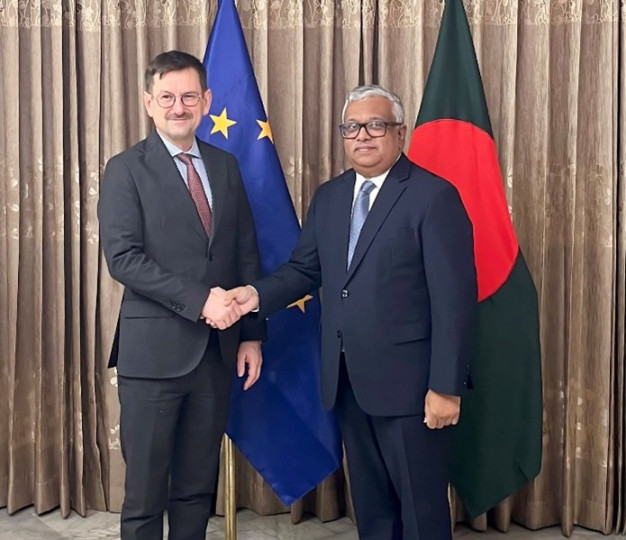
EU-Bangladesh diplomatic consultation 2026
Political & Economic Relations
EU-Bangladesh diplomatic relations were established in 1973. Since then, the European Union (EU) and Bangladesh have cultivated strong diplomatic, political, and economic ties, rooted in shared values and mutual interests. The EU remains a steadfast partner in supporting Bangladesh’s reform agenda, emphasising the importance of democratic governance, the rule of law, and the protection of human rights. Since gaining its independence, Bangladesh has achieved remarkable social and economic progress. Today, it stands as a dynamic economy with growing regional and global influence, though challenges—including climate vulnerability, economic resilience, and social equity—remain key priorities for cooperation.
The EU’s partnership with Bangladesh spans a wide range of sectors, from climate action and sustainable energy to education, healthcare, and digital transformation. Through initiatives like Global Gateway, the EU is deepening its engagement, with flagship projects such as the Bangladesh Renewable Energy Facility—the first of its kind in South Asia—paving the way for expanded collaboration in green energy, digitalisation, and the circular economy.
People-to-people ties are an essential aspect of EU-Bangladesh relations. A good example is the EU’s Erasmus+ scheme, which provides scholarships each year to students from Bangladesh. Moreover, in 2024, the EU launched a Talent Partnership with Bangladesh to develop mutually beneficial, regular, and safe mobility pathways to the EU, promote legal labour migration and contribute to the prevention and reduction of irregular migration.
The EU also delivers substantial humanitarian and other assistance as Bangladesh grapples with the challenges posed by hosting over 1 million Rohingya refugees who continue to flee violence, armed attacks, and human rights violations in neighbouring Myanmar, as well as an increasing number of extreme weather events such as cyclones, which are exacerbated due to climate change.
Trade remains a cornerstone of the relationship, with the EU as Bangladesh’s largest trading partner and leading source of Foreign Direct Investment (FDI), with many exciting growth opportunities in the years ahead.
In April 2026, the EU and Bangladesh finalised negotiations on a new Partnership and Cooperation Agreement (PCA), marking a significant step forward towards building a more strategic and comprehensive partnership. Once it has been formally adopted by the EU and Bangladesh, the PCA with constitute a comprehensive framework to strengthen bilateral relations across trade, investment, governance, climate action, and sustainable development, ensuring that cooperation remains dynamic and forward-looking.
Key agreements
- EU-Bangladesh Cooperation Agreement (expected to be replaced by a new Partnership and Cooperation Agreement in the near future).
- Covers trade, economic development, human rights, good governance and the environment.
- Agreement on Trade in Textiles Products.
- Regulates the distribution of export licenses from Bangladesh – although today (due to the EBA scheme) Bangladesh no longer has any quota restrictions on its exports to the EU.
Trade and Investment
The EU’s trade relations with Bangladesh are currently based on unilateral trade preferences granted by the EU since 2001 under the GSP Everything but Arms (EBA) and offering duty-free, quota-free market access scheme for least developed countries (LDCs).
As the largest EBA beneficiary, Bangladesh accounts for over 60% of all EBA exports to the EU, with its exports growing from €9 billion in 2011 to over €21 billion in 2025. In contrast, EU exports to Bangladesh have remained relatively modest, at €2-3 billion annually during the same period, making the EU Bangladesh’s largest trade surplus partner (Bangladesh-EU trade statistics).
Bangladesh’s major export products include clothing (over 90%), footwear, frozen food, agro-products, among others, while the EU’s major exports to Bangladesh are machinery, transport equipment, and chemicals.
The EU is also a major investor in Bangladesh, with €2 billion FDI stock (2025). European investments contribute to job creation, skills development, improved working conditions, sustainability standards, technology transfer, and economic diversification.
The EU works closely with the Government of Bangladesh, business associations, trade unions, and civil society to strengthen labour and environmental sustainability with a view to enhancing Bangladesh’s trade competitiveness. Following the Rana Plaza tragedy in 2013, the European Union, together with Bangladesh, the United States, Canada, and the International Labour Organization (ILO), launched the Sustainability Compact to improve workplace safety, labour rights, and responsible business conduct. Since July 2021, under the enhanced EU engagement linked to the GSP EBA scheme, Bangladesh has been implementing a National Action Plan aimed at aligning its labour laws, including those governing export processing zones, with international standards. Through the Team Europe Initiative on Decent Work, alongside Denmark, Netherlands, and Sweden, the EU supports the Government of Bangladesh in reforming labour laws and strengthening private sector compliance with labour standards, while also helping stakeholders prepare for the upcoming EU due diligence and forced labour legislations.
To support both the government and the private sector in advancing sustainability, various EU programmes and initiatives offer guidance and financial support to facilitate the transition towards decarbonisation and circular economy models, as well as to prepare for upcoming EU legislative initiatives such as the Ecodesign regulation.
Related information
Access2Markets: Exporting from the EU, importing into the EU - all you need to know
-
Image
 Copyright
DG TRADE
EU-Bangladesh trade flow and balance, annual data 2010 - 2025.
Source: European Commission, DG Trade
-
Image
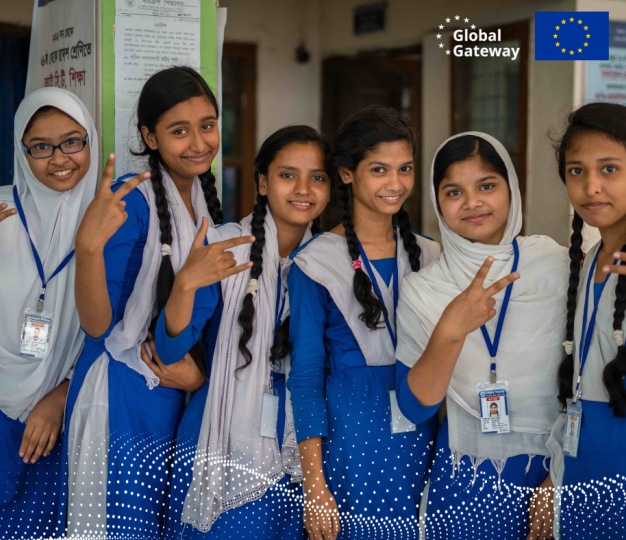
Education has been a fundamental part of our partnership with Bangladesh. Global Gateway is investing in quality education, including digital education, with a life-long learning perspective, in line with the Sustainable Development Goals.
Photo credit: Lauren Kana Chan
-
Image
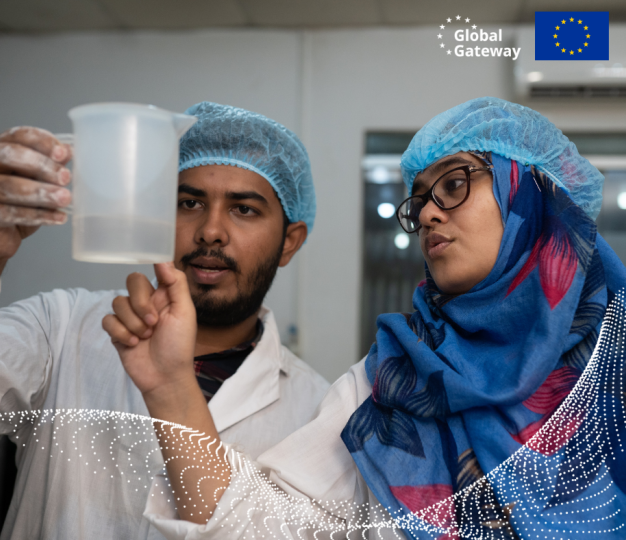
The Global Gateway aims to support the Government of Bangladesh in accelerating sustainable growth and decent job creation.
Copyright: Delegation of the European Union to Bangladesh
-
Image
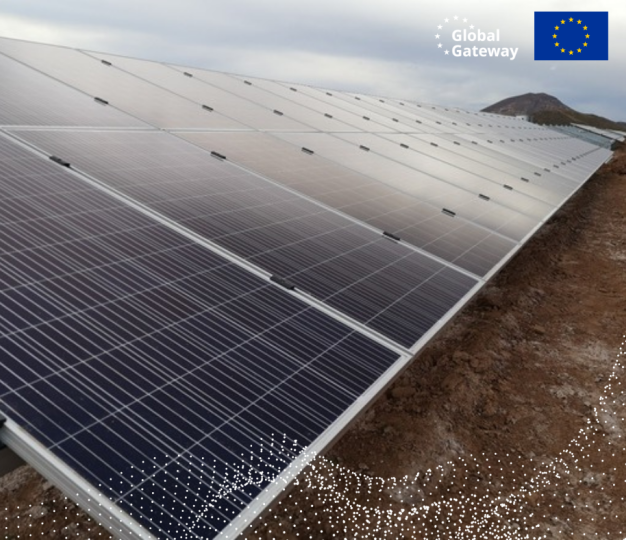
The Global Gateway supports the green transformation in Bangladesh. It promotes green technology exchanges and reinforces energy security.
Copyright: European Union
Development Cooperation
A key tool for enabling EU Development Cooperation with Bangladesh is the Neighbourhood, Development and International Cooperation Instrument (NDICI – Global Europe). Our strategic framework is outlined in the Multi-annual Indicative Programme (MIP) for Bangladesh for 2021-2027. The MIP aims to strengthen cooperation in key areas and enhance education, skills development, employment opportunities and social protection, energy efficiency, environmental protection, gender equality, access to justice, public services, and migration management.
For the 2021-2027 period, MIP for Bangladesh prioritises three areas:
- Human Capital Development - covering areas such as education, skills development, access to employment and social protection;
- Green Inclusive Development - focusing on the energy sector and the overall environmental footprint;
- Inclusive Governance - covering governmental and financial institutions, and the inclusion of girls and women.
In addition, the MIP covers cross-cutting issues of migration and forced displacement, security and human rights.
Humanitarian Aid
The EU's humanitarian arm, ECHO, supports the following in Bangladesh:
Disaster preparedness
For example, building flood-resistant infrastructure and early warning systems.
Emergency response
In particular for tropical storms and heavy monsoon rains, which cause severe floods.
Support includes building transitional shelters, latrines and wells, providing food security and nutrition, as well as educational awareness surrounding water and sanitation.
Specific interventions
- Cyclone Remal, 2024 (shelter, water & sanitation).
- Rohingya refugees in Cox's Bazar District (nutrition, health, water & sanitation).
- Chittagong Hill Tracts (livelihood and food assistance).
More on EU humanitarian aid for Bangladesh.