
EU backs Shkodra with a Museum of Navigation and the Shirokë–Zogaj Road
For centuries, Shkodra has attracted travellers who recorded vivid impressions of its harbour, the voyage along the Buna River, and the graceful vessels gliding across the lake. They admired the diversity of plants and wildlife, the striking scenery, and the lively Wednesday bazaar, where local culture was on full display. Some visitors formed enduring ties with the city, returning again and again. Among them was Edith Durham, who described Shkodra as an old friend, welcoming her warmly when she returned a year after her first visit.
After supporting the preparation of the dossier that secured Lake Shkodra's designation as a UNESCO-protected Biosphere Reserve, the European Union has reaffirmed its commitment to Albania by advancing two additional projects that highlight the lake's ecological and cultural significance while promoting sustainable tourism.
A new Museum of Navigation is being built at a strategic location where three rivers meet at the entrance to Lake Shkodra. In the past, navigation along the Buna River connected the lake and the city to the sea, turning the area into one of the region's most important economic hubs under the watch of Rozafa Castle. This commercial centre expanded with the construction of Shkodra's harbour, while its bazaar became the leading trading centre not only in Albania but across the wider region.
The project, Improving Cultural Tourism Potential through the Construction of the New Museum of Navigation in Shkoder, funded by the European Union and the EBRD, seeks to revive this historic social and economic heart of Shkodra by making the most of the area's natural advantages and integrating three strategic dimensions: recreation for residents, tourism for visitors, and economic opportunities for businesses.
The Museum of Navigation covers more than 2,000 square metres and is dedicated to showcasing the history and significance of maritime culture. Its exterior features a terrace designed as a summer theatre and an installation shaped like a boat, offering views of the Buna River on one side and Rozafa Castle on the other. Constructed from Siberian pine, the boat structure combines aesthetic appeal with natural warmth, creating harmony between the building and its surroundings," explains Arnis Bitri, the project's engineer.
Once, Shkodra's harbour and bazaar lay at the heart of the city's prosperity, driving both commercial exchange and cultural life. Today, this heritage is being rediscovered, revalued and transformed into a foundation for the city's social, cultural, tourism and economic renewal. The National Museum of Navigation is envisioned as the key institution for preserving and interpreting this legacy.
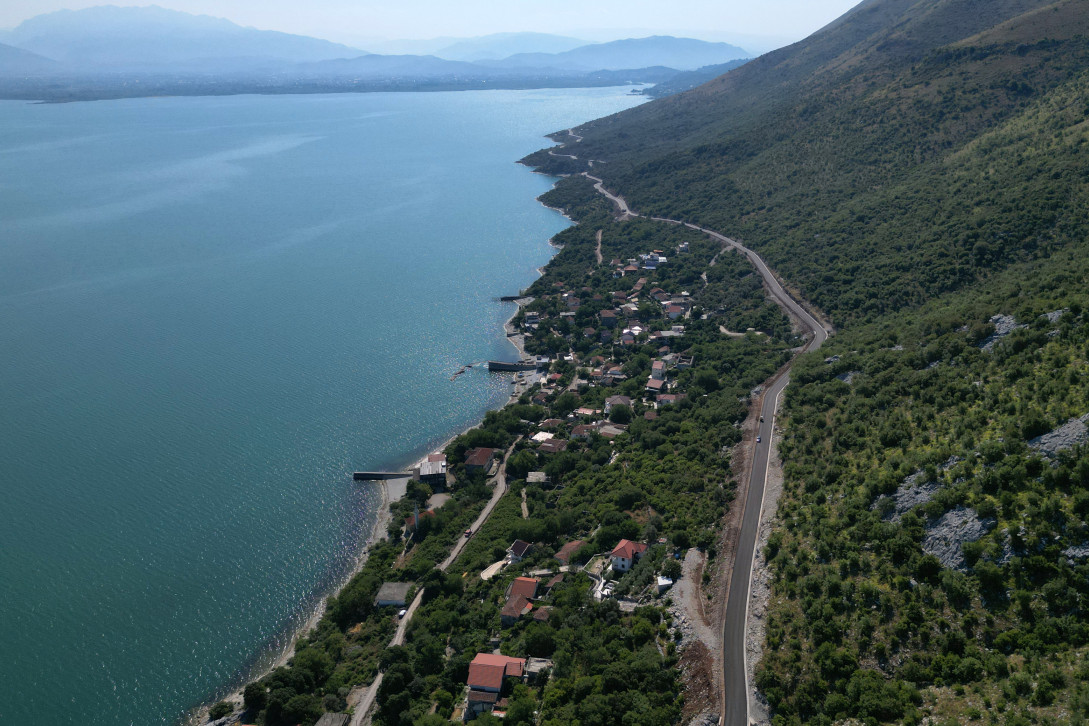
On the opposite bank of the Buna River, another project is under way, enhancing not only the area's appeal to visitors but also improving connectivity through the construction of a new lakeside road linking Shkodër with Montenegro and several villages along the Albanian shore of Lake Shkodra.
EU Delegation to Albania
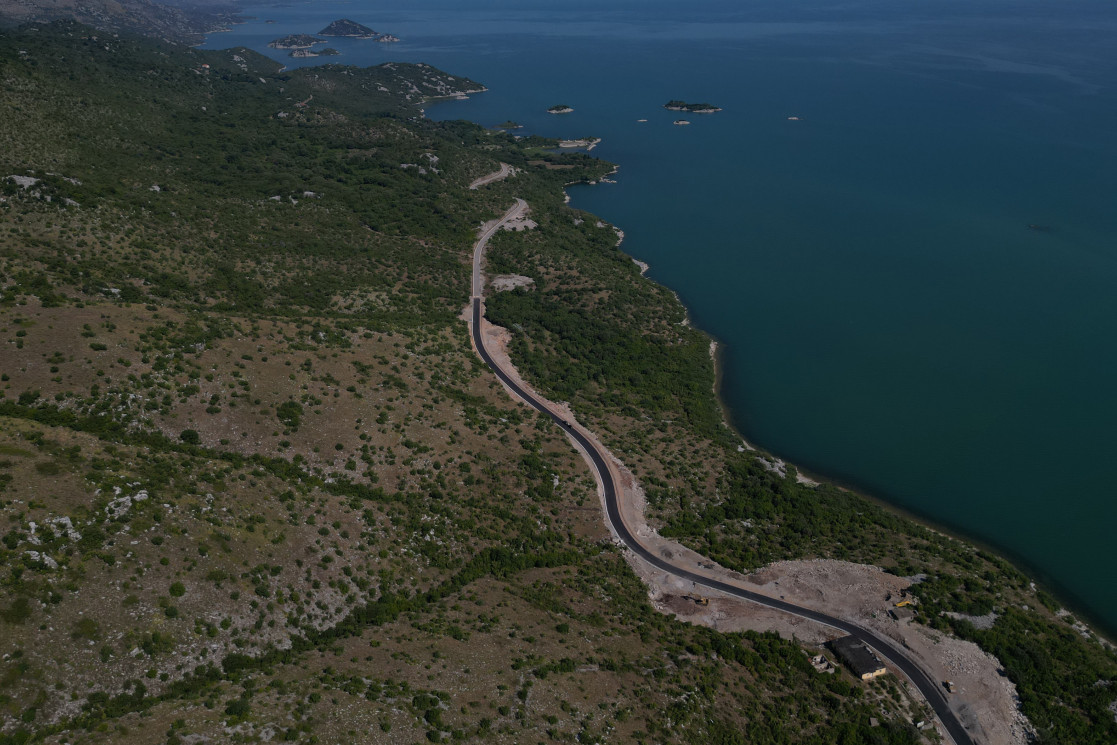
“The reconstruction and upgrade of the Road Shiroke - Zogaj - Montenegro border” project begins at the end of the Shirokë pedestrian promenade and extends to the border with Montenegro. Construction is now nearing completion. The new alignment generally follows the route of the existing road while improving a number of hazardous bends, enhancing road safety and bringing the route up to modern standards.
According to the engineers working on the project, the road will have a total width of seven metres, comprising a six-metre-wide carriageway with two traffic lanes of three metres each, together with two drainage ditches, each measuring 0.5 metres in width. The project also includes a two-metre-wide pedestrian and cycle path. The design speed is 50 km/h, although this is reduced to 30 km/h on certain sections due to the terrain.
The newly constructed road winds gracefully along the hillside, offering sweeping views across the lake. As it follows the natural contours of the landscape, travellers are treated to panoramic vistas where the shimmering water meets the horizon, framed by lush greenery and gently rising hills. The route not only improves accessibility but also transforms the journey into an experience, blending modern infrastructure with the beauty of the natural environment.
Together, the museum and the new road further enhance the value of Lake Shkodra and its UNESCO-protected Biosphere Reserve. The biosphere designation establishes clear criteria and management guidelines for the surrounding area, ensuring that the watershed's natural resources are both enjoyed and protected. In this way, the museum contributes to a renewed appreciation of the region's history, while sustainable development is promoted through careful planning and stakeholder-driven decision-making that safeguards biodiversity.
Background information
The European Bank for Reconstruction and Development (EBRD) and the European Union (EU) are strengthening the competitiveness of Albania's tourism sector.
The programme, to which the EBRD is contributing €60 million in loans and the EU €40 million in grants, finances the rehabilitation of cultural and natural heritage sites in four regions (Berat, Fier, Korçë and Shkodër) and upgrading of municipal and environmental infrastructure across the country, as well as regional transport links to improve accessibility to certain tourist sites and villages. Alongside infrastructure and heritage investments, the EBRD provides financing to local partner banks for on lending to tourism SMEs, complemented by advisory support to improve competitiveness and expand tourism services. Examples of infrastructure, cultural heritage and natural sites investments Financed with EU grants are: construction of the Museum of Navigation in Shkodra, Apollonia Archaeological Park, Osumi Bridge in Berat, 4 churches in Korça region and other investments in the selected regions. Financed with EBRD loans are the reconstruction and upgrade of the Road Shiroke - Zogaj - Montenegro border and Water Supply and Wastewater Systems in Shiroke – Zogaj, reconstruction of the road Buna Bridge – Shkoder – Velipoje, etc.