
EU restoration brings the treasures of ancient Durrës back to life
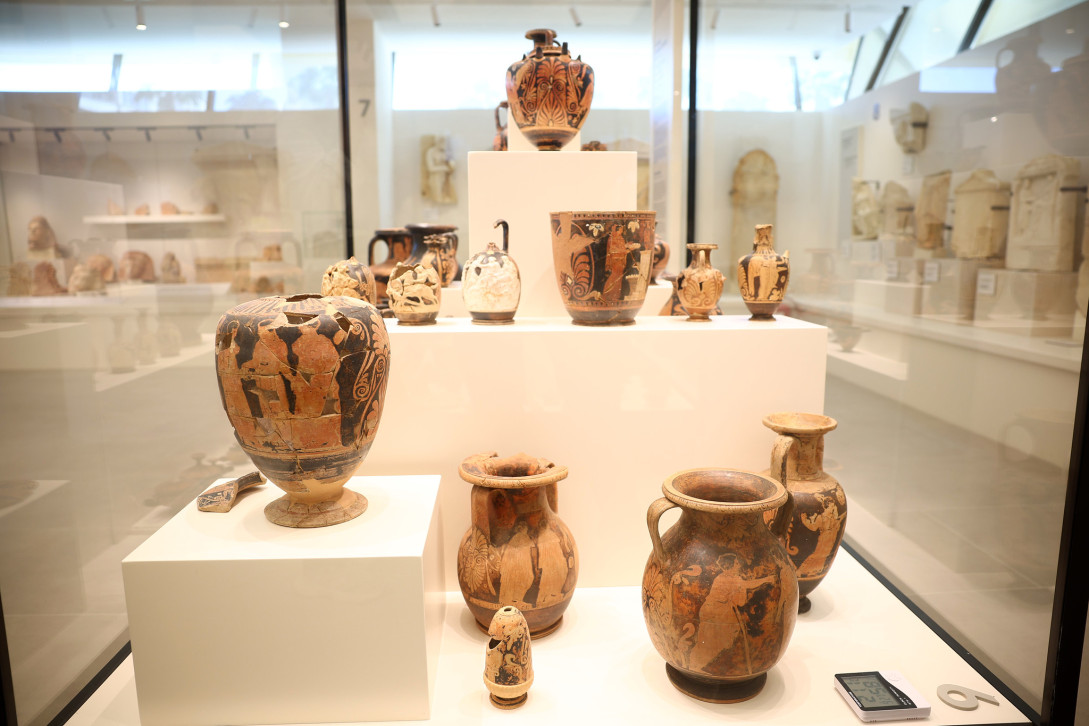
In 1970, excavations in the Hellenistic necropolis behind the Daute Hills near Durrës uncovered a rare site on the saddle between two crests. Aside from an unusual clay-bonded brick structure, the excavation yielded nearly six tonnes of artefacts—terracotta figurines, ceramics, fragments of stone sculpture, metal objects, and more than 630 bronze coins.
Initially thought to be a sanctuary of Aphrodite, later studies by an Albanian-French team confirmed, through coroplastic, epigraphic and literary evidence, that it was dedicated to Artemis, as mentioned by Appian. His account of Caesar’s campaign in 48 BCE describes him approaching Dyrrachium by night and reaching the Artemision. Archaeologists now affirm that the sanctuary on Daute Hill is the one Appian referred to, tracing Caesar’s route from Porto Romano westwards into the valley between Kokomane and Daute.
As archaeologist Belisa Muka notes, its location on the edge of the city, near a mountain pass, “fits Artemis’s role as guardian of borders and crossings, vulnerable points, as Caesar’s raid demonstrated”. Under the title The Artemision of Epidamnus-Dyrrhachium, these discoveries hold a prominent place in the Archaeological Museum of Durrës, recently restored through the EU4Culture programme.
EU Delegation to Albania
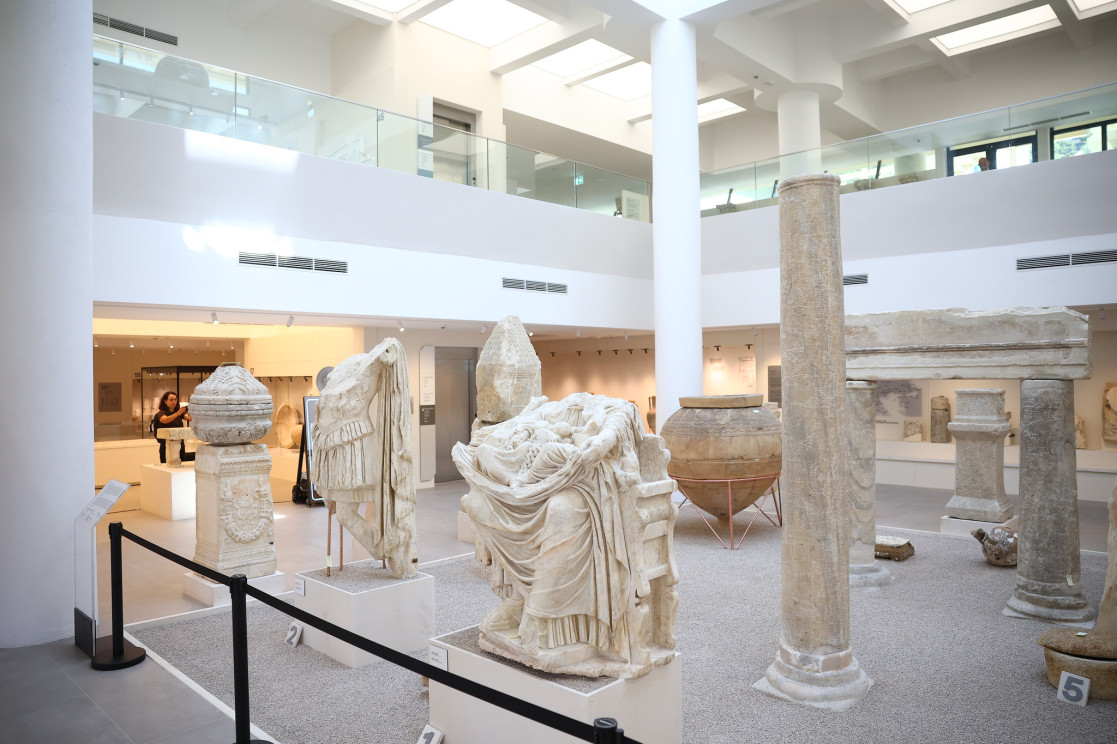
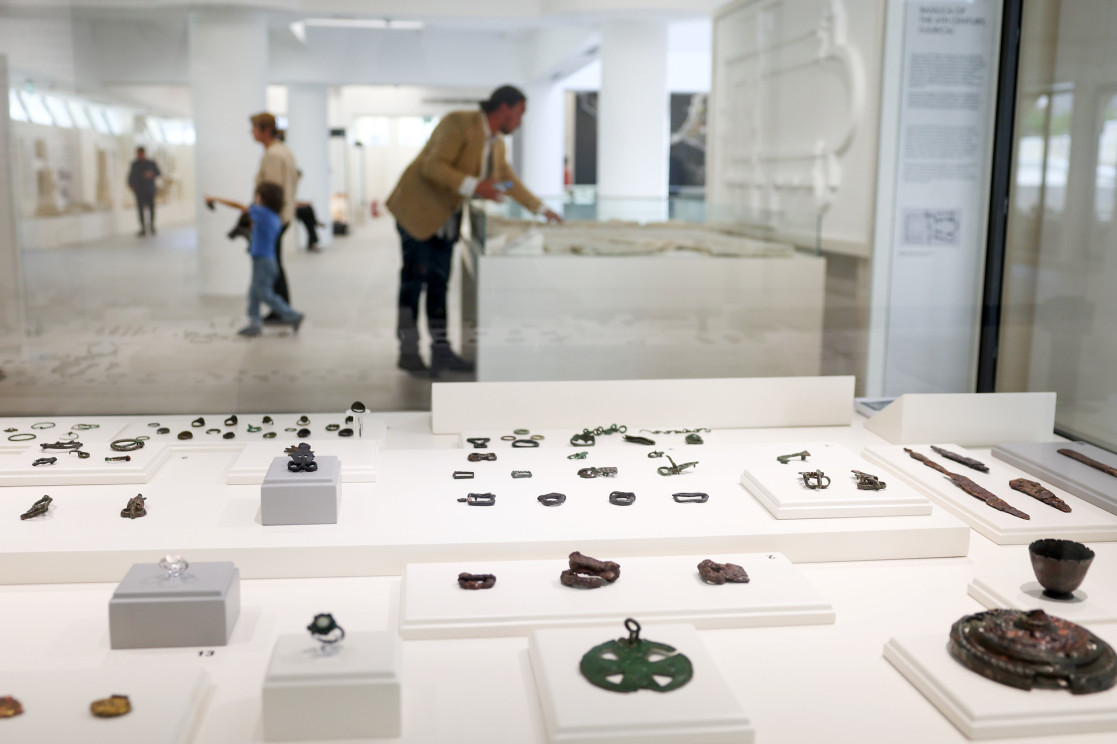
Initiated in response to the devastating earthquake of November 2019 and guided by the principle of building back better, the programme has renovated, restored and revitalised several Albanian cultural monuments, strengthening the presentation of national heritage and helping to secure its future. Following the restoration, the museum now features, for the first time, integrated climate-control, surveillance and fire-safety systems. Its collections have been redisplayed in both individual and mural display cases, with 56 new exhibits showcasing more than 2,300 artefacts ranging from the Neolithic and Eneolithic periods (6500–3000 BCE) to the Ottoman era (15th century CE).
Following the earthquake, the museum suffered extensive damage to both structural and non-structural elements, including cracks in walls, beams and plaster. Moisture infiltration caused rising damp and biological growth, while visible deterioration affected the upper floors. This combination of seismic and environmental damage required a comprehensive restoration approach.
“The project addressed the structural consolidation of the building, repairs to façades, windows and doors, and full upgrades to plumbing, HVAC (heating, ventilation and air conditioning), electrical, lighting and safety systems, creating infrastructure that meets contemporary museum standards. Exhibitions were reorganised and carefully curated, with artefacts safely stored, display cases modernised, interpretative narratives expanded and visitor services improved. Finally, outdoor spaces were enhanced for cultural use, an external lift was added, and new storage facilities were built for the Institute of Archaeology’s collections,” explains Lejla Hadzic, Cultural Heritage Adviser at UNOPS, the implementing partner of the programme.
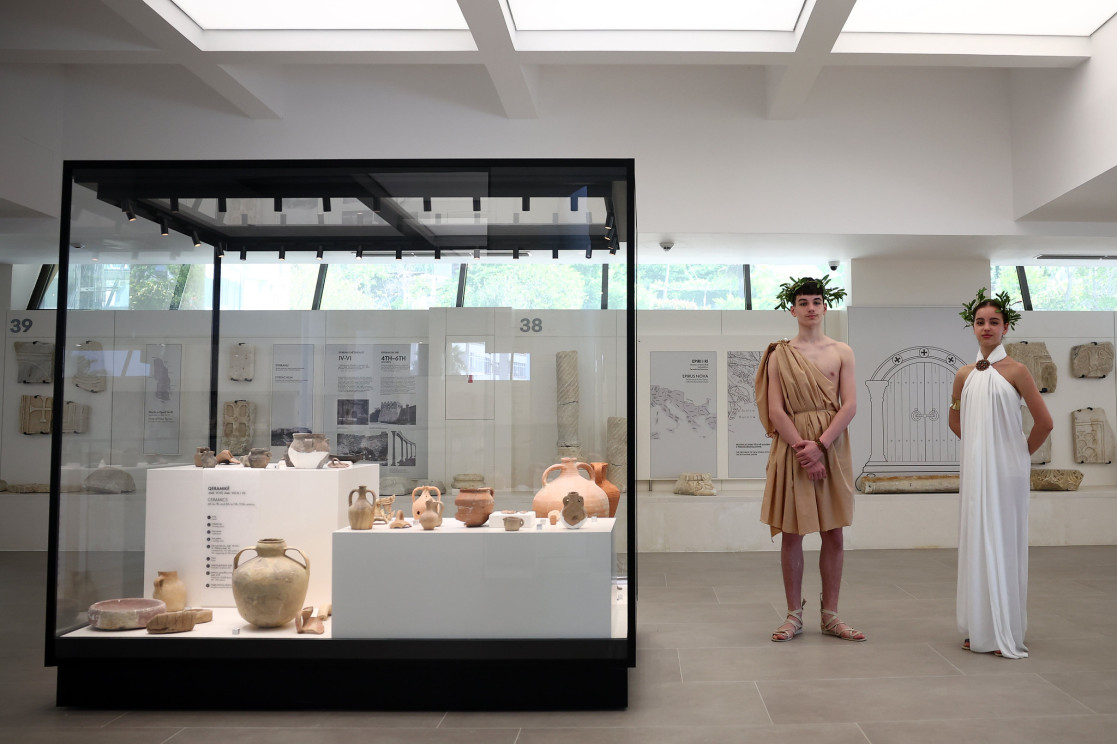
She emphasises that the museum layout has been redesigned to meet contemporary standards of preservation and storytelling. Nineteen display cases have been hermetically sealed to enable climate control, ensuring that delicate artefacts remain in a stable environment without fluctuations in humidity or temperature. For the first time, the objects are accompanied by a clear chronological narrative and complete bilingual descriptions that guide visitors naturally through the history of Durrës. This is the result of the long work of engineers, architects, archaeologists, designers and craftspeople working under the guidance of a curator.
EU Delegation to Albania
The National Archaeological Museum of Durrës is the largest museum of its kind in Albania. Through its objects, the city’s life on land and sea, its trade, wars, rulers, emperors, invasions, professions, rituals and the traces of past civilisations are revealed. From the bow of a ship to the clash of empires, Dyrrachium emerged as a strategic stronghold during the confrontation between Caesar and Pompey in 49–48 BCE, serving as Pompey’s military base while Caesar drew support from nearby cities.
The museum traces this layered history through evidence of Roman imperial cult practices, coins, vessels for oils and perfumes, loom weights and oil lamps spanning centuries. It highlights figures such as Emperors Anastasius I and Justinian I, both born in Durrës, whose Justinianic Code of 534 influenced the development of European law. Christian monuments, the amphitheatre, the Via Egnatia and artefacts from the Middle Ages through to Ottoman rule further illustrate Durrës’s enduring role as a crossroads of civilisations.
EU Delegation to Albania
“The museum collection illustrates the long history of Durrës, beginning as early as 6500 BCE, with the earliest objects attesting to human habitation in the area. I was particularly struck by the section on the city’s development, which includes the second-century amphitheatre built during the reign of Trajan, a monument that vividly reflects the way of life at that time.
“Hellenistic and Roman coins also testify to local production, alongside glass, ceramics and metalwork, all of which demonstrate the continuity and longevity of the city’s culture of craftsmanship and daily life, intertwining Illyrian, Hellenistic and Roman traditions,” says Hadzic, noting that the museum conveys the enduring significance of a nation rooted in this place, with a remarkable depth of historical development.
The group of archaeologists who studied the Sanctuary of Artemis explain its importance through the richness of the materials discovered there. Alongside representations of mortal women, seated on thrones or standing, numerous images of Artemis dominate the sanctuary. She appears in a consistent iconographic form: wearing a short chiton and ankle boots, with a lion’s skin draped over her head and torso, and a dog at her side.
In Epidamnus-Dyrrachium, Artemis embodied civic protection: safeguarding women as mothers, supporting men in defence, and overseeing the city’s strategic crossing point. In this role, she was rightly honoured as Soteira, the saviour of the community. In the museum, her presence continues to embody the resilience of a culture and the longevity of a civilisation.
Background information
The EU4Culture programme is funded by the European Union (EU) and implemented by the United Nations Office for Project Services (UNOPS) in close partnership with the Ministry of Tourism, Culture and Sports. It was focused on the renovation and revitalisation of major cultural heritage sites damaged by the earthquake and represents one of the largest cultural heritage programmes funded by the European Union, with a total budget of €40 million.