Innovative teaching in Albanian schools, how EU support is transforming classrooms in Albania
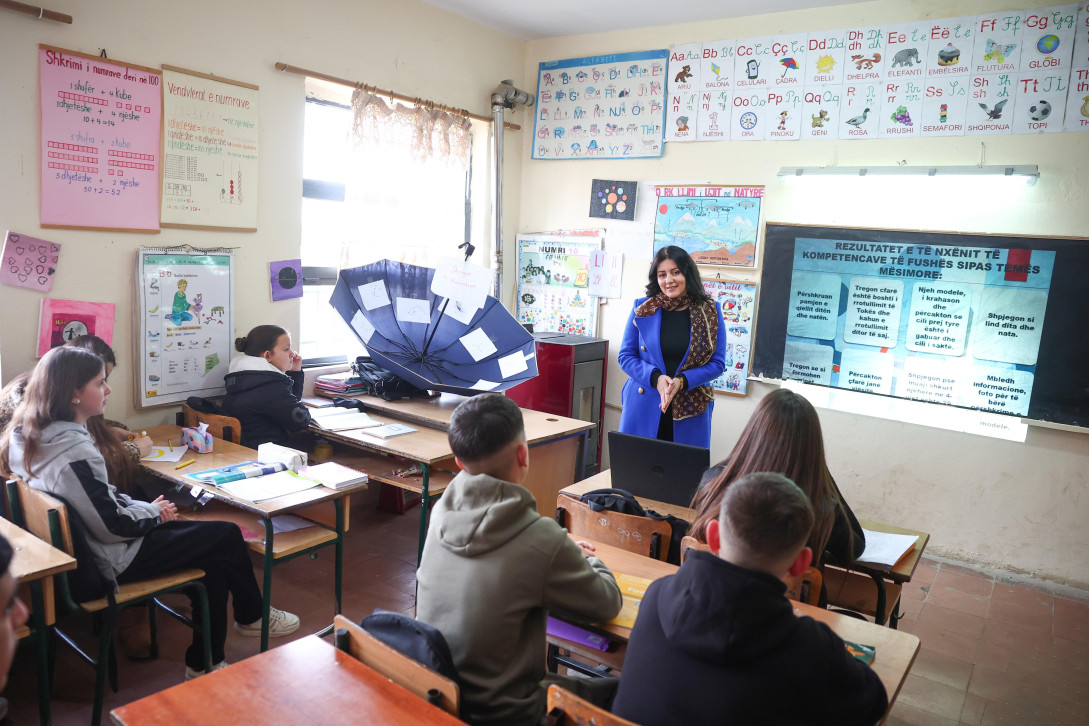
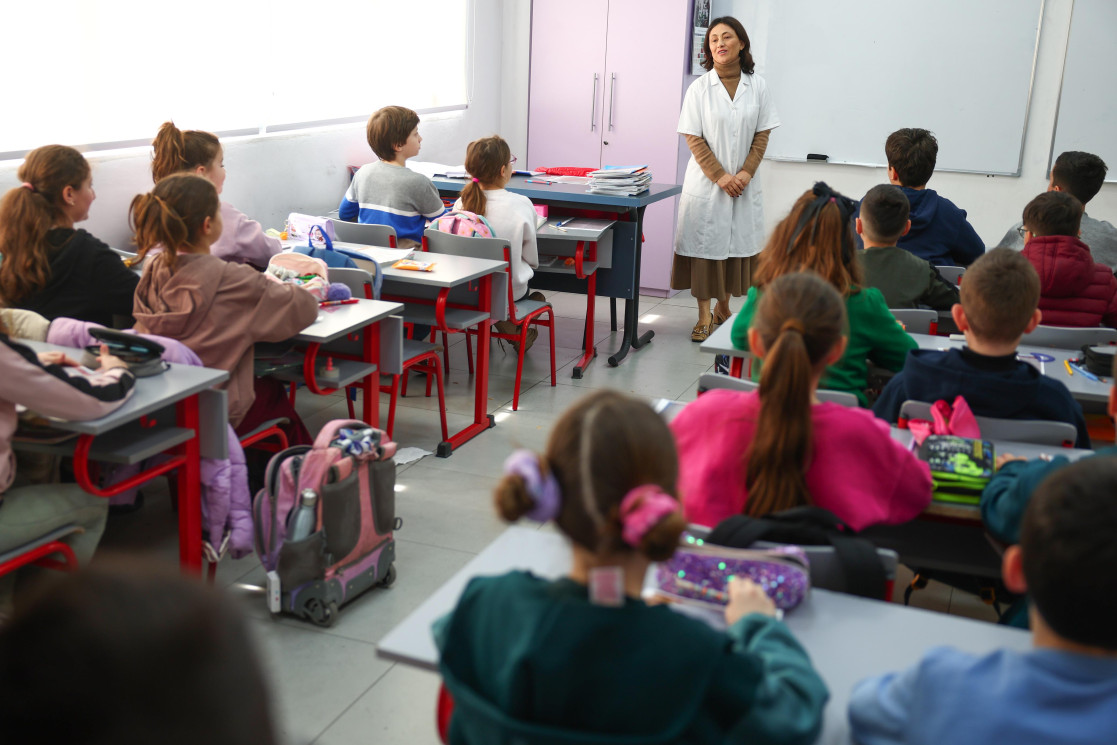
An umbrella decorated with zodiac constellations stands at the centre of a classroom at “Mersin Duqi” School in Berzhitë, on the outskirts of Tirana. Around it, pupils explore how day and night are formed, why the Earth rotates on its axis and orbits the Sun, and what Orion, Pegasus and Cassiopeia represent in the night sky.
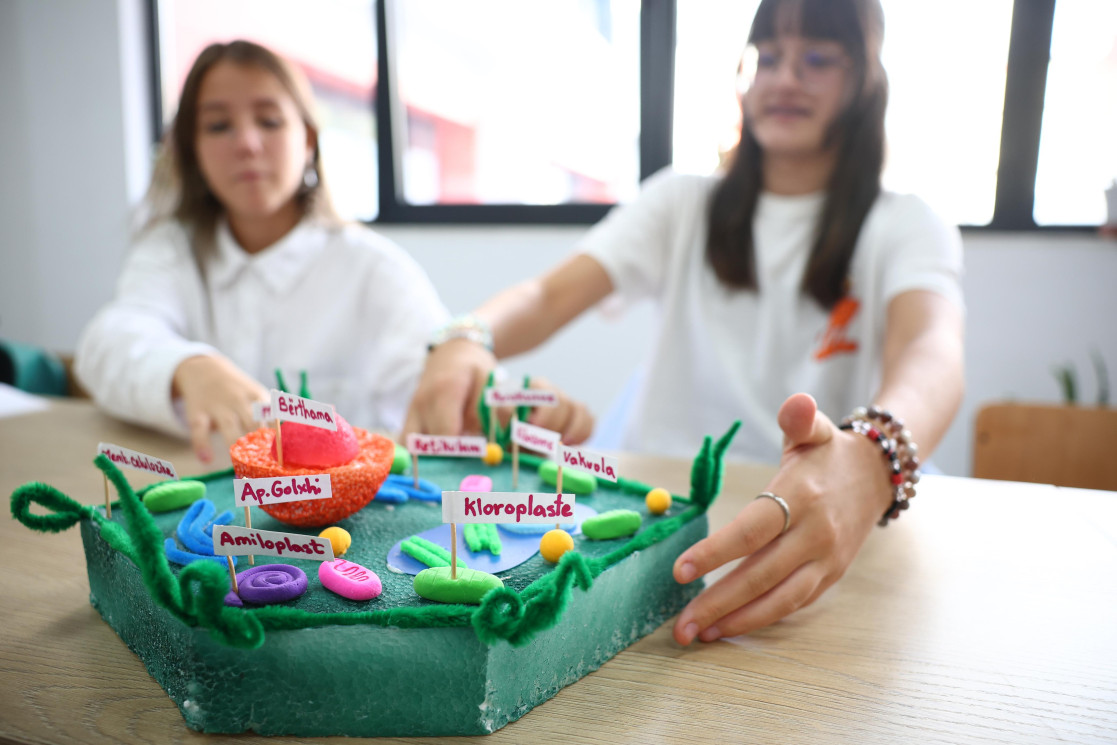
Physics lessons have taken on a whole new dimension, as EU4Inclusive Teaching introduces innovative methods into Albanian schools. Children now find physics classes engaging. They actively participate during lessons, not merely repeating information but discovering new knowledge about the Earth and the universe, while also contributing to the creation of teaching aids.
EU Delegation to Albania
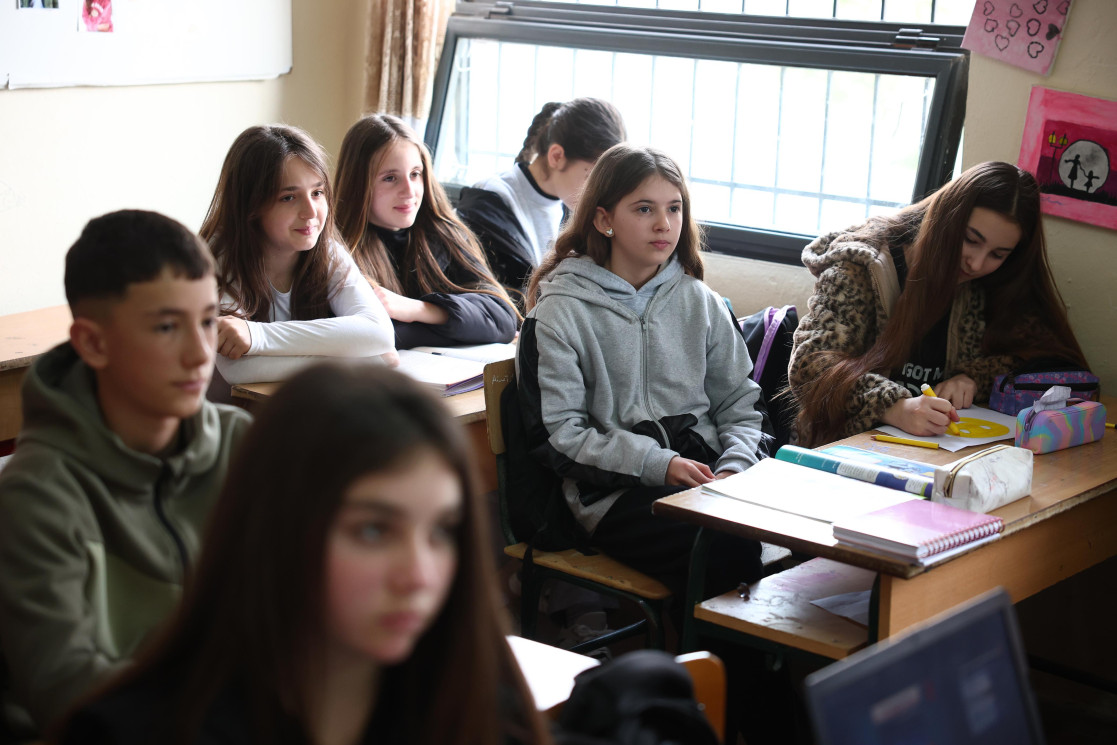
“We have moved from traditional lessons, where the teacher speaks and we simply listen, to a more interactive approach. Using educational games and connecting learning to everyday life engages everyone, whether we like the subject or not. At the end of each lesson, we even vote with emojis to share how much we enjoyed it,” says Arsa Selba, one of the pupils.
Her peer, Ajlina Ozuni, believes that what has changed most is how the class is organised. “The lesson becomes more meaningful when we learn to cooperate, express our thoughts and challenge one another. This active engagement draws us in, makes us feel part of the experience and transforms the lesson into something truly inspiring.”
Noel Duqi is also exploring his leadership skills while learning physics. “I explore the galaxy, forces and gravity in ways that inspire and motivate me. I enjoy taking initiative, and I am often chosen as the group leader during class activities.”
EU Delegation to Albania
The constellations and planets no longer feel distant, as they are brought together under a dark blue umbrella. Through the signs of the zodiac, pupils seek to understand the vast universe of stars that surrounds us. Just as the Earth’s axis, an abstract yet fundamental line, connects the North Pole to the South, pedagogical methods serve as a vital link between the obligation to learn and the desire to acquire knowledge. By shaping the way information is conveyed, these methods awaken curiosity and foster intellectual engagement among young learners.
Their teacher, Albana Dapi, is one of 15,000 teachers in Albania trained under the EU-funded project “EU4Inclusive Teaching”, an initiative aimed at improving Albanian students’ learning outcomes. By shifting the focus of teaching from passive reception to active participation, contemporary pedagogical approaches demand genuine engagement. This means confronting and overcoming the barriers that often inhibit students.
Through collaborative activities and visual aids, modern instructional methods cultivate trust and inclusivity. They balance oral participation, written work and creative expression, enabling each group of learners to demonstrate their strengths according to their individual ways of communicating.
EU Delegation to Albania
“EU4Inclusive Teaching has turned commitment into visible and lasting progress for inclusive education in Albania,” says Klodjan Seferaj, Project Director.
Jamarbër Kadiu, a student at “Emin Duraku” School, observes that innovative teaching methods make it easier to retain new information, as lessons are presented in open and welcoming ways. His peer, Jerina Çullaj, highlights the integration of technology as a particular strength, noting how it stimulates curiosity and engagement.
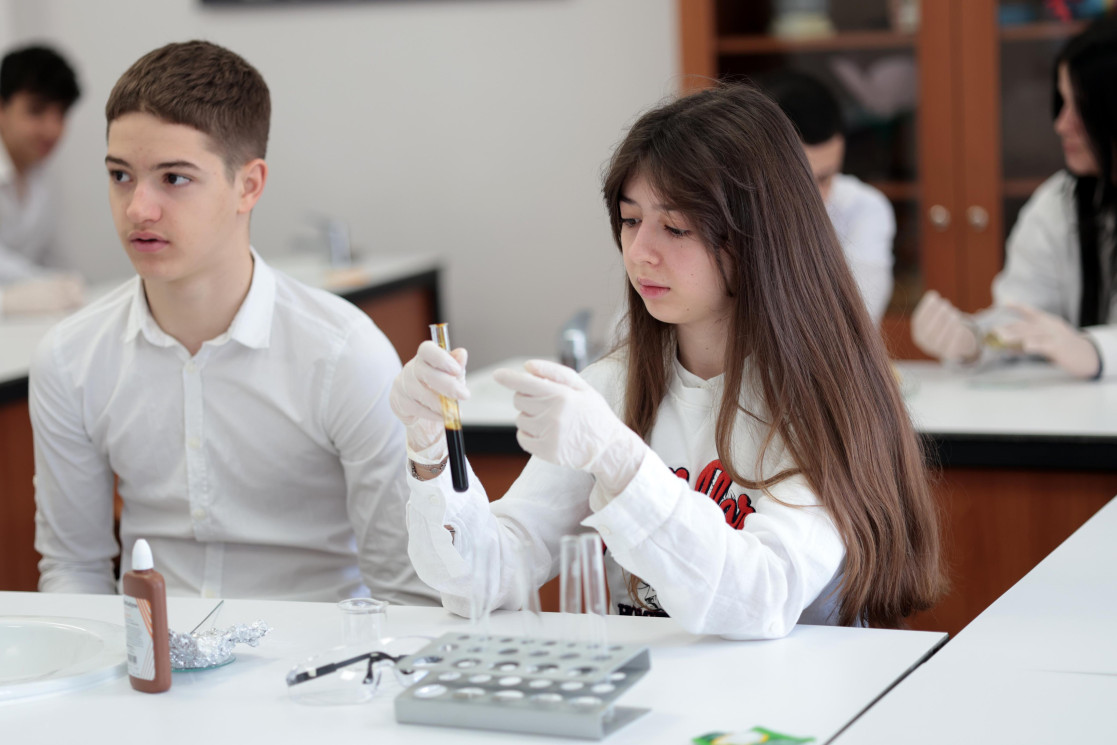
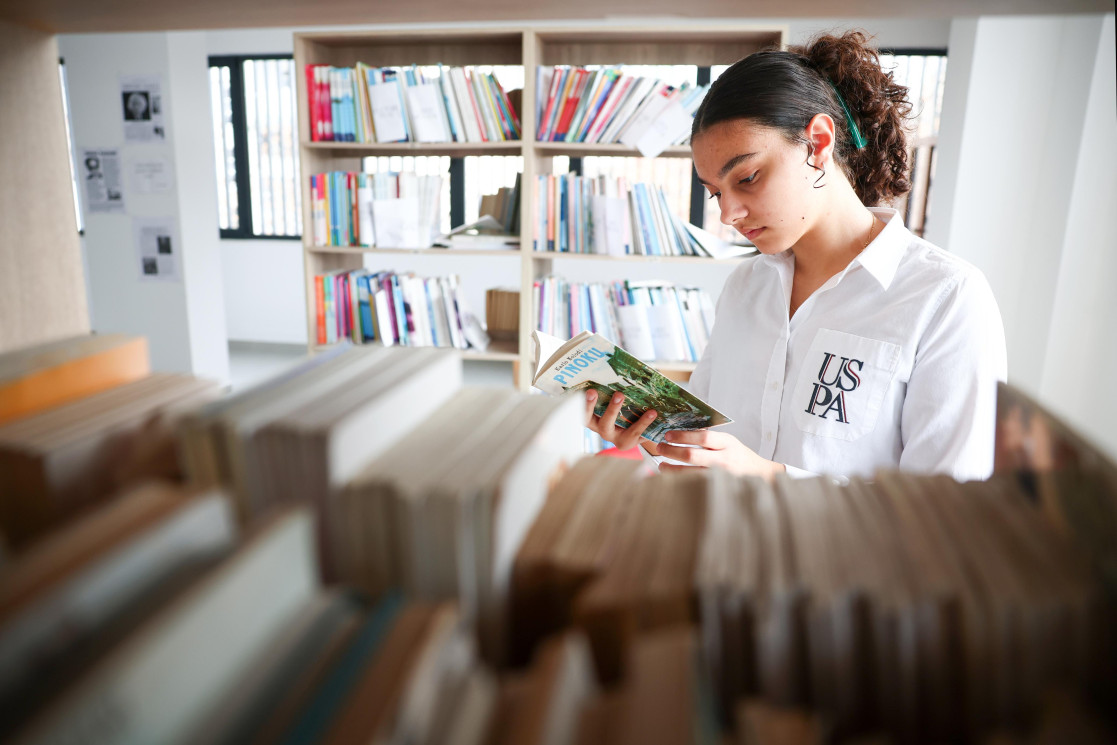
With their school recently renovated under the EU4Schools Programme, students now participate in diverse learning environments: the library for group work, the laboratory for experimentation and interactive platforms such as Kahoot, each fostering collaboration and deeper involvement in the learning process.
EU Delegation to Albania
“Today, our ideas truly matter in ways they did not before. With tools such as the video projector, the laboratory and interactive platforms like Kahoot, technology becomes a means of learning rather than a distraction. This approach reduces our reliance on phones and fosters active participation. As a result, even students who may not enjoy a particular subject feel included, since these innovative methods make learning more accessible and engaging for everyone,” Çullaj and Kadiu say.
Teachers emphasise that this approach represents a significant change, as in the past it was often difficult to capture students’ attention. Some learners may not be disruptive, yet they remain disengaged, a subtle form of withdrawal that teachers call “secret abandonment”.
Among them are children with special educational needs, who benefit greatly from environments that recognise their strengths. Many of these students are particularly skilled with technology and laboratory work, demonstrating remarkable intuition even if they are less inclined to participate verbally or through traditional textbooks.
Modern methods embrace these differences, creating an inclusive learning environment where students are free to express themselves and where their individual talents can be nurtured and developed.
At “Sinan Tafaj” School, pupils Jolin Jorgji and Dardan Rodoni demonstrate how inclusive teaching methods have allowed them to work closely with their teachers, not only to strengthen their leadership skills but also to build bridges across generations by rediscovering family and national stories. At the same time, they have brought literature to life in new ways, such as animating Gregor Samsa on social networks, demonstrating how creativity and tradition can merge to foster deeper connections and engagement.
EU Delegation to Albania
“For the national celebrations in November, we worked on a major school project that traced family history through audiovisual productions. Our study of Gregor Samsa, Faust and the Iliad has also changed: instead of focusing only on who they were, we explore what they represent, think and feel. To make this even more engaging, we created a social media page for Samsa, where he shares his emotions in a modern voice,” Jorgji and Rodoni explain.
Some wrote texts, others read or drew, ensuring that everyone’s abilities became part of the initiative. Their teachers, Edlira Këllezi and Darina Minga, have encouraged students not merely to reproduce texts but to refine ideas, cultivate self-development and contribute to society through comprehension, analysis and critical thinking.
Background information
EU4Inclusive Teaching is a European Union - funded project that aims to improve learning outcomes for Albanian students and reduce disparities between students from different socio-economic backgrounds, contributing to social cohesion and sustainable development. Implemented by the Open Society Foundation for Albania (OSFA) and Tampere University of Applied Sciences (TAMK), the project introduced an inclusive teaching model and a competence-based curriculum in Albania’s pre-university education system.
Through a 22-day Training of Trainers programme, 348 teachers were trained by TAMK professors, who then supported the training of 15,000 teachers nationwide through two accredited modules delivered both onsite and online. The project also strengthened school support services by developing an Audio-based Digital Platform for visually impaired students. Infrastructure and professional capacity support were provided to the Institutes for Blind and Deaf Children, which now operate as Resource Centers. In addition, 550 psycho-social school cabinets were refurbished with ICT equipment, and ASEBA tools were localized and introduced for use by school psycho-social services