
Team Europe investment cleans Himara’s coast with new wastewater treatment plant
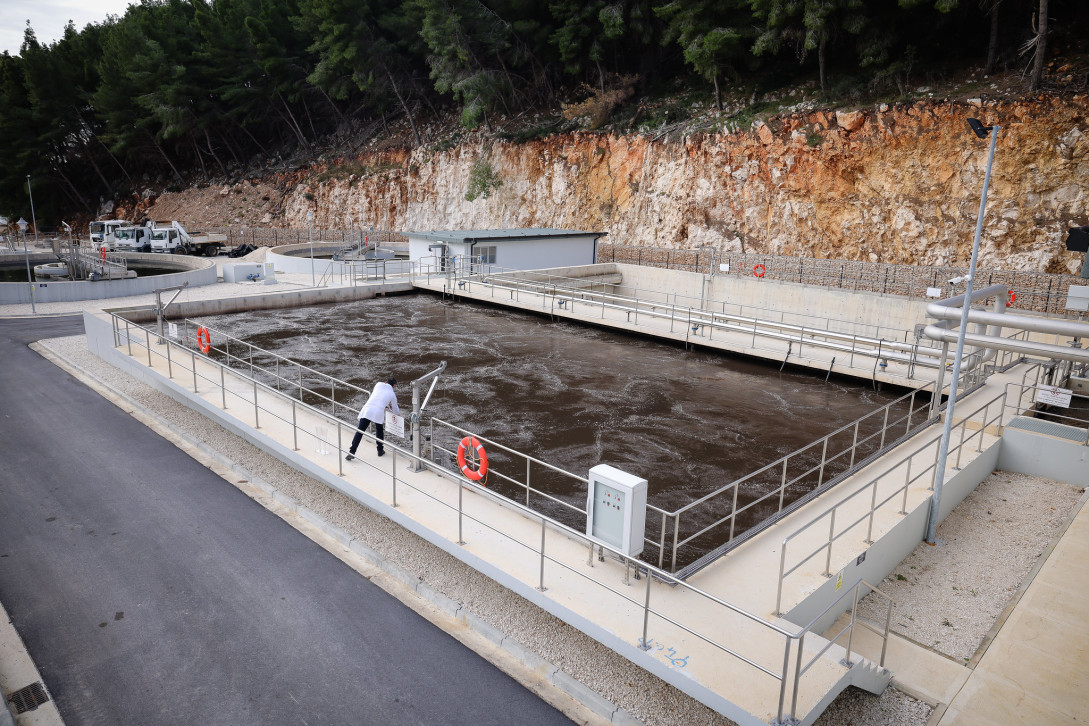
A year ago, from the hill of Argjileo, the coast of Himara stretched clearly into view. Across the bay, beyond the port, the sea’s blue was marred, darkened like a spreading stain, where wastewater flowed in. Today, that vision has vanished, along with the lingering scars of pollution.
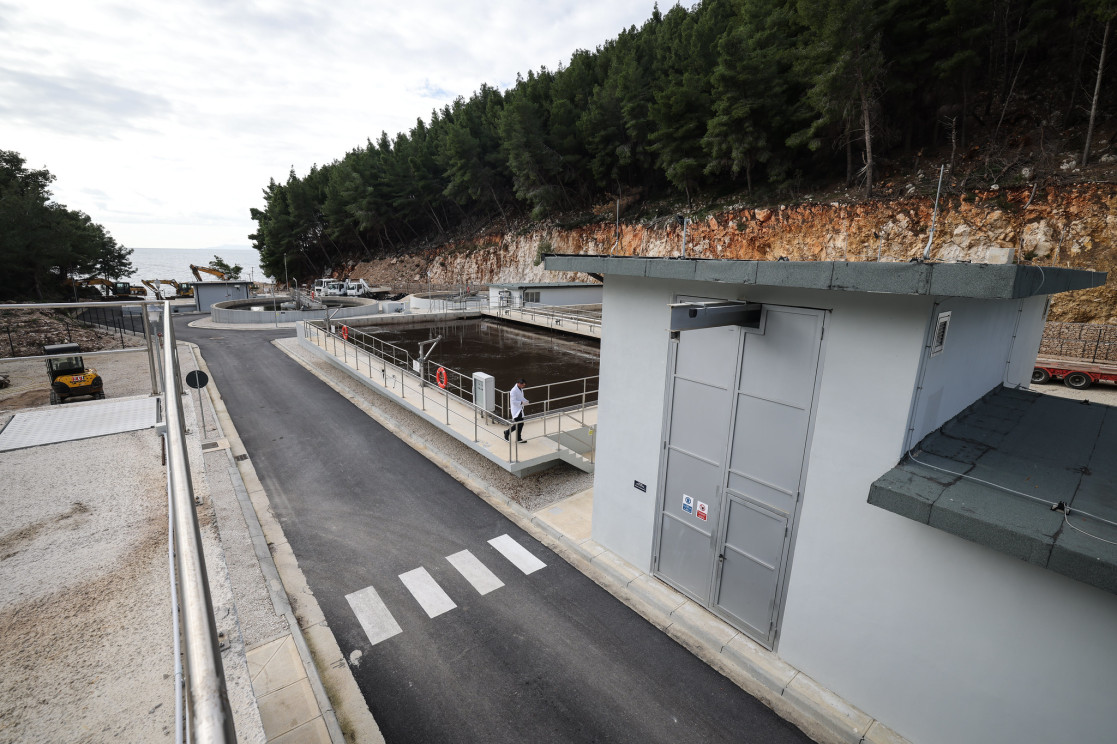
A new Wastewater Treatment Plant, recently inaugurated in the southern coastal city of Himara, marks a pivotal step forward in environmental protection and sustainable regional development. The new facility ensures that untreated wastewater is no longer discharged into the Ionian Sea, thereby safeguarding the ecological integrity and natural heritage of Himara’s coastline.
EU Delegation to Albania
Constructed under the Rural Water Supply Programme IV, the wastewater treatment plant is a tangible investment in the future of Himara and represents a major advance in protecting Albania’s Ionian coastline while promoting sustainable development for coastal communities. A flagship investment under the programme, it is financed by the European Union and the German Government and implemented by KfW in close collaboration with the Albanian Development Fund.
“It demonstrates how targeted investments in water and sanitation infrastructure can significantly improve quality of life while safeguarding the natural environment,” says Ms Mara Drochner, Director of the KfW Office in Albania. She emphasises that the project also directly contributes to meeting European Union environmental standards and supports Albania’s path towards EU accession. “As part of Team Europe, KfW is proud to work alongside Albanian institutions to strengthen water and sanitation infrastructure, building on decades of successful cooperation. Together with our local partners, we remain committed to promoting sustainable solutions that deliver tangible benefits for people and the environment across the country,” she notes.
Located outside the city on the site of a former septic tank, the plant currently serves a population equivalent of 16,000 residents, with the capacity to expand in a second phase to treat wastewater for up to 24,000 inhabitants. “This plant is fully biological and compliant with EU standards, meaning the water is treated by removing carbon and nitrogen through a biological process without the use of chemicals,” explains Endrit Mullalli, Project Manager, at “PWT Wasser und Abwassertechnik”.
EU Delegation to Albania
The treatment process includes several stages. Before entering the biological treatment phase, wastewater undergoes. First, coarse screening is applied, during which mechanical screens intercept large debris carried through the sewers, such as bottles, wood fragments and textiles. Next, fats and oils, which can disrupt the biological process, are removed.
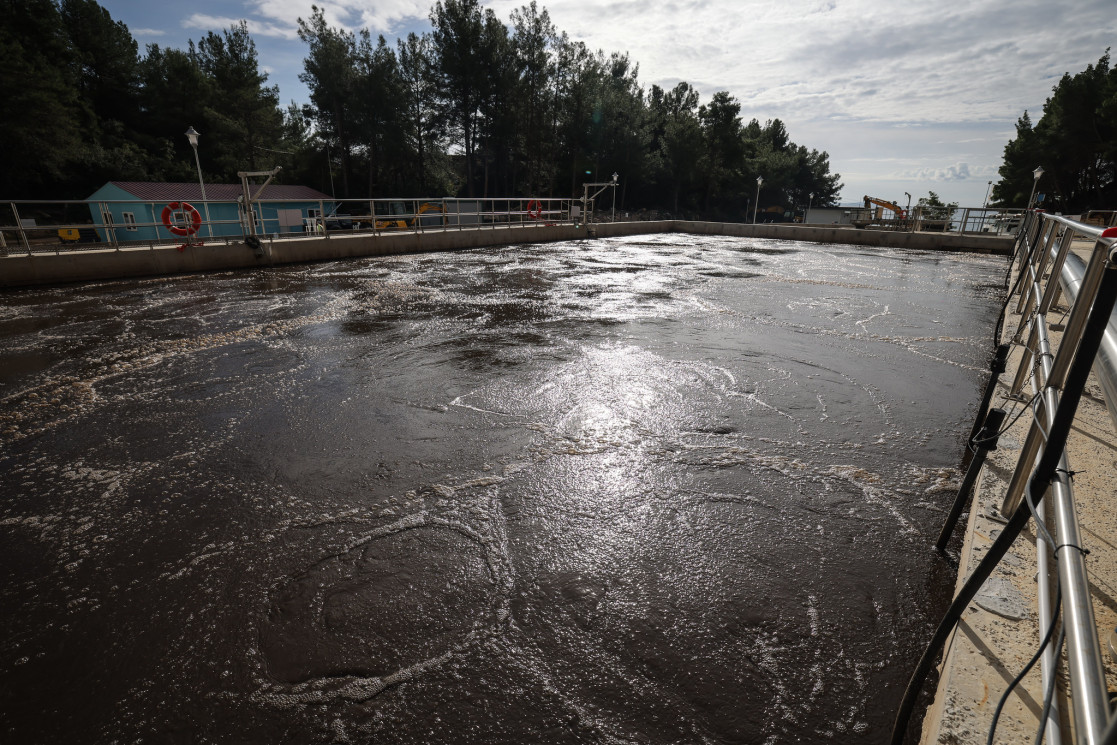
“Once these pre-treatment steps are complete, the water flows into two large aeration tanks for biological treatment. Within these tanks, two key processes take place, aeration and denitrification. During aeration, bacteria and microorganisms, collectively known as biomass, develop and feed on the organic matter present in the wastewater. This microbial activity enables the breakdown of carbon compounds and facilitates the release of nitrogen, making the biological purification process possible,” explains Mullalli.
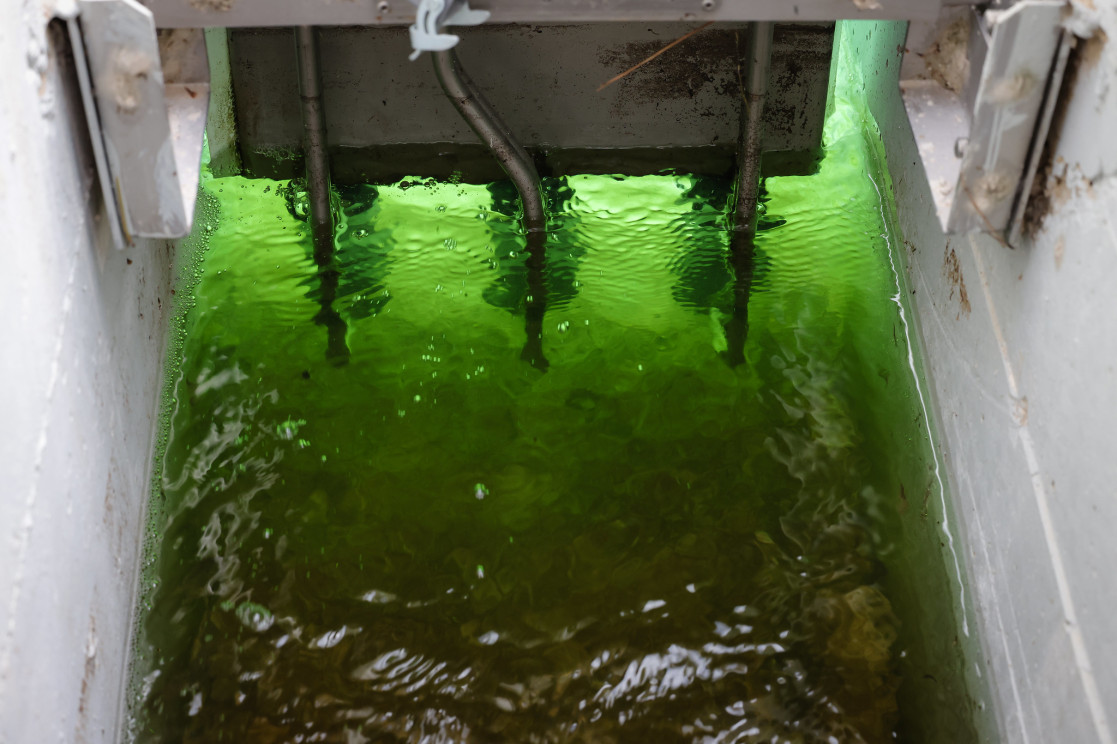
The treated water then enters sedimentation tanks, where sludge is thickened and mechanically pressed to reduce its water content, producing a soil-like dry mass. This sludge is transported to Pilur, Himara’s waste management site, where solar drying facilities further reduce moisture levels. “The final product can be safely used for fruit and flowers, though not for vegetables. The remaining water then undergoes a third treatment stage. Before being released into the sea, it is disinfected using a chemical-free ultraviolet system, ensuring safety for swimmers, marine life and the rare Posidonia plant found in Himara. The discharge takes place at a depth of 25 metres through an around 200 metre pipes installed under the project,” Mullalli highlights.
EU Delegation to Albania
The process is monitored both online through the SCADA system and through regular laboratory analyses. Dissolved oxygen levels are continuously monitored by sensors with predefined target values, and blowers are automatically controlled via SCADA to maintain these levels.
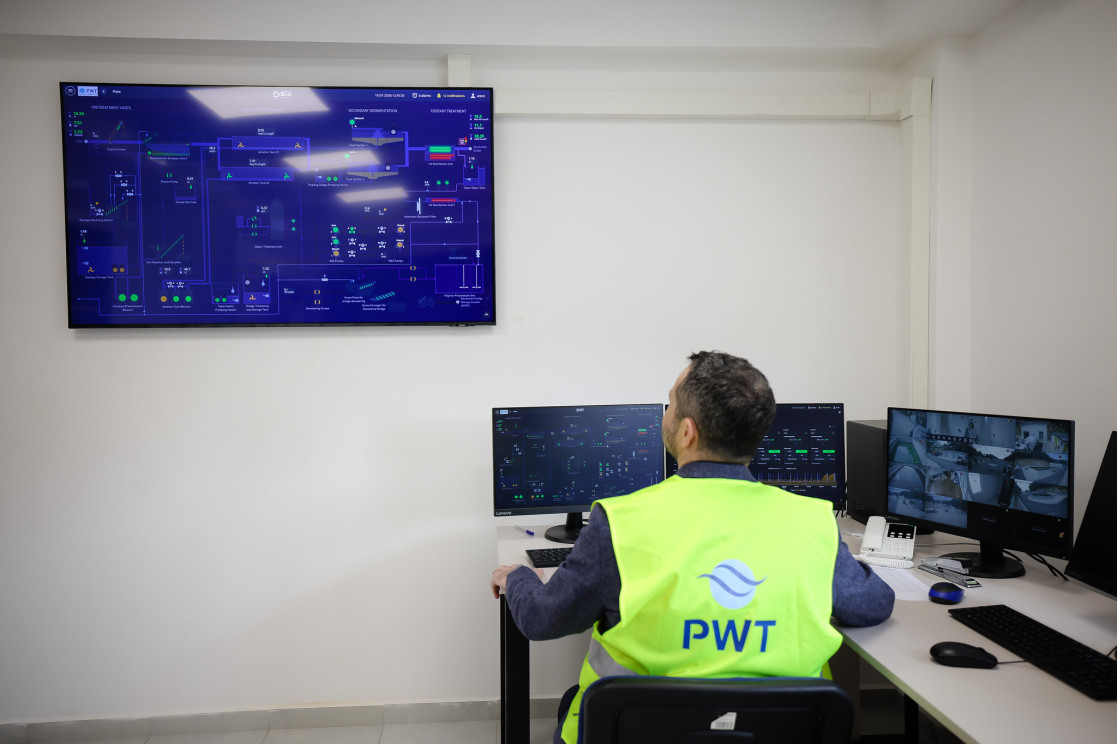
EU Delegation to Albania
Alongside the construction of the plant, the project rehabilitated and expanded Himara’s sewerage network. This included the installation of pressure and corrugated pipes, household connections with manholes, septic tanks and six pumping stations to channel wastewater to the plant. Electrical works, connections to power lines and the provision of two vacuum trucks, one for septic tank emptying and another for cleaning and flushing, were also completed.
The plant is designed to accommodate seasonal variation, treating a minimum of 1,800 cubic metres per day in winter and up to 5,000 cubic metres per day in summer. It operates with two parallel lines, one sufficient during the winter months and both used in summer to manage peak demand.
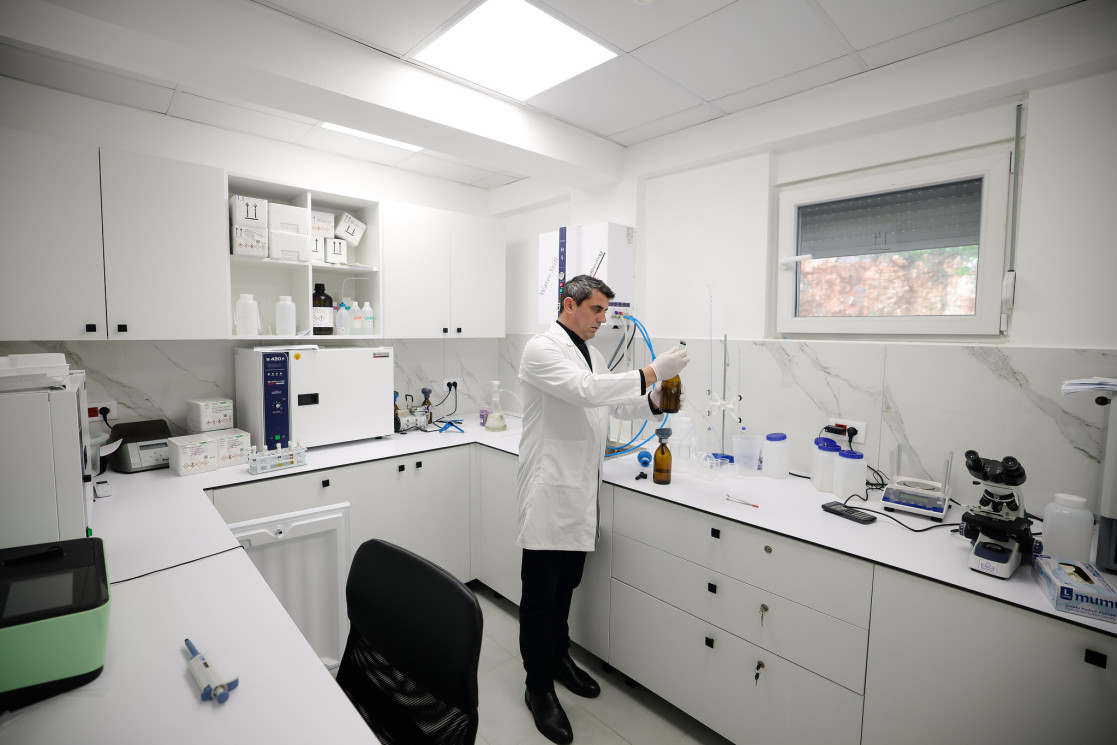
EU Delegation to Albania
For the Municipality of Himara, the plant has brought a major transformation, eliminating sea pollution and unpleasant odours while boosting tourism, according to administrator in the municipality of Himara, Thimjo Gjinuci. “The plant has had a very positive impact on tourism, as Himara attracts visitors from many countries. Two nearby campsites now benefit from a clean environment, free from pollution and odours. Building on this success, the municipality plans to connect Livadh’s sewage system to the facility and is considering additional small plants for Qeparo and possibly Dhërmi,” he says.