
International Parliamentary Roundtable on Human Wildlife Co-existence in Botswana and Beyond
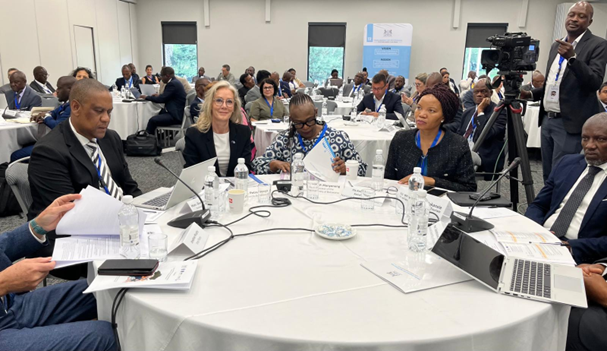
The roundtable focused on the role of parliaments in advancing human-wildlife coexistence (HWC) by facilitating the exchange of knowledge and experiences. It convened Members of Parliament from the EU, SADC countries and Asia, together with civil society representatives, community leaders, and conservation experts, to discuss challenges, share lessons learned, and highlight effective parliamentary approaches that can promote win-win solutions for HWC.
In Botswana, across Africa, and globally, human-wildlife conflict is an increasingly urgent issue for legislators. Wildlife and local communities alike face mounting pressures from habitat loss, climate change, human expansion, overlapping land use, risks to human safety, and tourism. While countries around the world benefit from rich biodiversity and ongoing conservation efforts, legislators are frequently tasked with finding strategies that allow communities to coexist with – and derive sustainable benefits from – wildlife.
The sessions focused on the role and capacity of parliaments in addressing human-wildlife conflict through mutual learning and evidence-based policymaking. Discussions highlighted strategies for engaging diverse stakeholders in developing legislative and policy frameworks that foster constructive and sustainable solutions. A key emphasis was on strengthening Community-Based Natural Resource Management (CBNRM) approaches, including supportive legislation and institutional mechanisms that empower communities to actively manage natural resources, benefit economically from conservation, and incentivise participation in coexistence initiatives.
In her opening remarks, Ambassador Petra Pereyra, Head of the European Union Delegation to Botswana and SADC, underlined that: “The European Union is committed to supporting practical, sustainable solutions to Human-Wildlife Coexistence through funding, dialogue and international partnerships. We support projects that develop best practices, strengthen legal and institutional frameworks, and promote coexistence between people and wildlife.”The Ambassador also highlighted several EU-funded initiatives focused on addressing human-wildlife conflict challenges in the region, including NaturAfrica, the Sustainable Wildlife Management Programme, the Job Creation and Investment Climate Programme, and an upcoming EUR 8 million initiative aiming to support the eco-tourism sector and its job-creation potential by strengthening small and medium-sized enterprises, with a particular focus on empowering women and youth.