Practical information
Are you an EU citizen in Colombia? Learn more about your right to consular protection and how you can benefit from it in this country.
-
Image

What is consular protection?
Consular protection is the help an EU Member State can provide to its citizens in case they need assistance abroad. Typically, consular protection can include cases such as:
- A need for emergency travel documents;
- A serious accident or serious illness;
- Relief and repatriation in case of an emergency;
- Being a victim of crime;
- Arrest or detention;
- Death.
In Colombia, Austria, Belgium, Czechia, Denmark, Ireland, Italy, Finland, France, Germany, Hungary, Netherlands, Romania, Poland, Portugal, Spain, and Sweden have a resident Embassy, while Bulgaria, Croatia, Cyprus, Estonia, Greece, Latvia, Lithuania, Luxembourg, Malta, Slovakia, and Slovenia do not.
6 non-resident Member States are represented by honorary consulates. Likewise, a network of 68 honorary consulates of resident Member States and consular agents[1]cover the entire country, especially the largest cities outside Bogotá.
You are an EU citizen in need of consular protection in Colombia?
- You can contact your resident Embassy/Consulate/Honorary Consul able to provide consular protection.
- If your EU Member State has no resident Embassy/Consulate/Honorary Consul able to provide consular protection] in Colombia, you can turn to another EU Member State for consular protection, noting there are specific arrangements for your consular protection.
- Following the travel advice issued by your country’s Foreign Ministry.
Indeed, any EU citizen abroad whose own Member State has no local representation is entitled to receive consular protection from the diplomatic or consular authorities of any other EU Member State. In that case, EU citizens are entitled to benefit from consular protection under the same conditions as the nationals of that other EU Member State.
The Embassy of the Netherlands, for example, issues emergency travel documents for citizens who are not represented in the country. In the case of Finland, Honorary Consuls cannot issue passports, nor emergency passports, but can offer assistance to other European citizens.
You can find the contact details of the Embassies/Consulates/Honorary Consuls of the EU Member States that can provide consular protection, as well as existing agreements between EU Member States for consular protection in Colombia in the attached table.
There are two bilateral agreements between EU Member States to provide consular protection in Colombia:
- Nationals of Luxembourg are represented by Belgium.
- Nationals of Slovakia are represented by the Czech Republic.
[1] Honorary Consuls and consular agents have different functions and competencies. Honorary Consuls are volunteers who can provide a more accessible and responsive service to nationals who are in their area of consular competence because they are abroad, especially in places that are difficult to reach. They provide information and assistance to people experiencing difficulties abroad. Honorary Consular Agents have a slightly reduced role to that of Honorary Consuls. They are the first point of contact in case of emergency.
-
Image
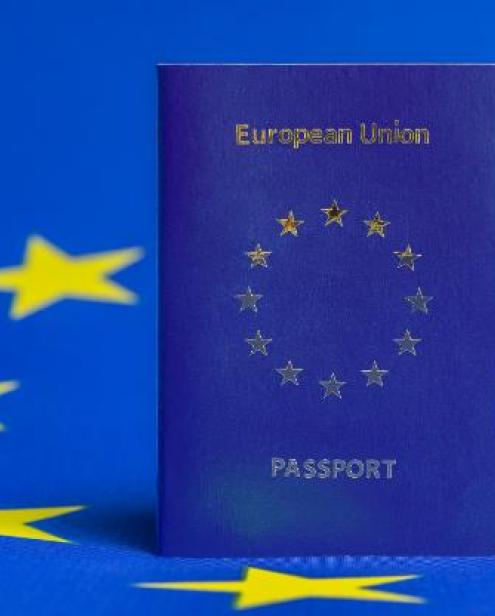
EU Emergency Travel Document
EU citizens whose passport or travel document has been lost, stolen or destroyed in a country outside the EU where their own EU Member State does not have an embassy or consulate are entitled to receive an EU Emergency Travel Document from any other EU Member State located in that country.
The EU Emergency Travel Document is issued for a single journey to the holder’s EU Member State of nationality or residence, or exceptionally, to another destination (such as a neighbouring country with an embassy or consulate of the holder).
The EU Emergency Travel Document is valid for a bit longer than the period required for completion of the journey for which it is issued. Normally, the validity will not exceed 15 calendar days. Persons receiving an EU Emergency Travel Document are strongly encouraged to complete the journey as quickly as possible, to follow any advice given by the consulate or embassy regarding the best route, and to immediately apply for a normal travel document. The EU Emergency Travel Document must be returned after arrival at the final destination.
EU citizens in need of an EU Emergency Travel Document must apply at the embassy or consulate of an EU Member State. The EU Emergency Travel Document will be issued after a verification of the applicant’s nationality and identity by the unrepresented EU citizen’s Member State of nationality. In normal cases, the issuance should not take longer than seven working days.
Member States may also choose to issue the EU Emergency Travel Document to other persons, such as their own nationals or EU citizens’ family members who already live in the EU. If an EU Emergency Travel Document is issued to a person who is not an EU citizen, a visa may be necessary.
Further reading
Consular protection - European Commission
Directive on an EU Emergency Travel Document
More Information
Please note that the EU Delegation in Colombia cannot provide direct consular assistance.
As an EU citizen, you can take simple steps to make consular protection more effective, for example:
- When abroad, registering with your Embassy or Consulate and/or through dedicated platforms, if applicable.
- Other tips include keeping an electronic copy of your travel documents, subscribing to a travel insurance or saving crisis contact details.
Remember that each traveler goes abroad at his or her own risk and the ability of Embassies to help in case of problems is always limited.
For more information on consular protection, see the dedicated pages on the websites of the EEAS, the European Commission and the Council of the EU, or find the consular protection contact details here.