
The European Union fights against child malnutrition in Ecuador
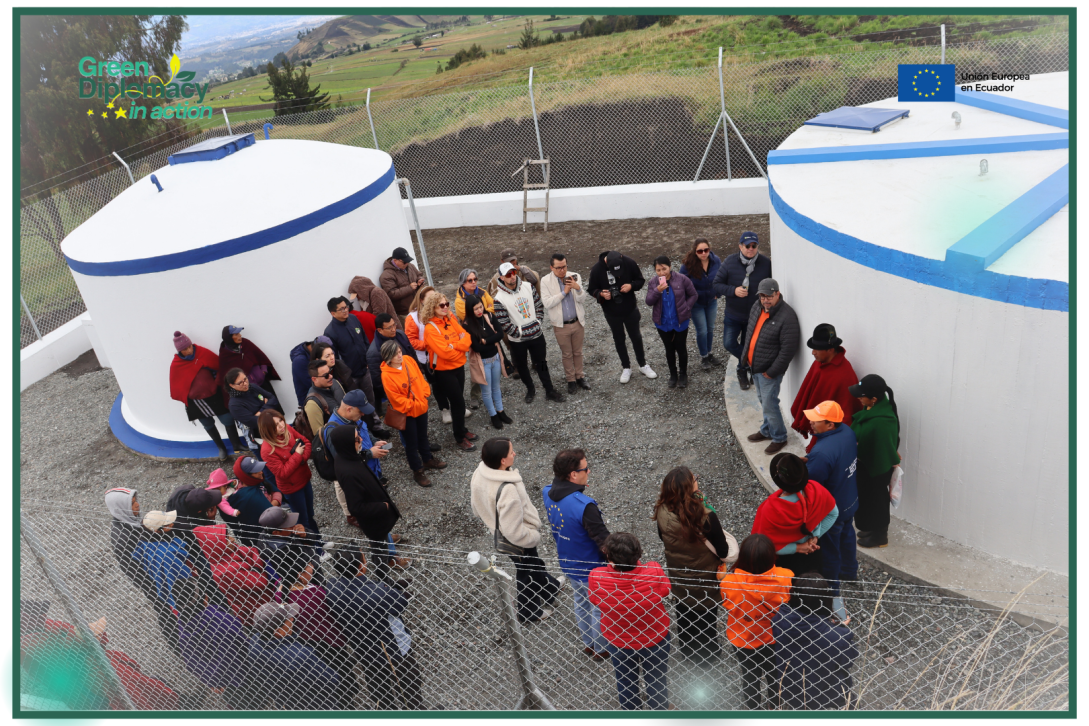
A generation is growing up on an empty stomach and with the future compromised. In several provinces of Ecuador, entire communities coexist with Chronic Child Malnutrition (CCM) as a normalized reality: children who lack nutritious food, who drink contaminated water because it is the only one that arrives, and whose bodies carry from the first years the irreversible consequences of this lack.
In rural areas, many families make a painful decision to sell what they grow before consuming it, so they can pay for notebooks, uniforms or other basic things. Eating takes a back seat to surviving.
The Aid in Action Foundation is leading the implementation of the project ‘Lands Free of Malnutrition’,implemented in the rural parishes of San Andrés in the Guano canton (Chimborazo province) and in Manglaralto (St.Helena). The initiative is funded by the European Union in Ecuador, through its Global Gateway strategy, and has the collaboration of public, private and academic entities.
This mission was carried out in the framework of Green Diplomacy Week, a global initiative of the European Union that promotes climate action and sustainable development. The 2025 edition focuses on water resilience, energy transition and global climate action, aligned with the principles of the Global Gateway, the European strategy for international cooperation.
Among the allies who put their grain of area into this project are: the Public Water Company, the Ministry of Public Health (MSP), the Decentralized Autonomous Governments (GAD) of Santa Elena and Guano, the Polytechnic Higher School of Chimborazo (Espoch), the Esquel Foundation, Welt Hunger Hilfe and Sumar Juntos de Banco Pichincha.
The overall objective is to reduce CCM in these areas, benefiting more than 52,000 people. To this end, six strategic axes were defined: safe water, health and nutrition, food sovereignty, political advocacy, educommunication and knowledge management.
The challenge is national
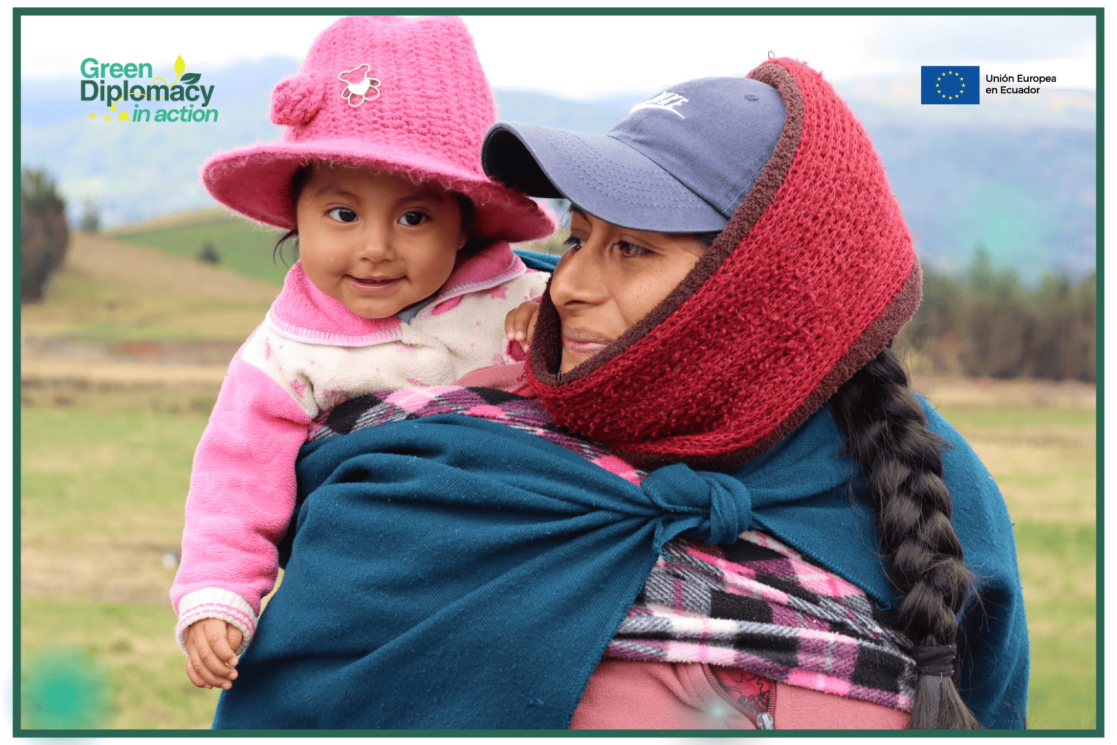
Ayuda en Acción (2025)
Chronic Childhood Malnutrition (CCM) remains one of the main social and public health challenges in Ecuador. This problem, which particularly affects children under the age of two, is of concern to various national and international organizations that seek to eradicate it from the most vulnerable communities in the country.
According to the National Survey on Child Malnutrition (ENDI), prepared by the National Institute of Statistics and Census (INEC), the national average rate of ICD reaches 19.3%, which means that 2 out of 10 girls and boys under two years of age are stunted.
By region, the Sierra is the most affected with 21.4%, followed by the Amazon with 20.2%, while the Coast registers 12%. If the data are analyzed by ethnic group, the panorama is more critical among the indigenous population, where the CCM reaches 35.9%.
CCM is not only due to lack of food. It is a multicausal phenomenon that responds to structural deficiencies: lack of access to safe drinking water, insufficient health services for pregnant and lactating mothers, and incomplete vaccination schemes. The consequences are irreversible: children with ICD have lower cognitive and physical development, which impacts their school performance and future productivity.
Aware of the seriousness of the problem, ten organizations decided to join efforts to combat malnutrition at its root and generate sustainable models that can become public policy.
Visible results after 18 months of work
After a year and a half of implementation, after a visit to the Guano Canton, it was possible to make it visible that the project has made concrete progress on several fronts:
Safe water:
- Conservation of 7.30 hectares of wasteland in San Andrés and 2.31 hectares in Manglaralto through reforestation.
- Production of 9,000 plants in nurseries in Guano and 4,000 in Sinchal.
- Progress of 33.25% in the construction of 12 drinking water systems.
- Import of 40 WaterStep M100 chlorine generators.
- Installation of weather stations and training of 142 community leaders (36% women) in the ‘Water School’.
Food Sovereignty:
- Creation of the School of Family Farming, with practical modules and 482 technical visits.
- Implementation of two model farms with biofactories, nurseries and production of cuyes and birds.
- Delivery of 1,270 cuyes and 4,400 chickens to 227 families.
- Reproduction of sweet potato seeds Toquecita with the National Institute of Agricultural Research (Iniap).
- 118 hectares with technical irrigation for 84 families and holding the first agroecological fair in January 2025.
Health and nutrition:
- Coordination with the MSP for vaccination campaigns and prenatal checks.
- Research with Espoch on nutritional risk factors.
- Development of two prototypes of food supplements and a community recipe book with traditional preparations.
Educommunication:
- Training modules on exclusive parenting, hygiene and breastfeeding (also in Kichwa).
- Training 539 people, 70% women, on co-responsibility in care.
- Sex and reproductive education fairs for adolescents.
- Four communication campaigns planned until 2026 and a gender strategy with 80% progress.
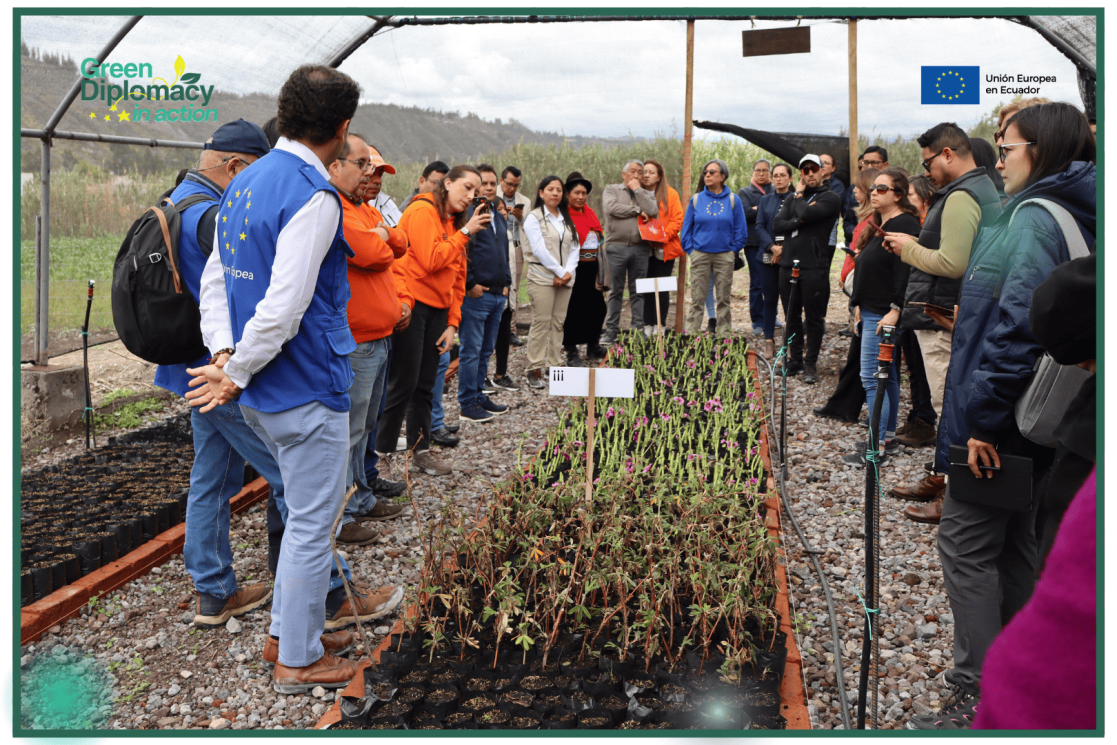
Ayuda en Acción (2025)
Communities that are the protagonists of change
Although institutional leadership is key, the real driver of the project is communities. During the tour, we were able to witness that, in each territory, families have contributed time, labor and even economic resources to ensure that the works are carried out.
In the parish of San Andrés (Guano), for example, the community of Sachapamba and the organizations built a new water purification plant, replacing the previous one that worked for three decades and was collapsed. To do this, the inhabitants invested $10,000 of their water fund for the studies and organized community mingas for its construction.
Before, they had to walk 17 kilometers to the melting of the Carihuairazo volcano to get water; Today they have a system that allows them to access clean and safe water without moving.
Women have a central role in the whole process. They lead water committees, agroecological farms and cuy breeding programs. This, even though, in many cases, they are not supported by their husbands. This was the case for Ms Laura, who told us that her husband did not agree with the “experiment” of the new way of raising cuyes. Now, he is grateful for his wife's work.
Thanks to the trainings, and donations of 156 cuyeras, they have gone from raising 20 cuyes to more than 100, with better sanitary and productive conditions. This food, rich in protein, has been incorporated into the daily diet of families, reducing their dependence on processed foods.
In addition, the installation of portable irrigation systems allows them to grow more varieties of vegetables and tubers, improving their feed and generating surpluses for sale. Local production is strengthened and with it the family economy and food security.
The families that have received this support are grateful to all the institutions that came together to be able to give them a better life. In addition, they are very proud of the work and the results of their own work.
A hope that expands
The ‘Nutrition-Free Territories’ model seeks to be replicable in other provinces. Its initial results show that the articulation between state, international cooperation, private sector and communities can transform realities that for decades were ignored.
During the tour, the Vice-Presidency of the Republic was present. This visit was attended by the Undersecretary of Cooperation and Social Linkage, María Lorena Ponce, who committed herself with Ayuda en Acción and the European Union to seek that these projects be transformed into public policy and reach more provinces and cantons to eliminate the CCM.
What is Global Gateway?
The Head of Cooperation of the European Union, José María Medina, explained that the Global Gateway is the new European cooperation strategy focused on mobilizing resources in alliance with the private sector to achieve public policy objectives, especially in the field of infrastructure such as water and sanitation, considered the most expensive.
Medina stressed that the European Union's cooperation "is based on values and human rights, which implies a people-centered approach. “This is not just about building a water plant or pipelines; the real objective is to reduce malnutrition, and water is a key tool to achieve this.”
He added that Global Gateway projects also integrate social, cultural and educational aspects, such as food sovereignty, public health and educommunication. “Without these “soft” components, the objectives are not achieved. Infrastructure is essential, but it must be accompanied by actions that transform the lives of communities", he concluded
Article prepared by Estefanía Chaparro, winner of the ‘Voices in Action’ journalism competition, organised by Ayuda en Acción and Revista Vistazo, in collaboration with the European Union in Ecuador (2025).