
EU, ITC Deepen Long-Term Impact in Eswatini Livestock Sector
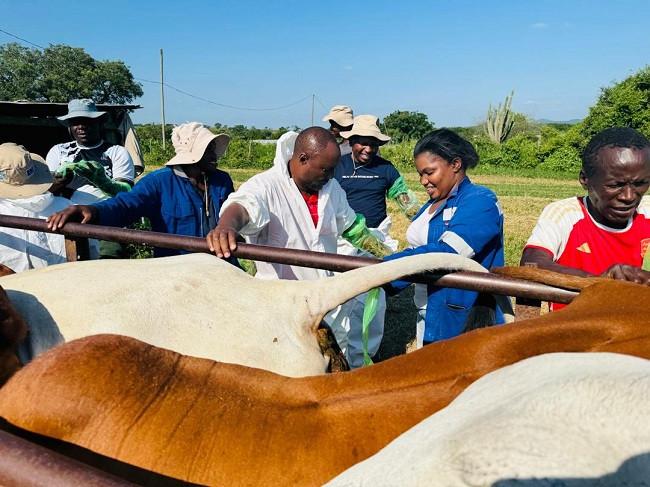
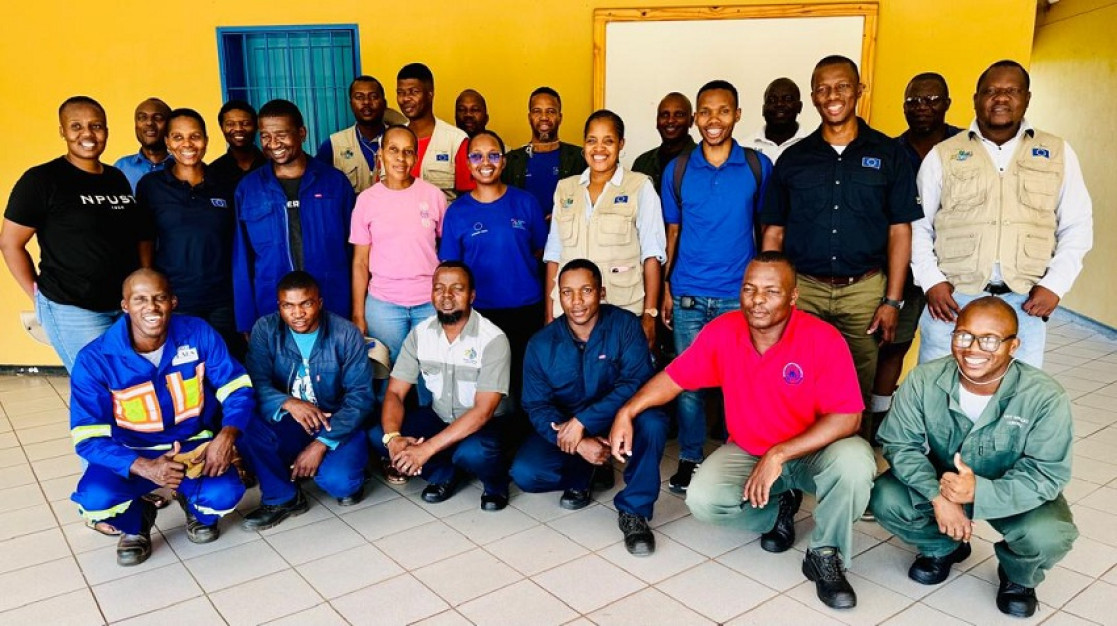
As part of the Eswatini Livestock Value Chain Development Programme (ELVCDP), supported by the European Union and implemented by ITC in partnership with the Ministry of Agriculture, 25 frontline livestock extension officers and veterinary professionals recently completed an Artificial Insemination (AI) refresher training at the Mpisi Veterinary and Farmers Training Centre.
ITC
According to ITC National Livestock Expert, Sibonangabo Sikhondze, the training built on earlier capacity-building interventions and forms part of a broader, phased approach to embedding modern breeding services within national livestock systems.
“Rather than a once-off intervention, the refresher training reinforces the programme’s longer-term objective of modernising the beef and goat value chains by improving genetic quality, enabling better breeding management, and strengthening public-sector service delivery to farmers across the country,” he said.
For extension officers working directly with farming communities, the value of the programme lies in its practical relevance and its potential to bring lasting change to livestock production systems, particularly on Swazi Nation Land.
“This training was a huge boost for me,” said Menzi Jele, a Livestock Extension Officer. “It reminded us of key issues we deal with daily, such as disease management, which we can sometimes overlook. Being trained in artificial insemination gives us practical tools to support farmers better.”
Jele noted that the programme is already addressing long-standing challenges faced by livestock farmers.
“Some farmers are using opportunities such as the government bull loan scheme. Some still import bulls from South Africa or rely on any bull available in their communities, even when the genetic quality is poor. With AI, bulls are tested, including genetically, which will significantly improve the national herd. It also reduces the high costs and risks associated with keeping bulls, such as theft, disease, and parasite management.”
He added that improved breeding management is equally important. “Uncontrolled breeding often results in cows calving when feed is scarce, which affects both the cow and the calf. AI allows breeding to be planned properly, improving productivity and animal welfare.”
Another participant, Cynthia Dlamini, highlighted the scale and efficiency that artificial insemination brings to livestock production.
“This refresher was especially valuable because it focused more on practical work than theory,” she said. “It will bring positivity among farmers, particularly on Swazi Nation Land, where small-sized bulls are common. One bull cannot inseminate many cows in a day, but with AI, the scale is completely different.”
The refresher training forms part of a broader EU-supported strategy to institutionalise artificial insemination services through the establishment of a national Artificial Insemination Centre, continued mentorship for extension officers, and a gradual rollout to government farms and pilot farming communities.
Despite challenges such as movement restrictions caused by Foot and Mouth Disease at the training site, the programme continues to strengthen national capacity by equipping officers with practical skills in oestrus detection, synchronisation, semen handling, pregnancy diagnosis, and the safe use of AI equipment.
“This programme demonstrates how EU support translates into lasting impact,” said EU Programme Officer, Bhekani Magongo. “By investing in people and systems over time, we are helping Eswatini build a more productive, resilient, and competitive livestock sector that delivers tangible benefits for farmers and the wider economy.”
Through sustained capacity building and system-level support, the EU–ITC Livestock Programme is expected to: reduce breeding and production costs for farmers, improve genetic quality and resilience of cattle, enable planned breeding aligned with feed availability, increase productivity and farmer incomes, and strengthen food security and inclusive rural growth.
As the programme advances, trained extension officers will continue rolling out AI services, supported by ongoing mentorship, monitoring, and farmer awareness initiatives, ensuring that investments translate into sustained, measurable impact across Eswatini’s livestock value chain.
About the European Union Delegation to Eswatini
The EU Delegation to Eswatini is responsible for managing diplomatic relations between the EU and the Kingdom of Eswatini. These relations cover political relations, development cooperation, economic and trade relations as well as other areas of mutual interest between the two partners. The central objective of this partnership is to reduce and ultimately eradicate poverty through sustainable development, the progressive integration of Eswatini into the world economy, and the promotion of the rule of law, democracy, and human rights.
About ITC
The International Trade Centre is the joint agency of the World Trade Organization and the United Nations. ITC assists small and medium-sized enterprises in developing and transitioning economies to become more competitive in global markets, thereby contributing to sustainable and inclusive economic development within the frameworks of the Aid-for-Trade agenda and the United Nations’ Sustainable Development Goals (SDGs).
About the Programme
The ITC-Alliances for Action programme 'Eswatini: Promoting growth through competitive alliances', funded by the EU, supports job creation for small farmers, entrepreneurs, and artisans. Eswatini offers the global market unique organic produce, artisan roasted coffee, handmade cultural creations, and gourmet condiment lines.
ITC works closely with smallholder farmers, agro-processors, and artisans in Eswatini to support them in ways that are sustainable and benefit both people and the planet. In this way, ITC fosters and preserves cultural heritage, and draws on artisan skills and concepts of green growth.
Alliances for Action is an ITC initiative that seeks to transform food systems through producer partnerships that cultivate ethical, climate-smart, sustainable agricultural value chains.