
From Participation to Power: Transforming Women’s Roles in Eswatini’s Livestock Sector

In Eswatini, a small land-locked country navigating a changing economic and agricultural landscape, women perform a substantial share of livestock management activities, yet their work in value production often remains invisible and undervalued. The Eswatini Livestock Value Chain Development Programme (ELVCDP), funded by the European Union and implemented by the International Trade Center (ITC) in collaboration with the Government of Eswatini, supports and enhances women farmers’ participation and visibility of their contributions in the livestock value-chain sector. It examines socio-cultural norms to foster equal household partnerships, and ensures more accessible capacity-building trainings.
This not only transforms the outlook on women farmers’ roles in their communities, but drives economic productivity and sustainability – tapping into the country’s unrealised trade and growth potential.
The Programme leverages and creates synergies between ITC’s Alliances for Action (A4A) and SheTrades methodologies, combining their complementary strengths through an inclusive and participatory approach structured around the five A4A pillars:
Understand, Convene, Transform, Invest, and Impact.

Comms ITC
Gender roles in livestock management
The socio-cultural structures in Eswatini traditionally cater to men as heads of households. Men have ownership of land and assets, direct decision-making, and are the primary beneficiaries of capacity-building activities and technical support. As such, women and youth have limited exposure to gain technical knowledge, business and financial know-how, access to services and information on best-practices required to adopt resilient agricultural practices amidst climate change threats, as well as managing and operating livestock as a business.
Enhancing capacities, confidence, and communities
|
Systemic barriers not only affect individual capabilities and technical know-how, they influence systems of participation through assumptions and structures. Meaningful inclusion requires changes in individual skills, environments, and broader systems to target interconnected constraints.
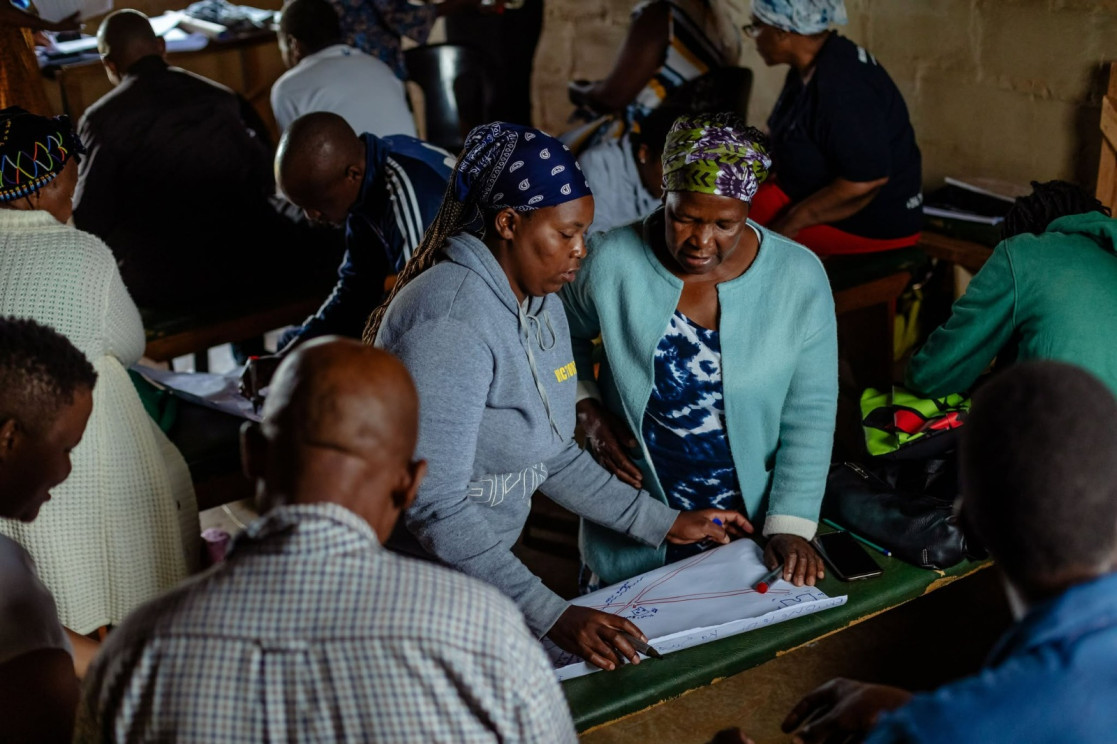
This programme addressed existing gender norms at the household level by engaging men and women in discussions around roles and responsibilities, resulting in more equitable household decision-making and greater recognition and integration of women’s roles as income earners. entrepreneurs, and contributors to household livelihoods. After these trainings, men began to share crucial information and invite women along to capacity-building activities.
“When women have greater access to knowledge, opportunities and decision-making, the benefits extend beyond individual farmers to their families, communities and the wider economy. The European Union is proud to support Eswatini in building a more inclusive, productive and resilient livestock sector.” – Bhekani Magongo, European Union Programme Officer
Comms ITC
ITC developed gender-responsive agricultural service delivery models in response to accessibility barriers. The programme conducted its trainings in easy and safe to access venues, training schedules were altered to accommodate participants’ needs and adapt to the realities of women’s lives – women were at time accomanied by their children. To accommodate low literacy, multi-media communication channels and delivery methods were employed, including videos, booklets, and illustrations.
The training content focuses on business-oriented and technical know-how on rearing animals in a healthy, productive, and profitable manner. This includes vaccination programs, supplementary feeding, calving, and breeding techniques, fostering a greater sense of trust from women and the communities. By promoting environmentally conscious and resilience building practices of livestock management with natural resources, women received the tools to make informed decisions on the future of their farms.
From local change to systemic impact
Impact goes beyond the targeted communities. The programme’s A4A approach strengthens relationships between programme participants, government institutions, producer organisations, traditional authorities, and extension officers for joint interventions that respond to gender-specific barriers. In addition, the development of an interactive Power BI dashboard, which translates data into actionable insights for external partners, can support evidence based decision-making and help institutionalise gender inclusive practises as well as sustainable livestock management.
When support is given to underrepresented groups, the entire household, community, and country thrives.
Impact in numbers:
-
-
Community Collaboration in Luhlekweni:
During a challenging time period of dry seasons and shortage of grassfor livestock grazing, a group of farmers, including women and youth, formed a cluster. Using the knowledge gained from the supplementary feeding (nutrition) training sessions, the farmers decided to meet and draft bylaws to guide the working parameters of their group. This extended beyond their initial goal of savings, venturing into supplementary feeding to ensure that their livestock survives the dry season.
– Reported by farmer Hlobsile Magagula
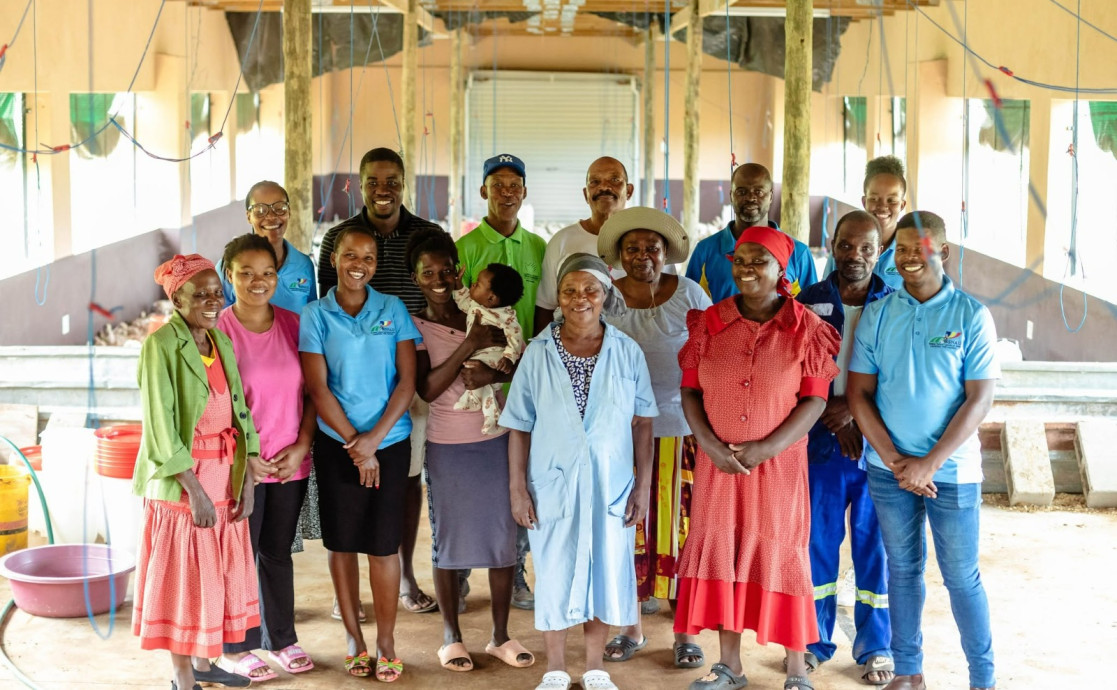
133 livestock farmers (58% women) participated in trainings with the Eswatini National Agricultural Union.
-
Over 2500 livestock farmers, MSMEs, and extension officers were trained in sustainable rangeland management practices.
-
20 leather artisans (50%
women, 20% youth, 10% persons with disabilities) were supported with technical skills development.
Comms ITC