Youth are crucial in our societies, says EU Ambassador to Eswatini
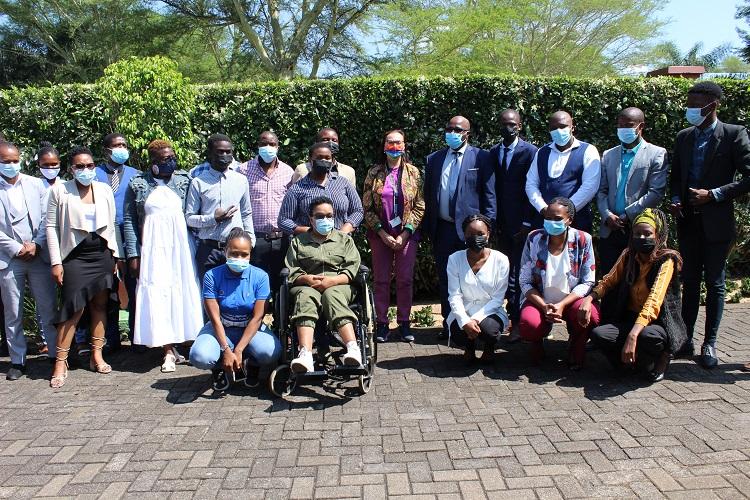
EU Ambassador to Eswatini, Dessislava Choumelova said this on 29 March 2022 when she spoke to young people during a Youth Consortium meeting organized by the Coordinating Assembly of Non-Governmental Organizations (CANGO) under a project funded by the EU.
“Having young people close to our hearts, we have chosen to prioritize youth in the EU’s cooperation with Eswatini in our next bilateral programming period until 2027,” Ambassador Choumelova said.
“During this period, we are planning a series of interventions supporting access to formal and non-formal education, improving the quality of the TVET, working closely with the private sector and the CSOs such as CANGO,” she added.
Why focus on the youth? The Ambassador said this was because the political and operational context in Eswatini changed dramatically in 2021 with serious political and security turbulences following unprecedented pro-democracy protests in June-July.
She said further protests in October 2021 resulted in the burning of schools, public buildings and businesses, something which led to the closure of schools.
But also of great concern, according to the Ambassador, is the high unemployment among young people, inadequate healthcare facilities and increasing poverty and inequalities, also among the youth and rural populations.
“An emerging humanitarian crisis with increasing food security is another risk expected to deteriorate further with the Russian war of aggression in Ukraine,” said the Ambassador.
For Eswatini to overcome these challenges, the Ambassador said, the only way forward was a comprehensive and inclusive dialogue among all stakeholders, including political parties, women’s and youth movements, trade unions, teachers, students and other civil society organizations.
“Dialogue and engagement, not violence, is the answer and the way forward,” the Ambassador emphasized.
The Ambassador’s full speech…
It is twice the pleasure to be here today:
First, this Youth Consortium Coordination event focuses on the needs, dreams and expectations of youth but also on the crucial role youth plays today in Eswatini, and all around the world;
Second, for us in the EU, 2022 is the European Year of Youth. We in Europe dedicate this year to the vision, engagement and participation of all young people in order to build a better future that is greener, sustainable, more inclusive and digital. With this in mind, we in Europe are listening to our young people via platforms, fora, public engagements with the objective to co-create with our youth more and better opportunities for the future. We wish to see the same in our partner countries.
So I feel truly privileged to be here and partake in this event during the European Year of Youth. But there is another, more concrete and relevant reason why I am particularly delighted with being here:
Having young people close to our hearts, we have chosen to prioritise youth in the EU’s cooperation with Eswatini in our next bilateral programming period until 2027. And this is why:
The political and operational context in Eswatini changed dramatically in 2021 with serious political and security turbulences following unprecedented pro-democracy protests in June-July. Further protests in October 2021 resulted in burning of schools, public buildings and businesses and led to the new closures of schools. The existing political and socio-economic challenges have thus been aggravated by Covid-19 pandemic and the civil unrest. Of great concern are the high unemployment, especially among young people, inadequate healthcare facilities, increasing poverty and inequalities, again - particularly among the youth and rural populations. An emerging humanitarian crisis with increasing food insecurity is another risk expected to deteriorate further with the Russian war of aggression in Ukraine. The only way forward is a comprehensive and inclusive dialogue among all stakeholders in the country, including political parties, women’s and youth movements, trade unions, teachers and students and other civil society organisations. Dialogue and engagement, not violence, is the answer and the way forward.
I am happy to be able to share with you today that our cooperation in the next 6 years will focus on empowering the youth and the most disadvantaged to help with skills development for employment creation and entrepreneurship and further provide targeted social services to the poor and most vulnerable groups of the population in the grassroots communities. We are planning a series of interventions supporting access to formal and non-formal education, improving the quality of the TVET, working closely with the private sector and the CSOs, such as CANGO.
For over a decade, the European Union and CANGO have been working hand in hand to support and empower civil society in Eswatini. I am grateful to CANGO for your commitment and continuous efforts in addressing issues of youth empowerment. Since 2014, we have granted CANGO 1 300 000 EUR – on average one euro per Emaswati!
So our support has been tangible and we hope it has helped CANGO reach out and strengthen civil society. Over the years, and especially during the last two years, which has presented an enormous challenge for civil society organisations due to the COVID-19 pandemic, I am pleased to see that CANGO continued to advance with their work, including working with the youth most affected by the pandemic.
Our joint work is guided by our common values: peace, democracy, rule of law, justice and equality, tolerance and solidarity, and mutual respect among people. These values have enhanced our partnership throughout the years resulting in initiatives that have brought and continue to bring civil society actors and communities together at the table - to share experiences, discuss important issues, listen to each other, and find a way forward. I hope this experience will prove helpful in the forthcoming national dialogue.
Our past work on gender equality and women empowerment aimed at creating opportunities for girls and women to participate meaningfully in the socio-economic, civic and political activities in this country. The EU holds the firm belief that a sustainable economy and much needed social progress only can be achieved if all sectors of society, especially youth, women and vulnerable groups, all active actors in the development process of the country.
We therefore need to work hard towards removing the obstacles that inhibit such participation.
We continue to collaborate with CANGO in advocating for the protection and promotion of human rights and democratic values. This encompasses all rights: civil, political, social, economic and cultural rights. For the EU, human rights are a matter of social justice and they should be protected, defended and promoted without discrimination.
The Civil Society Platform for Inclusiveness Project, which we are currently implementing in partnership with CANGO aims at creating a platform for multi-stakeholders to constructively engage on the status of human rights implementation in the country. This is vitally important in a context where there is a strong desire for democratic reforms in the Eswatini society.
Today’s event is an important milestone in this regard.
There are 73 % of young people under the age of thirty-five in this country (Census, 2017)1. What an incredible resource for the country! To maximise this potential, policies need to empower young people and create enabling environment for them to thrive economically, socially and emotionally.
“Nothing About Us Without Us” - is a slogan that we hear often. What does it mean? Inclusion and equal participation. The Youth Consortium is an answer to that. Mobilisation of youth organisations will activate space for youth civil society to come together and become a considerable force for policy-makers to listen and respect.
Eswatini continues to struggle to fulfil the socio-economic obligations towards the youth. Youth, including young women and girls, and people with disabilities are among the groups whose rights are violated most often. They continue to be disproportionality affected by school dropouts, teen pregnancies, STDs and HIV infections and they have limited access to education and economic resources, especially in rural areas in Eswatini.
The European Union has been supporting the civil society in Eswatini since the independence of the country, over 50 years ago. We continue to provide support for organisations and institutions working on the issues of youth. We, however, understand that we cannot combat inequality and discrimination alone. There is a need for a complex social transformation to eliminate inequalities, discrimination and any negative attitude towards marginalised groups while creating an inclusive and enabling environment for participation.
In this, everyone has a role to play. We must collaborate and support civil society organisations and other like-minded partners who are advocating for young people's rights to access equal opportunity.
The European Union continues to pledge its unwavering support to the civil society of Eswatini, including youth representative organisations and institutions to help harness the talent and incredible potential that this small country holds – its young people.
Ladies and gentlemen, I thank you for your attention.