
EU and PEC Michel reaffirm support to regional security at first International Conference on the Accra Initiative
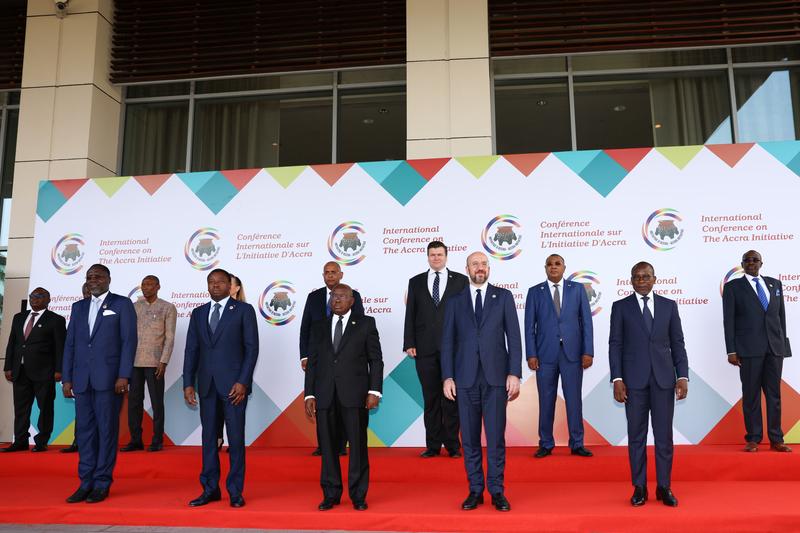
The conference served as a follow-up to the Sahel spill-over conference in The Hague earlier this year and shed light on the specific nature and goals of the Initiative. More importantly, it showed significant political mobilisation from the highest levels of Accra Initiative (AI) member states and commitment to address regional security threat through homegrown responses. President of the European Council, Charles Michel, attended as keynote speaker alongside Heads of States and high-level officials from the region.
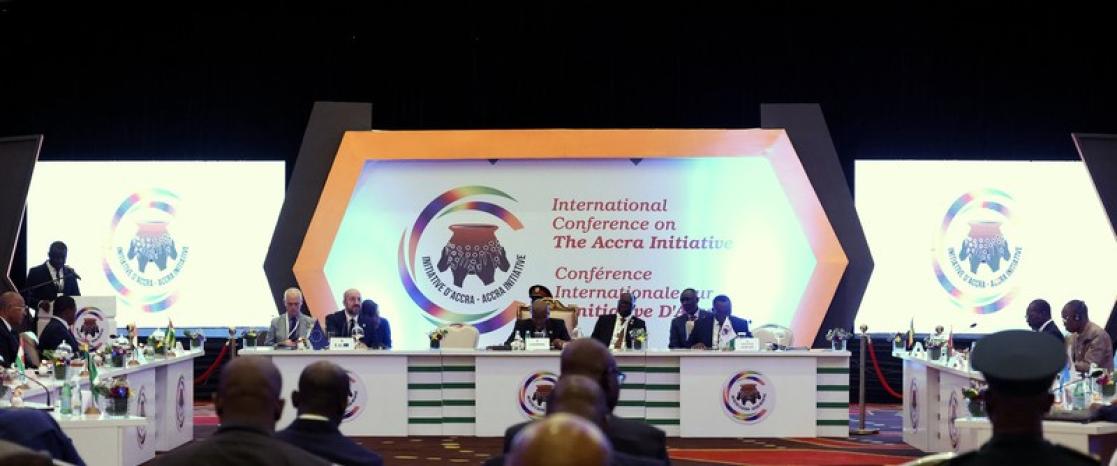
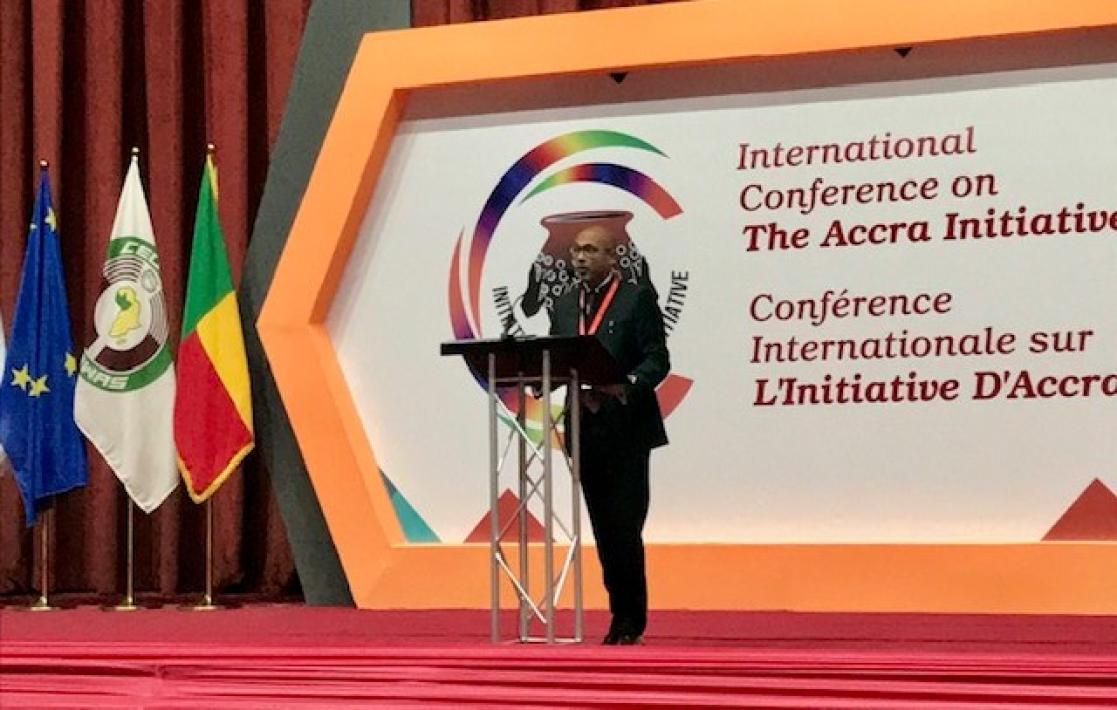
The high-level conference kicked off on 21 November with a Ministerial session, where Ministers of Security and Defence from AI member states and development partners showed up in numbers. In his special address, EU Ambassador to Ghana, Irchad Razaaly, described the conference as a key step to showcase “political mobilisation and substantive reaction” to the ongoing regional insecurity, to which there is no other response than “collaboration and cooperation” between countries.
A Heads of State Summit followed on 22 November, with Ghanaian President Akufo-Addo as Chair and President of the European Council (PEC), Charles Michel, as keynote speaker. Also in attendance were: Presidents of Togo and Benin, Prime Ministers of Cote d’Ivoire and Burkina Faso, Minister Delegate from Niger, President of the ECOWAS Commission, UNSR to the AU, Deputy UNSR for Sahel and West Africa, UK Minister for the Armed Forces, German Deputy Foreign Minister, French Deputy Special Envoy for the Sahel, EU FPI Director, and EUMS Ambassadors in Ghana.
In his welcome remarks, President Akufo-Addo reiterated the AI as a “homegrown solution to regional problems” and noted that the main objectives of the conference were to i) draw the attention of the international community to the West African security situation and ii) identify opportunities and challenges in security responses, which could inform support from external partners.
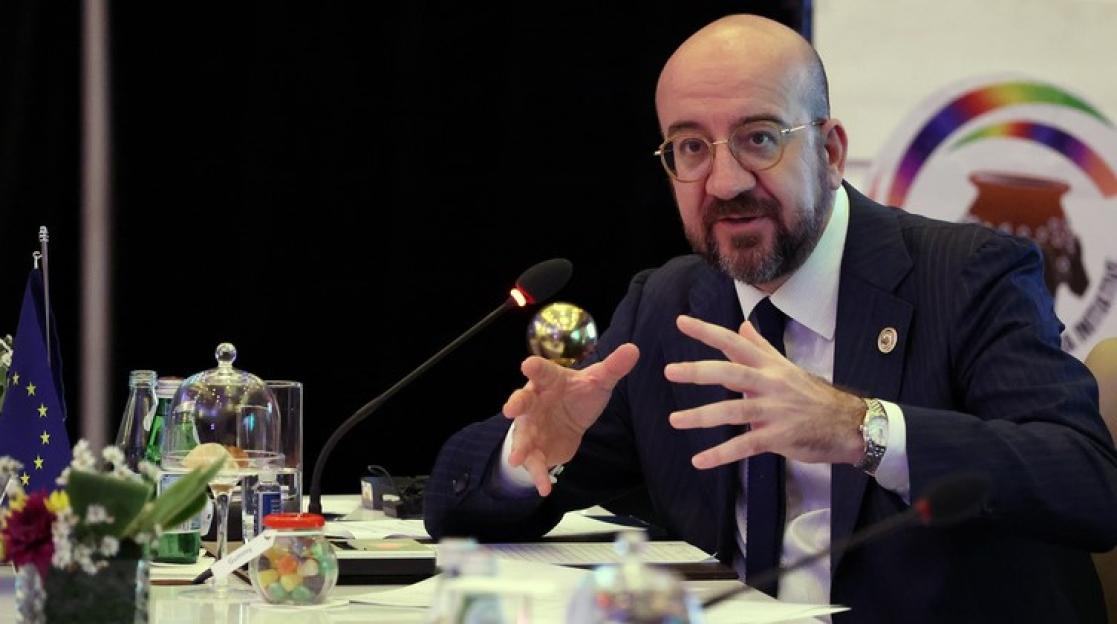
PEC Charles Michel emphasised that the conference marks a shift from tactical to political collaboration under the AI umbrella, adding that AI member states are indeed in the lead, or “cockpit”, of this initiative. He noted that the EU is the largest supporter of the African security architecture and remains a “reliable, loyal and visible partner” to West African states. PEC also highlighted the need to address risks beyond pure security, including youth radicalisation, climate-related issues, good governance and disinformation.
Preceding these events, a technical conference brought together civil society, think tanks and academia on 17-18 November, which concluded with agreement on seven key recommendations for AI member states.
At the outset of the long-awaited conference, it is now clear that the Accra Initiative remains a flexible and operational mechanism focused on military response and intelligence sharing.