
EU funded Project improves nutrition for communities in Laos
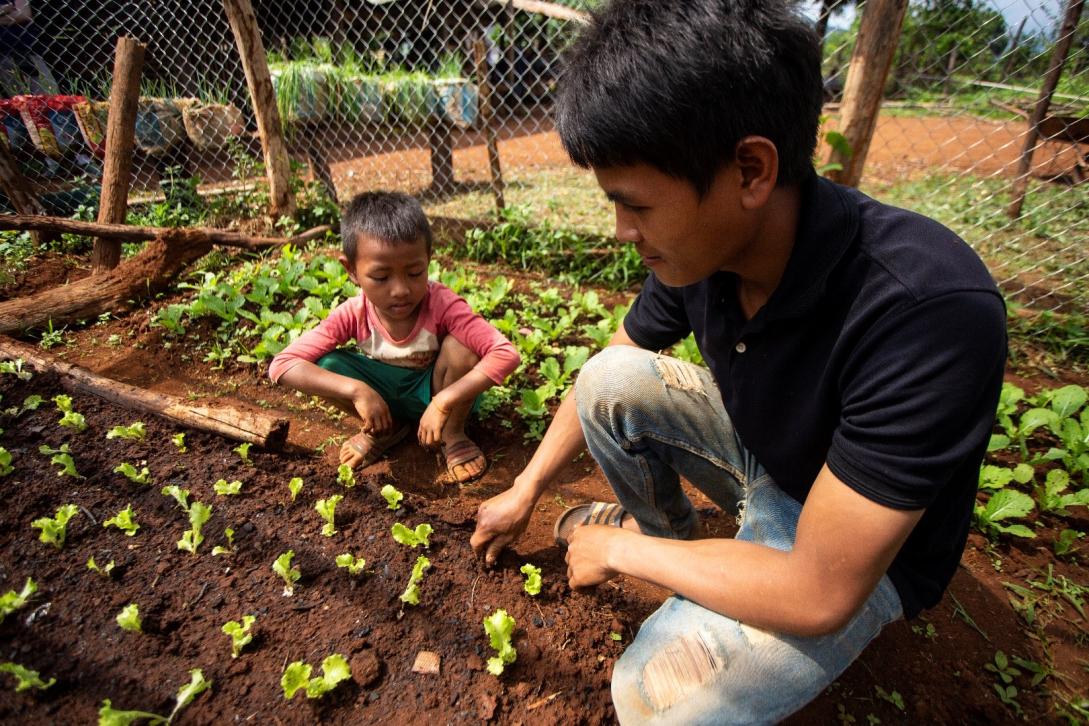
On Friday 16th of September, the Department of Hygiene and Health Promotion of the Ministry of Health, the European Union, the Australian Embassy, and World Vision co-chaired the National Closing Ceremony of the Accelerating Healthy Agriculture and Nutrition (AHAN) Project. The ceremony aimed at concluding five years of the project’s implementation, sharing out the key findings of the recent end-line evaluation with the stakeholders and policy-makers towards nutrition, including various ministries of the Government of Lao PDR, development partners, UN agencies, and other Non-Governmental organisations.
With activities related to agriculture and livelihoods, mother and child’s health, improved access to water, hygiene and sanitation, and gender equality, around 140,000 individuals from the twelve districts supported by AHAN have benefitted from an integrated, holistic approach to tackling the roots of malnutrition and the technical expertise from the consortium of four organisations led by World Vision, and the financial support of the European Union, with additional funds from the Australian Department of Foreign Affairs and Trade (DFAT) for Saravane province.
The key findings of the end-line assessment of the project indicate that:
- 70% of families are now food secured all year round, a major breakthrough compared to the 11% assessed during the baseline of the project (2018), and despite the COVID-19 pandemic;
- Stunting rates in children under five years old have decreased from 47% to 29% in three years, meaning that more than 2 in 3 children have the adequate height for their age;
- Underweight rates in children under five years old have also decreased from 34% to 26%, meaning that more than 3 in 4 children have adequate weight for their age;
All those achievements and their sustainability are also explained by the strong multi-sector coordination the project has been setting up with different ministries of the Government of Lao PDR, including the Ministries of Health, Agriculture and Forestry, and Lao Women’s Union, from the central to the provincial, and district levels, implementing all activities hand-in-hand with Government stakeholders and village authorities to ensure this impact is maintained.
During the learning event, various stakeholders shared their views on the impact of the AHAN Project. H.E. Ina Marciulionyte, Ambassador to the European Union in Lao PDR, shared through a video message: “I would call it a successful project, and we could be proud of this project. The success was partly because of different experts that were involved, but what is very important is that we managed to gain the trust of local communities and local authorities”. Dr. Phonepaseuth Ounaphom, Director General of the Department of Hygiene and Health Promotion, Ministry of Health, also said: “AHAN positively impacts our department by decreasing malnutrition rate at the village, creating a management system at the grassroots level, and supports better coordination between local village health volunteers and health centres. Even after the project ends, health staff and village volunteers will carry on the work because the project has involved and engaged them from the beginning: this contributes to sustainability.”
Now coming to an end, the five-year project is currently phasing out from the communities, leaving a durable legacy to them through new knowledge, equipment, and more importantly ownership of the activities that rhythmed their lives and changed their behaviours. Indeed, AHAN did more than pursue sustainable development goals: it created a new dynamic in the communities and Government ministries, ensuring all people have the common grounds to sustain and create a better life for their children and future generations.
- End-