
Lebanon launches EUR 32 million programme for conflict-affected areas with support from the European Union, Denmark and France
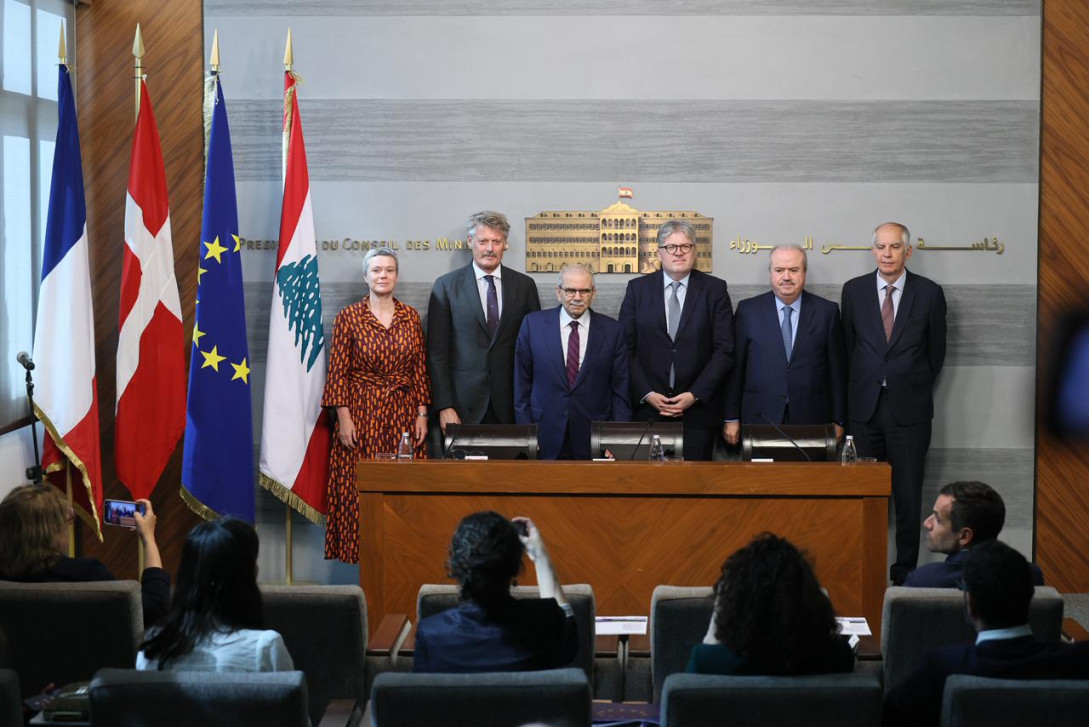
The Government of Lebanon, the European Union, Denmark and France, through Agence Française de Développement (AFD), officially launched today a EUR 32 million programme aimed at supporting conflict-affected areas in South Lebanon and the Bekaa Valley.
The programme was initially conceived following the November 2024 ceasefire. It is now being launched at a particularly difficult time for Lebanon and has been adapted accordingly: supporting national institutions in preparing for recovery, while supporting response to urgent needs on the ground. Once conditions allow, the programme will support longer-term recovery by strengthening the capacities of local authorities, helping local businesses get back on their feet, supporting sustainable agriculture, and creating employment opportunities for the most vulnerable.
The launch ceremony took place at the Grand Sérail in the presence of H.E. Prime Minister Dr. Nawaf Salam, H.E. Minister of Finance Yassine Jaber, Mr. Michael Karnitschnig, Acting Director-General for the Middle East, North Africa and the Gulf at the European Commission, H.E. Sandra De Waele, Ambassador of the European Union to Lebanon, H.E. Hervé Magro, Ambassador of France to Lebanon, H.E. Kristoffer Vivike, Ambassador of Denmark to Lebanon, alongside representatives of Lebanese institutions, AFD and partner organizations.
H.E. Minister of Finance Yassine Jaber said: “On behalf of the Government of Lebanon, I would like to express our sincere gratitude to the European Union, France, and Denmark for this generous EUR 32 million grant supporting war-affected areas, SMEs, and local governance. This support comes at a critical moment for Lebanon, as we once again face renewed hostilities, widespread destruction, and large-scale displacement. Your contribution is not only timely — it is a strong example of coordinated international solidarity aligned with national priorities and urgent local needs. Today’s challenges require more than traditional assistance. They require flexibility, speed, and partnership. Lebanon needs a cessation of hostilities and a return to lasting peace — not fragile ceasefires that fall short of delivering durable stability. Our message today is clear: Lebanon needs strong, coordinated, and flexible support — support that helps preserve social cohesion, respond to urgent humanitarian needs, and lay the foundations for credible recovery and inclusive growth. Lebanon’s resilience continues to be tested. But resilience alone is no longer enough. With timely and coordinated international support, we can move from crisis management toward recovery, reform, and renewed hope.”
Mr. Michael Karnitschnig, Acting Director-General for the Middle East, North Africa and the Gulf at the European Commission, said: "The EU stands with Lebanon, providing humanitarian assistance and tangible support for economic recovery. We believe that true recovery necessitates collaboration between the private and public sectors. The EU is ready to mobilize additional funds to restore livelihoods and rebuild confidence in Lebanon’s economy, highlighting the urgent need for authorities to prioritize and implement meaningful reforms."
H.E. Kristoffer Vivike, Ambassador of Denmark to Lebanon, added: “With strong Lebanese leadership and coordination, I believe we can ensure together that this project, which is the first of its kind, will achieve its full potential and become an important model for recovery and stabilization efforts moving forward.”
H.E. Hervé Magro, Ambassador of France to Lebanon, declared: “France has consistently chosen to stand by Lebanon over the long term, including during the most difficult periods. Through this programme, we are investing in local territories, public institutions, agriculture and youth, with a simple belief: the recovery of South Lebanon and the Bekaa will also depend on the revitalization of local economies and on creating tangible opportunities for affected communities.”
In a context marked by ongoing instability, economic crisis and growing humanitarian and social challenges, the programme reflects the shared commitment of the European Union, Denmark and France to continue supporting Lebanon’s stabilization and recovery efforts, while reinforcing the role of Lebanese institutions and local authorities in leading and coordinating recovery initiatives.
Implemented over four years (2026–2029), the programme will support recovery efforts in areas heavily affected by the consequences of conflict, in South Lebanon and the Bekaa Valley. The total budget of the programme amounts to EUR 32 million, financed through a grant from the European Union of EUR 24.8 million, co-financing from the Danish Ministry of Foreign Affairs amounting to approximately EUR 5.35 million, and a EUR 2 million contribution from AFD.