
EU and Malawi: a future-proof partnership
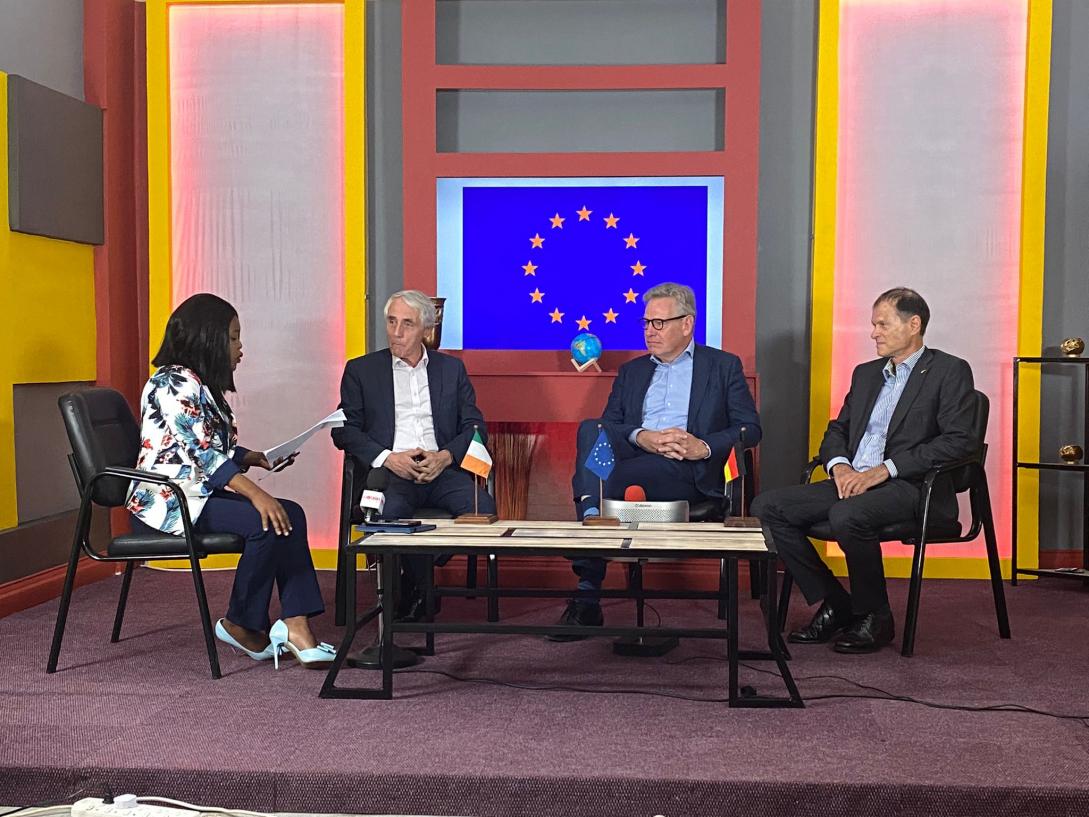
Today 9th of May is Europe Day. It commemorates the Schuman Declaration, which laid the foundations for what is now the European Union (EU) in 1950, barely five years after the end of WWII. The Schuman Declaration was unique in many ways, as it sought to pool strategic resources between the historical rivals France and Germany, in order to make war “not merely unthinkable, but materially impossible”.
72 years on, the principles of peace and solidarity are still at the core of the European Union, and the idea that closely-knit economies do not wage war at each other has stood the test of time and the EU’s regional integration has since inspired many continents, including Africa. The EU is an important supporter of SADC’s regional integration process, with almost half a billion euros provided to the organisation since the early 2000s.
Peace and solidarity cannot be taken for granted, however. The Covid pandemic, the Russian agression against Ukraine and the war that has ensued, as well as the increasingly devastating impacts of climate change, have reminded us of how fragile peace can be and how precarious solidarity becomes when one is in turmoil oneself. Nonetheless, the EU has remained true to its original ideals:
- During the Covid pandemic, the EU and its member countries, also known as “Team Europe”, provided the largest amount of vaccine exports and donations through the global COVAX initiative.
- Team Europe allocated 46 billion euros to address the health crisis globally, and activated a humanitarian air bridge to deliver assistance to countries in need.
- EU institutions have pledged almost 5 billion euros and member countries almost 2.7 billion euros of support to Ukraine and its people. This includes reception of refugees, humanitarian aid, civil protection, macro-financial assistance, support for Ukrainian armed forces and support in the investigation and prosecution of international crimes.
- Finally, the EU is the largest provider of climate financing in the world and a leader in reducing its own greenhouse gas emissions, with the aim to become climate neutral by 2050.
Malawi enjoys - whether directly or indirectly - many benefits from the cooperation that was established with the European Union in 1976, particularly in the fields of agriculture, education and good governance. Most recently, the EU has aligned its cooperation priorities to Malawi’s Vision 2063 and is working closely with Government and civil society to deliver the Malawi the country deserves.
Nevertheless, we are much more than a donor: Malawi and the EU share a common future, common visions and common values. Malawi’s recent positions on the war in Ukraine and on climate financing constitutes proof of the maturity and political character of this partnership.
Both the Covid pandemic and the war in Ukraine have brought EU countries closer together, while not forgetting their neighbors and partners around the world. It is clear that the “de facto” solidarity which Robert Schuman, one of the EU’s founding fathers, hoped to build through concrete achievements, cannot stop at Europe’s borders, because global challenges need global solutions.
Global solutions call for more, not less, multilateral governance and rules-based international cooperation. As a champion of multilateralism and long-time supporter of the United Nations, the EU will remain a critical player on the world stage to find sustainable and fair solutions to the global challenges we are all facing, but which hit poor countries harder.
We look forward to continuing to work hand in hand with Malawi with whom we enjoy a future-proof partnership focused on a stronger Malawi firmly anchored in its region, its continent and the world.
_____________________________
Rune Skinnebach (EU Ambassador)
Ralph Timmermann (German Ambassador )
Seamus O’Grady (Irish Ambassador)
CONTACT DETAILS
EU Delegation Press Office