
From a prisoner to a village marvel
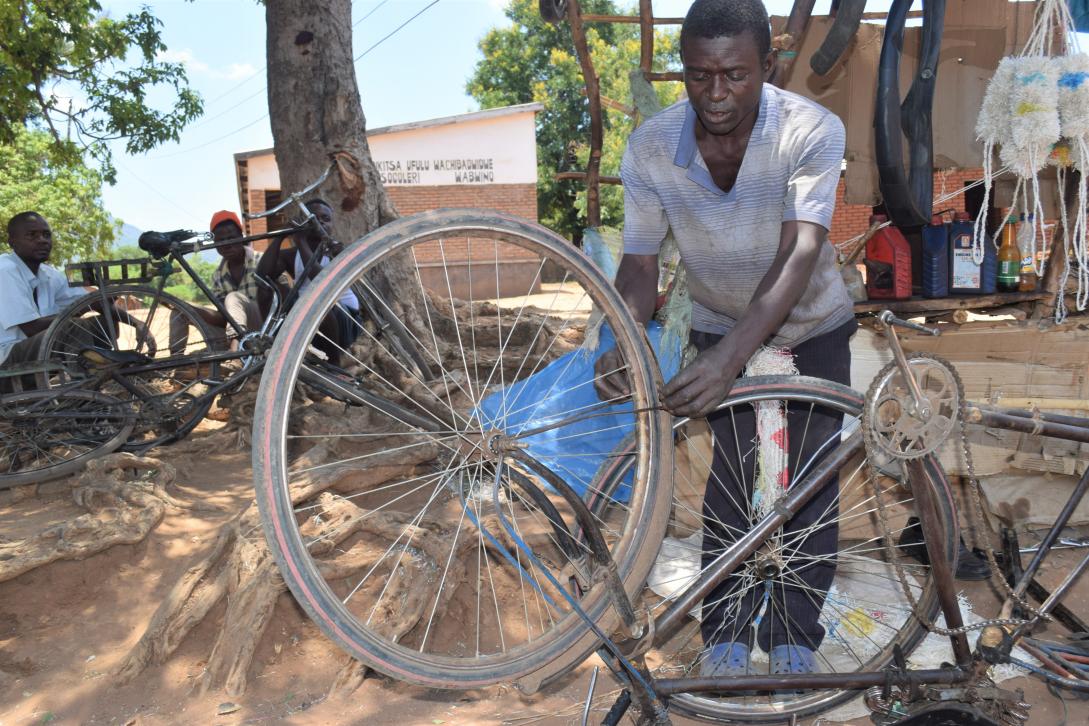
Symon Muyaya of Njima Village, Senior Chief Nazombe in Phalombe, is an epitome of how prisons are reforming inmates. Born some 53 years ago, he is a marvel in his area albeit his recent return from Mulanje prison where he was to serve a 4-year term for burglary and theft.
Muyaya is among the 2,049 inmates released this year through the Prisons Inspectorate recommendations to decongest prisons amid rising cases of Covid-19. He served barely half of his sentence.
“I couldn’t imagine myself going out before the end of my sentence,” says Muyaya, smiling, while adding that “I was worried about my children.”
He says of life in prison: “it is not the place to be, but I learnt many skills.”
Muyaya, a father of six and twice ‘divorced’, is “different from so many people who return to this area from prison.”
“He came back with skills none of us have and cannot indulge in criminal activities anymore because he is busy,” says Andrew Likhonda who adds that other ex-prisoners went back to their bad habits when they returned to the village, earlier.
Likhonda, a longtime friend to Muyaya, runs a hawker next to Muyaya’s bicycle workshop at a small market next to Chiringa courthouse, just 100 yards away from Fyson Beula or Group Village Headman Makhonja.
Makhonja says “Muyaya is a good example of how prisons change people.”
“I’ve not even started using some of my new skills such as pottery making. I can make a Leopard from clay and you will think it is from wood,” Muyaya boasts.
He was jailed for “keeping stolen items for friends” who unfortunately escaped from custody leaving Muyaya the only one incarcerated for the offence.
“It was a bitter lesson for me and it affected my children,” he recalls.
His 18-year-old Standard 8 son, Kesten, buttresses saying “life was tough the time my father was away.”
We found Kesten together with his father at the shop and he is proud because “my father is transferring the skills he learnt from prison to me.”
Apart from fixing bicycles, Muyaya is into sponge making, weaving baskets and door mats, making bicycle mudguard hooks and livestock ropes, among others. He earns about K7000 a week, on average from the sales.
“Since I didn’t produce anything the time I was in prison, I use this money to buy food,” he says.
Prisons Chief Commissioner Wandika Phiri recently acknowledged the necessity of decongesting prisons amid Covid-19 as imperative in preventing an uncontrollable spread of the Corona Virus.
The emergency Prison Inspectorate exercise, coupled with other initiatives such as Camp Courts, that saw in-mates like Muyaya released before the end of their terms, were supported by the European Union funded Chilungamo (Justice and Accountability) Programme.
Team leader Sophie Racine once said “decongesting prisons was now more necessary than ever before.”
The 48m Euro initiative, is supporting government to bring justice closer to the vulnerable through the Prisons Department, Malawi Police Services, Judiciary, Legal Aid Bureau, Office of the Ombudsman, Malawi Human Rights Commission and the Ministry of Justice and Constitutional Affairs.