EU Joins Global Efforts for a Clean and Fair Climate Transition at COP30 in Belém, Brazil
We commend Namibia for its enduring commitment to fighting climate change, promoting environmental protection and green industrialisation, priorities strongly shared with the European Union (EU). The Climate Conference is a pivotal moment to step up action and meet the Paris Agreement goals set ten years ago. The EU is dedicated to paving the way towards a global transition that is clean, fair and resilient. All COP Parties were requested to submit their new Nationally Determined Contributions (NDC) ahead of COP 30. The EU enters the summit united behind an ambitious new Nationally Determined Contribution (NDC) agreed by all 27 Member States, aiming to cut net greenhouse-gas emissions by 66.25 - 72.5% below 1990 levels by 2035. This paves the way toward a 90% reduction by 2040 and full climate neutrality in EU 27 by 2050.
With the new NDC, the EU travels to COP30 with a strong package that balances environmental ambition with economic resilience. These targets are anchored in European climate legislation and concrete delivery: in 2023, EU emissions fell by around 8% while GDP grew, demonstrating that decarbonisation and economic growth can go hand-in-hand. At COP30, the EU will urge partners to bridge the ambition and implementation gaps, advance the pledges to triple global renewable energy capacity and double energy-efficiency rates by 2030, and minimise any overshoot beyond the 1.5°C temperature limit.
Climate finance remains a decisive challenge. The “Baku to Belém Roadmap” aims to increase support for developing countries to at least USD 1.3 trillion annually by 2035. The EU and its Member States remain the world’s largest providers of public climate finance, with NAD 633.9 billion (€31.7 billion) delivered in 2024 and additional NAD 220 billion (€11 billion) mobilised in private investment.
Strong partnerships are essential to a just transition. Namibia’s leadership in green hydrogen, critical raw materials and sustainable land management demonstrates how climate action can deliver jobs, industrial development and opportunities for youth.
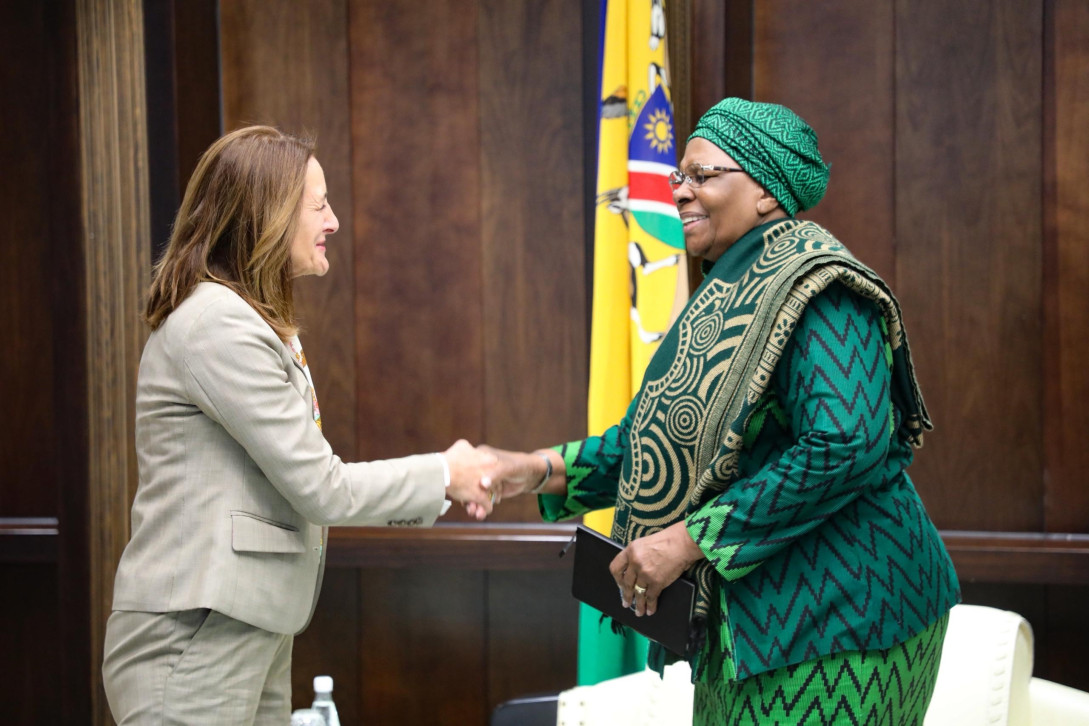
EU Ambassador to Namibia, H.E. Ana Beatriz Martins, noted:
“Namibia’s lead in developing greeneconomy sectors highlights Africa’s essential role in shaping a sustainable global future. The EU stands ready to deepen cooperation with Namibia on green industrialisation, resilience and inclusive growth.”
European Council President António Costa and European Commission President Ursula von der Leyen will represent the EU in Belém for discussions on industry decarbonisation, energy transition and climate resilience. Together with partners such as Namibia, the EU will continue driving the global transition away from fossil fuels and keep the 1.5°C goal within reach.
Background
The Paris Agreement, adopted in 2015, aims to limit global temperature rise to well below 2°C and pursue efforts to stay below 1.5°C. The EU has already reduced its GHG emissions by 37% since 1990, while growing its economy by nearly 70%. This demonstrates that ambitious climate action and economic progress can go hand in hand. Namibia and the EU continue to strengthen their cooperation under the EU–Namibia Strategic Partnership on Sustainable Raw Materials and Green Hydrogen, launched in 2022, to support green industrialisation and shared prosperity in line with global climate goals.