
‘Erasmus+ is a success story we are particularly proud of’
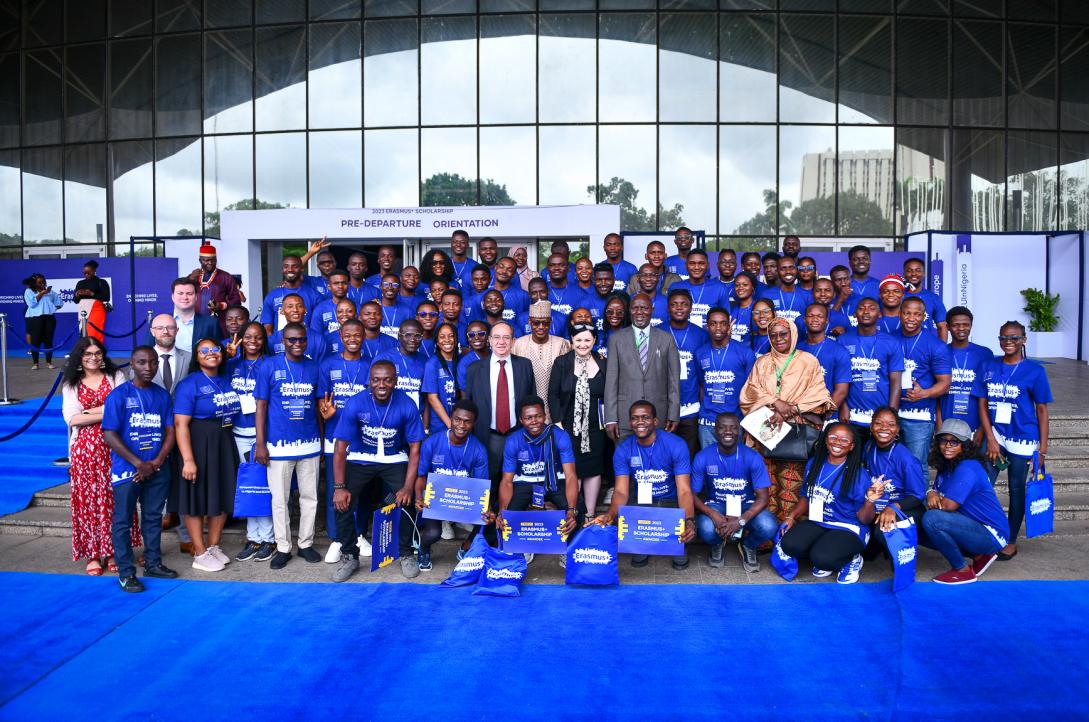
In keeping with tradition, the EU Delegation in Abuja, on July 19, hosted a pre-departure orientation event for the 135 young Nigerians who have received EU scholarships in the framework of the Erasmus Mundus Joint Master Degree (EMJMD) programme in 2023. The event usually provides a platform for the beneficiaries to interact among themselves; get first-hand information about life in their countries of mobility; tap from the experiences of previous awardees; engage with representatives of EU Member States hosting their respective programmes to sort out issues relating to their travel documents; and to share their success stories with prospective Erasmus applicants.
The number of scholarship recipients from Nigeria this year makes it the top beneficiary of the programme in Africa and the fifth globally – coming after Pakistan, India, Bangladesh and Brazil. Close to 800 Nigerians have benefited from Erasmus Master Study programme since 2014, 500 of them in the past four years.
The EU Delegation wants Nigeria to be number one in the world. “We will work for that, together with the Ministry of Education, the National Universities Commission and Nigerian Universities, to get there,” the EU Ambassador to Nigeria and ECOWAS, Ms Samuela Isopi, said at the event. The Permanent Secretary in the Federal Ministry of Education, David Adejo, and the Acting Executive Secretary of the National Universities Commission, Chris Maiyaki.
“Erasmus+ is a success story the EU is particularly proud of and is by far the most successful initiative of the European Union to support education and people-to-people, youth-to-youth contacts. It is a concrete example of what a win-win cooperation should look like,” the Ambassador stated.
According to her, the Erasmus initiative demonstrates the great potential of EU-Nigeria cooperation as a people and youth-centred cooperation for the future; the EU’s readiness to offer regular migration opportunities for young Nigerians to travel and study in Europe, based on their merit, capacity and abilities; and the concrete commitment of the EU to creating opportunities for Nigerian youth.
“The Erasmus is a life-changing experience. You will be exposed, dear awardees, to other cultures and meet people coming from different parts of the world. It is an opportunity for you to become ‘citizens of the world.’ This is what the Erasmus programme is all about: Connecting people, young people from Africa, from Europe and from across the globe, beyond boundaries to create a new generation of global citizens,” Ambassador Isopi said.
Both the Ambassador and the Permanent Secretary in the Ministry of Education, Mr David Adejo, urged the scholars to be worthy ambassadors of Nigeria in Europe. Adejo hailed the Erasmus initiative, which he noted had promoted academic excellence and innovation as well as encouraged the exchange of knowledge and best practices among participants.
In his speech, the Acting Executive Secretary National Universities Commission, Chris Maiyaki, re-echoed the need for the awardees to be worthy ambassadors of the country and urged them to take advantage of the opportunity to soar higher.
Erasmus+ provides also opportunities in higher education and Technical and Vocational Education and Training (TVET): Some 525 Nigerian students, researchers and staff have benefited from short-term mobility to Europe; 172 students and staff from Europe have moved to Nigeria (2014-2021). From 2022 to 2024, 221 Nigerian students and staff are billed to visit European universities in 17 countries, while 23 Nigerian universities will host about 87 Europeans.
The EU is also supporting Nigeria’s basic education sector. During the period 2023-2027, the EU will be investing over €45 million in grants to support basic education, especially in the North West, a region particularly affected by insecurity that has totally disrupted the education systems. “We will pay particular attention to girls’ education that is an essential pre-condition to achieve women empowerment and gender equality,” Ambassador Isopi said.