
EU supports sustainable management of the Lake Kivu and Ruzizi River basin.
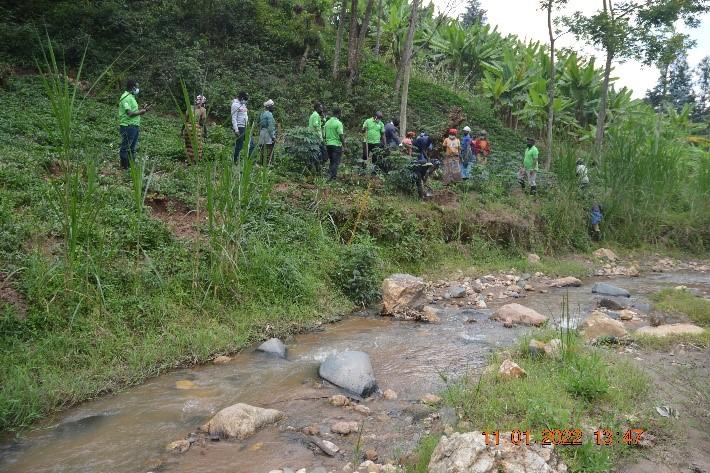
GIZ was joined by project partner ABAKIR, grant recipients World Agroforestry (ICRAF) and the Albertine Rift Conservation Society (ARCOS), and the management of Rutsiro district to discuss the objectives of the demonstration projects launched in the context of the GIZ project; “Support to the integrated management of water resources of lake Kivu and Ruzizi River,” which is co-financed by the European Union (EU) and the BMZ.
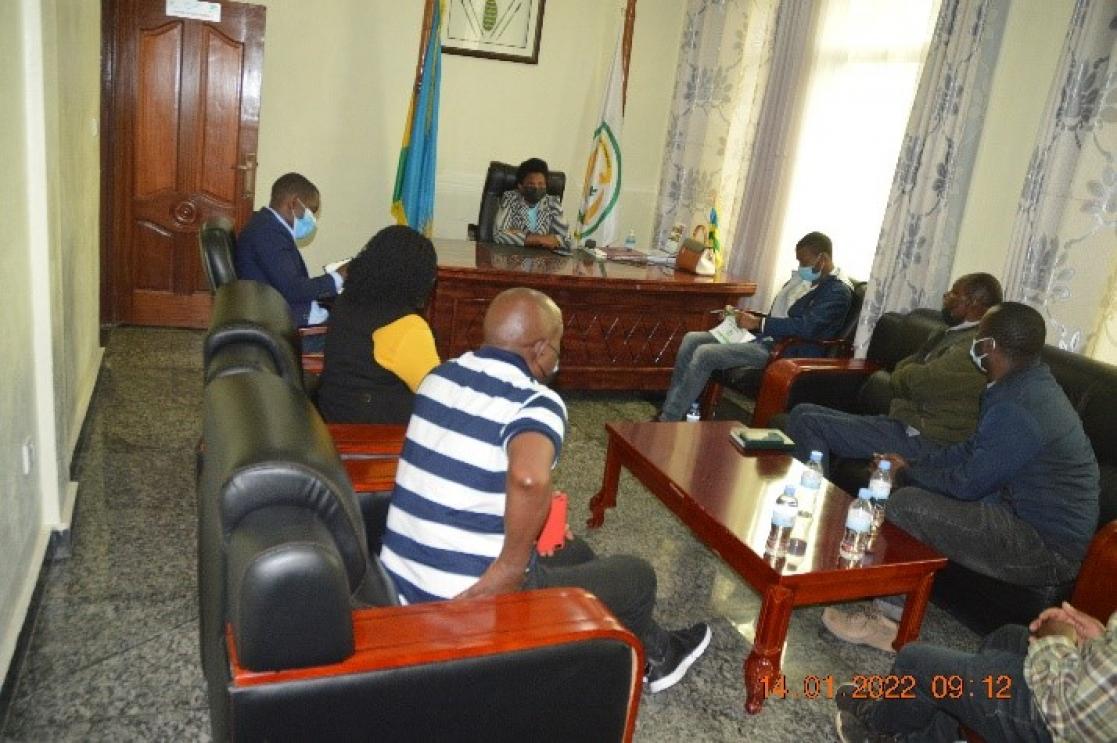
The launch began with joint meetings hosted by the management of Rutsiro district led by the Mayor, and the Vice Mayor in charge of economic development, and the Director of Agriculture. The Mayor enthusiastically welcomed the team and thanked the partners for selecting Rutsiro for the demonstration projects. She also underlined the importance of close collaboration and continued partnership with the district during implementation. This meeting also provided an opportunity to brief local officials on the broader context of the transboundary nature of the GIZ project, which implicates Rwanda, Burundi and DR Congo. The demonstration projects have increased the visibility of ABAKIR and transboundary resources governance to the district authorities and the communities around the Kivu Lake.
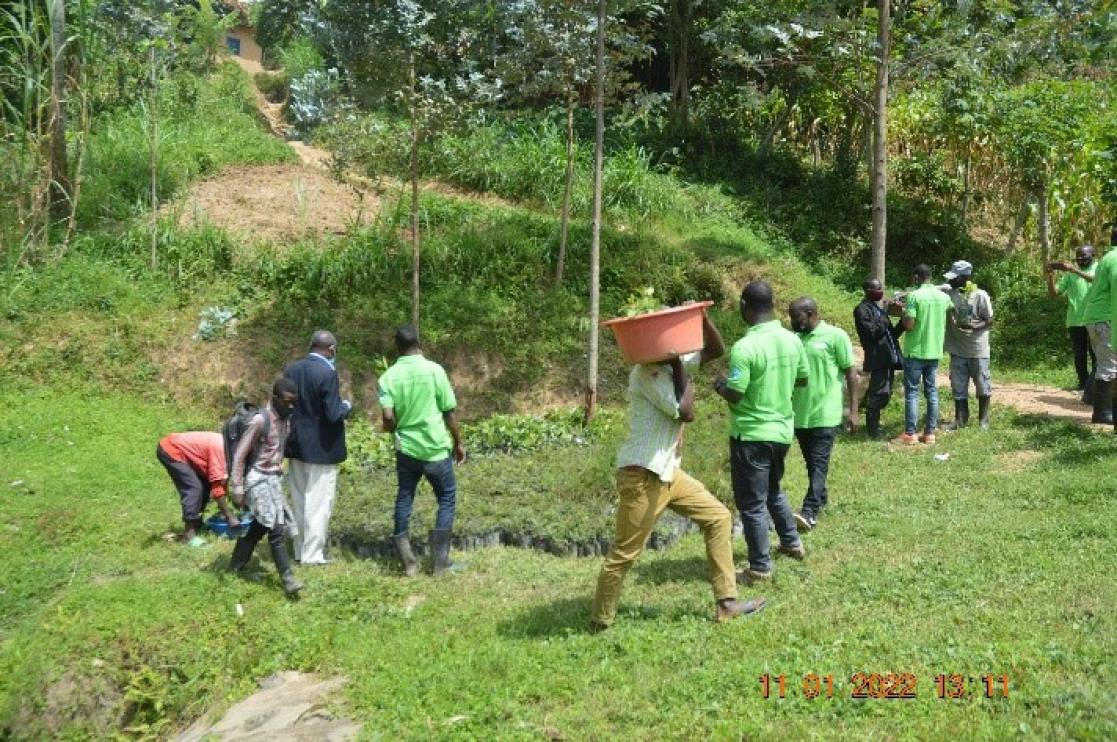
After the meeting with the Mayor, GIZ and ABAKIR continued to the field, with a first visit to the site selected by the district for the construction of a market selling point of produce grown by project beneficiaries. This market selling point will be used by the local community, and primarily by women and youth to generate income by selling their harvest of fruits and vegetables in a clean and safe environment. Then, the team moved to the tributaries of the Koko River and held an introductory meeting with the communities, where the demonstration project objectives, the key role of communities during implementation, and the benefits to local livelihoods were discussed. Together the project team, district officials and the communities planted trees along the shores of the rivers to increase bank stability and erosion control protection. The team and local communities then planted fruit trees to improve nutrition and livelihoods for community households. To ensure community engagement and ownership, a community sub catchment committee was established to ensure sustainability and transparency in the ongoing activities.
Next Steps
The next phases of the demonstration projects will consist of establishing anti-erosion trenches on selected farmland and the continuation of tree planting (agroforestry, fruits and indigenous species) on trenches and riverbanks. To build local capacities, communities will be trained on the integrated concept of Water-Energy-Food-Ecosystems (WEFE) Nexus, business development and financial management. To improve their livelihoods, income generating activities will be established through agricultural inputs and livestock provision. Furthermore, a gravity water supply system along the Koko River basin for small scale irrigation will be established, a selling point for the community will be constructed, and efficient cooking stoves will be distributed to households selected in the intervention area.