
Returning refugees and internally displaced children receive a free education in Somalia in EU-funded schools
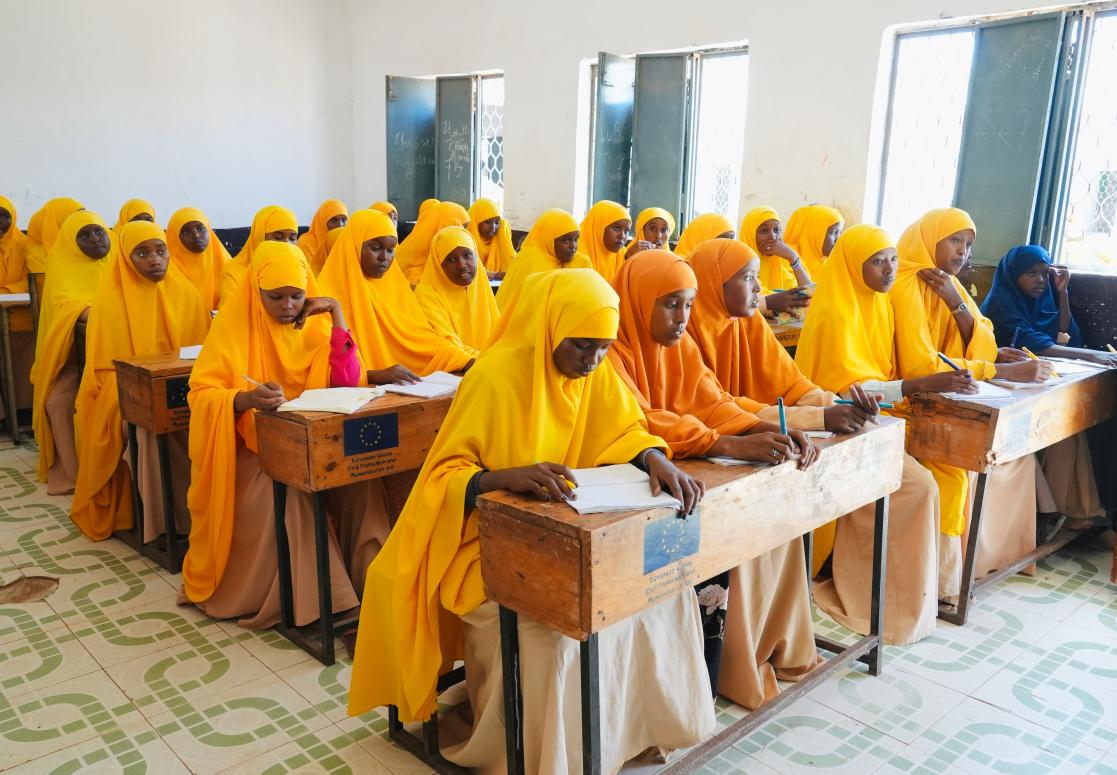
Coming back to Kismayo in southern Somalia from Daadab Refugee Camp, she found that most of the schools were private and charged around USD12 dollars a month.
“When I moved here, I was very worried because I went to several schools and I was told there is no free education and I had to pay tuition fees which I couldn’t afford. I was then referred to Beder School and eight of my kids are studying in this school now. Two have already finished high school. As returnees, we appreciate the education opportunity and in addition, my daughter was employed at this school after finishing her education,” said Nimo Hashi.
Beder Model Primary and Secondary School is located inside a camp for internally displaced people (IDPs) on the outskirts of Kismayo. The school, funded by the European Union, provides free quality education to 1,400 learners, most of whom are voluntary returnees from Dadaab.
The funding of Beder School is part of the EU’s Strengthening Education and Training in Somalia Programme which targets 48,000 learners across four regions of Somalia. The Programme focuses on establishing schools within IDP camps, hiring teachers, and providing necessary resources such as textbooks, stationery, and learning materials.
Adan Sahane who is from the humanitarian organization ADRA, a member of the consortium implementing the project says the education of the refugees and IDPs is critical.
“The country has become more stable since 2011 so many refugees from the Dadaab camp in Kenya have opted to come back. Now 90% of the pupils are returnees and IDPs,” he said.
EU
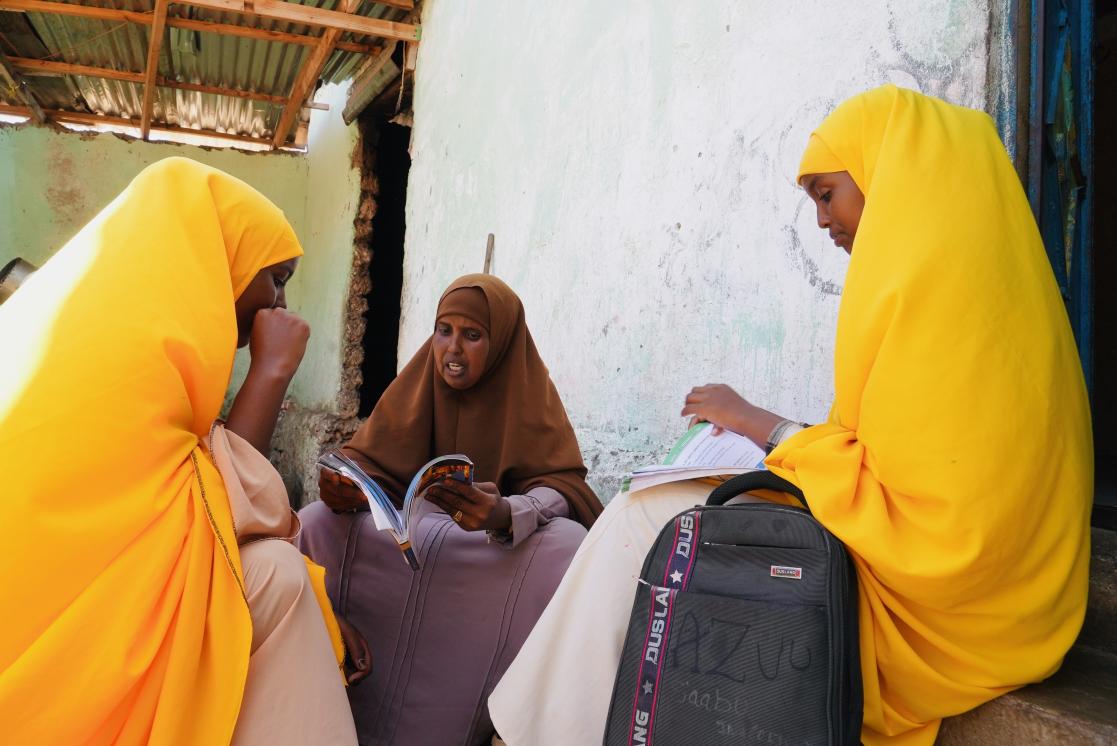
Hanan Osman is a class 8 student at Beder School who came back to Somalia from Kenya with his family in 2010.
“One thing that makes this school stand out from other schools is the library here which has helped instil reading culture in students. Now all students go to the library when they don't have classes to read books. It personally helped me get skills in creativity and developed a passion for writing,” he said.
In order to improve inclusivity in education, the school is also educating children with special needs.
“The school did a lot to contribute to rebuilding the community. Before most of the community here believed that disabled people can't be educated. Education was an exclusive right for only able-bodied people. But now that has changed. As teachers, we have been given training on inclusive education to meet the educational requirements of people with special needs,” said teacher Hussein Nur Abdi who is a former refugee himself