
The European Union backs South Africa in fight for return of Ukrainian children stolen by Russia
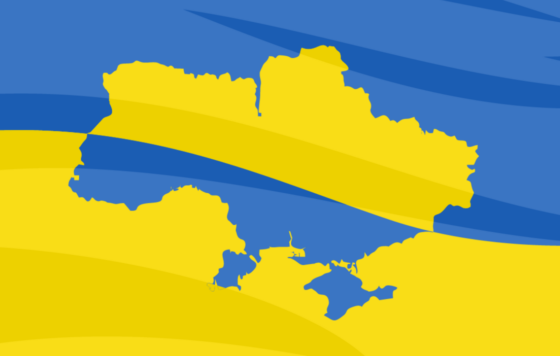
Ukraine is fighting not only for its own people but also for the rules-based international order, say ambassadors.
Published in the Sunday Times, 22 February 2026
Ukrainians keep fighting for their children, their country, and a rules-based international order.
When the first explosions were heard by nurses and nannies at the Kherson Regional Children’s Home in southern Ukraine on February 24 2022, they were alarmed and confused. As Russian forces occupied Kherson at the beginning of their country’s full-scale invasion of Ukraine, staff moved the children to a church, attempting to hide them. Eventually, Russian soldiers found them. They forcibly transferred and deported 48 Ukrainian children. Witnesses recall how the Russians wrote the children’s names on their little hands to identify them — only to later change the identity of many. This was not an accident of war. It was a deliberate policy of erasing their identity.
According to the Bring Kids Back initiative of the president of Ukraine, there are records confirming the deportation and forced transfer of approximately 20,000 Ukrainian children by Russia. These children are still missing, being illegally placed in foster families and adopted in Russia in the process of depriving them of their national identity — changing their names, biographies and even dates of birth. This makes the ongoing mediating role of South Africa to facilitate their return so urgent and important. We support South Africa’s efforts and work together, as we did recently in the UN General Assembly to adopt a resolution on the return of all Ukrainian children forcibly transferred or deported by Russia since 2014.
Almost 1,500 days have passed since Russia started its full-scale invasion of Ukraine, but let us keep in mind that the aggression started 12 years ago through the occupation of Crimea. The reckless Russian war of aggression has, according to estimates, cost nearly 2-million casualties, including citizens of South Africa and other African countries tricked into fighting for Russia. This is the heaviest casualty rate suffered in any military offensive since World War 2.
The global damage generated by Putin’s war includes threatened food insecurity, ecological disasters, disrupted energy exports, increased inflation and slowed globalisation.
Ukrainians are fighting with extraordinary courage, not only to defend their people and territory. They are fighting for the rules-based international order and in defence of the principles of the UN Charter that the overwhelming majority in the international community hold dear: independence, sovereignty and territorial integrity, and the obligation to settle international disputes by peaceful means.
As Europeans, we have a direct stake in Ukraine’s security and future. Supporting Ukraine is an investment in Europe’s own security and in the stability of our continent. That is why we are committed to securing a comprehensive, just and lasting peace. Nobody wants peace more than Ukraine. But peace cannot come at any cost. Any agreement must ensure Ukraine’s independence, sovereignty and territorial integrity within internationally recognised borders, while guaranteeing Ukraine’s long-term security and its ability to defend itself. A ceasefire without security guarantees is not peace; it is merely a pause before Russia decides to strike again.
Ukraine has continuously demonstrated a commitment to a just and lasting peace, while there is a stark asymmetry between Russia’s statements on “seeking peace” and the war crimes being committed on the ground. In the midst of the coldest winter in Ukraine since the beginning of Russia’s war of aggression, Russia is ruthlessly intensifying its attacks, deliberately striking homes and civilian infrastructure, energy facilities and heating systems, leaving innumerable families without power, heating and water in freezing temperatures. By doing this, Russia is creating a humanitarian crisis. This is not the conduct of a state seeking peace. It is a war of attrition against an innocent civilian population.
After four years of war, the future is uncertain for those children forcibly transferred by Russia from the Kherson Regional Children’s Home. Returning all forcibly transferred children to Ukraine and pursuing accountability for those responsible, including criminal prosecution under international law, is paramount.
Europe will always stand with Ukraine and its people, as they show the most extraordinary resilience and keep fighting Russia’s attempts to assert its dominance over their country.
2026 must be the year Russia ceases its war of aggression against Ukraine, paving the way for a just and lasting peace for Ukraine, in full compliance with the principles of the UN Charter and international law.
Signed: Amb. S Kramer (European Union), Amb. R Königsbrun (Austria), Amb. P Jansen (Belgium), Amb. M Tzorzorkova (Bulgaria), Amb. A Cicvaric (Croatia), High commissioner A Mandritis (Cyprus), Amb. T Ulicny (Czechia), Amb. K Poulsen (Denmark), Amb. D Schaer (Estonia), Amb. P Metso (Finland), Amb. D Martinon (France), Amb. A Peschke (Germany), Amb. Des E Kakiopoulou (Greece), Amb. A Gormley (Ireland), Amb. A Vecchi (Italy), Amb. R Jankauskaite (Lithuania), Amb. J Doornewaard (Netherlands), Chargé d’affaires J Chodorowicz (Poland), Amb. C Costa Neves (Portugal), Amb. M Sitaru (Romania), Amb. V Gracz (Slovakia), Amb. S Podlesnik (Slovenia), Amb. JM Pascual (Spain), Amb. AK Eneström (Sweden)