
European Union, UNOPS handover Feeder Roads Project in Warrap, Lakes, NBGS & WBGS State
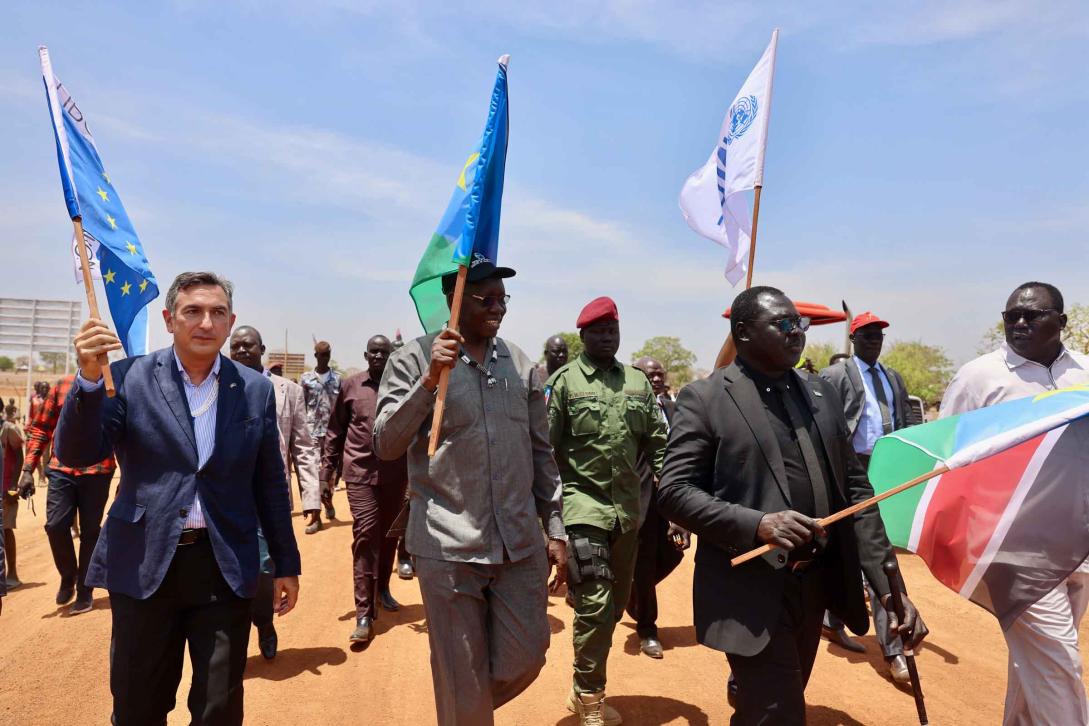
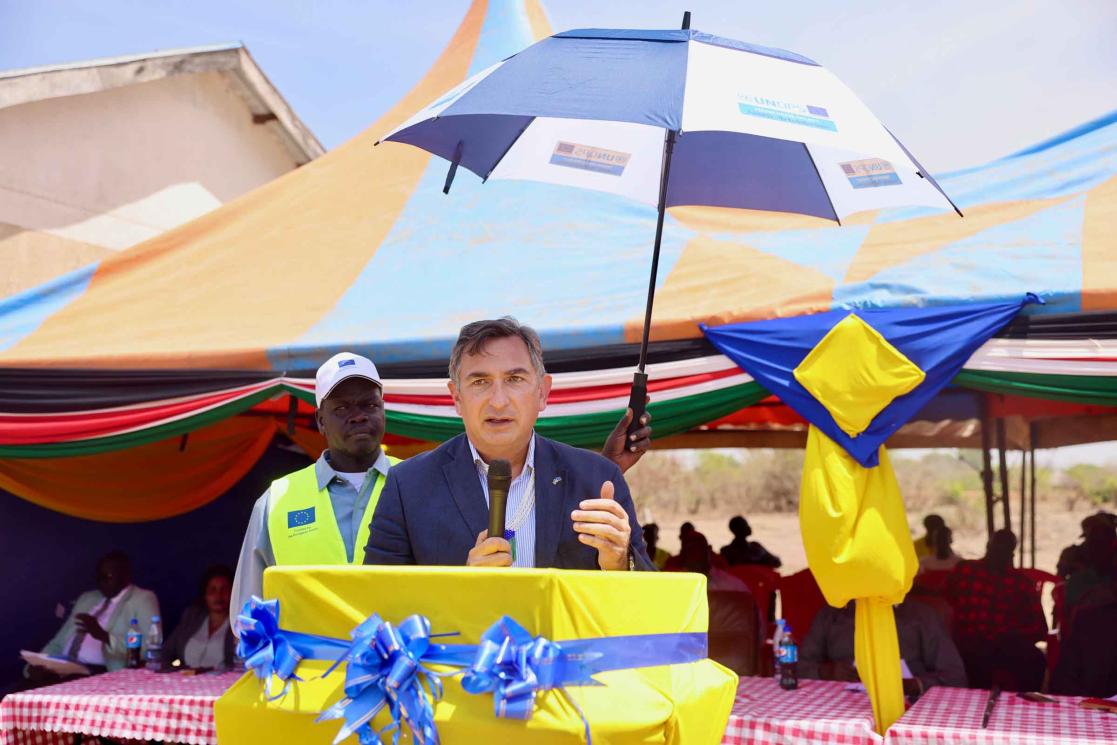
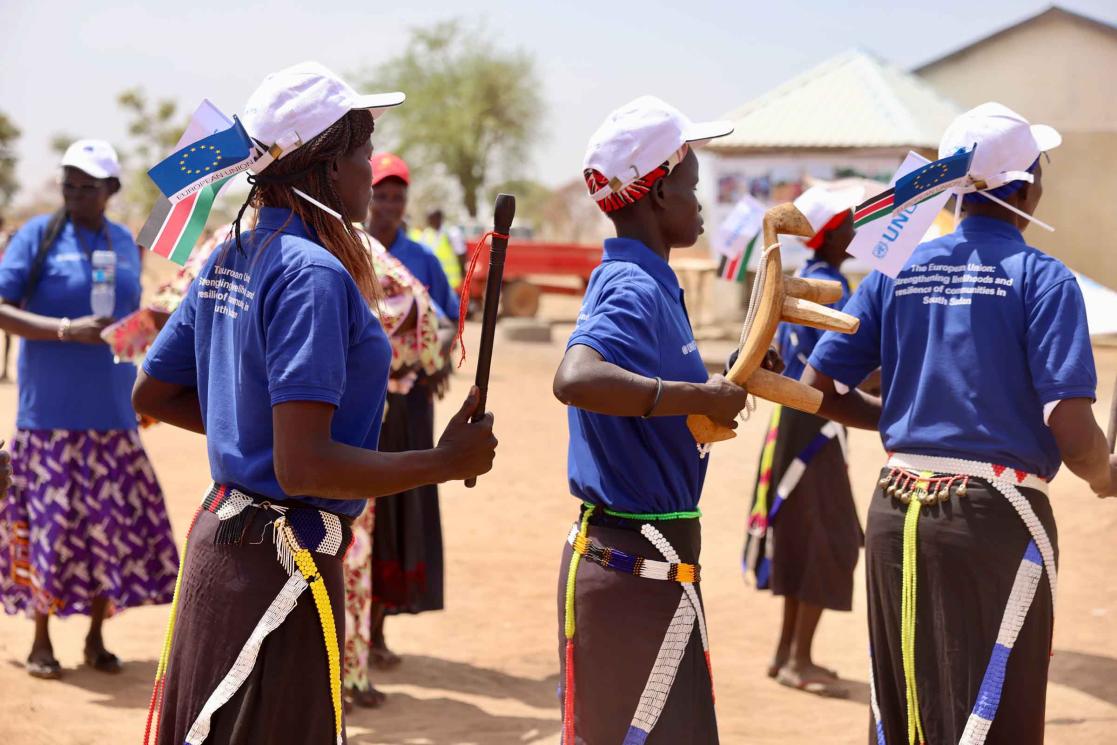
The European Union's Head of Cooperation in South Sudan, Gabriel Octavian Leonte, together with other dignitaries from the South Sudan national and state government on Thursday attended a final handover ceremony in Warrap state marking the completion of the Feeder Roads Project.
With the generous funding from the European Union totalling almost 44 million euros, the United Nations Office for Project Services (UNOPS) has constructed over 170 kilometres and maintained 306 kilometres of feeder roads in Warrap, Lakes, Western and Northern Bahr el Ghazal states. Other infrastructure built in the target states include four markets and five Water, Hygiene and Sanitation (WASH) systems.
Speaking about the project, the UNOPS Multi-Country Office Director and Representative to the African Union (AU), Worknesh Mekonnen Gonet said; “UNOPS is committed to working closely with its partners in South Sudan to provide durable solutions to development challenges. This involves collaborating with key stakeholders to build resilient and sustainable infrastructure including roads which will boost economic growth and enable local communities to thrive socially and economically.”

Constructed between 2016 and 2020, the roads link farmers to markets and have enhanced trade and food security. These roads have significantly reduced the travel time between farms, homes, markets, schools, health centres and other social amenities. Local traders use the completed roads to deliver farm inputs closer to the farmers. The roads have also enabled traders to reach the hinterland and buy farm produce directly from the farmers thereby providing better prices to the farmers by eliminating the agents. Similarly, business people from the rural areas can easily travel to towns to access better markers for their products.
“This project is truly one of the EU flagships in South Sudan. In partnership with UNOPS, we have built much necessary 170 kilometres of feeder roads and associated support infrastructure in rural areas. These roads are a tangible and valuable asset to the communities benefiting from them, who have benefited of enhanced security and access to services and markets,” Mr. Leonte said.
“Moreover, the roads also facilitate the access of humanitarian and development partners, government, and private sector actors to previously hard-to-reach areas, while also providing a lifeline to communities affected by floods and other difficulties. We are immensely proud of the impact that these roads are having in the livelihoods and well-being of the beneficiary communities, and we remain committed to supporting vulnerable South Sudanese communities in their path towards development.”
UNOPS
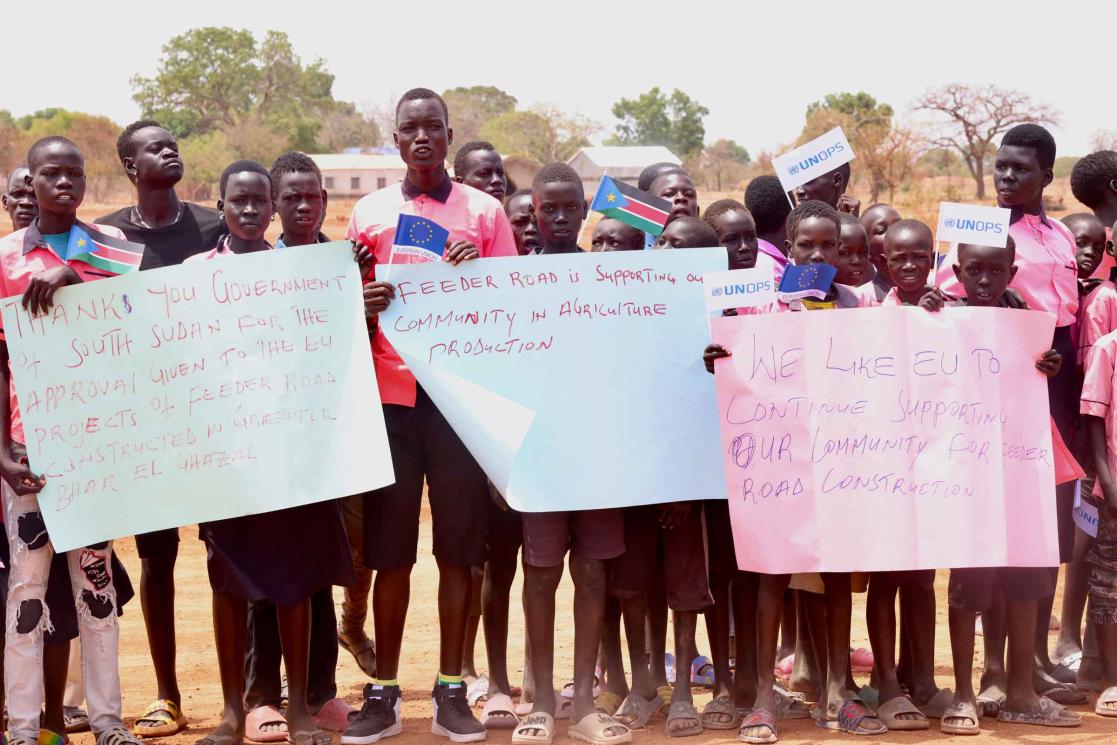
The feeder roads have had a significant impact on the lives of the local communities as children can now access schools at ease and communities can access better health care in other localities. This project directly responds to sustainable development goals 9 (Industry, innovation and infrastructure), 8 (decent work and economic growth), 3 (good life and wellbeing) amongst other goals.
The European Union and the United Nations Office for Project Services continue to provide resilient infrastructure in various states of South Sudan.
UNOPS