
Opening remarks of Timo Olkkonen, EU Ambassador in South Sudan, at the validation workshop of the Judicial Reform Committee (JRC) - findings and recommendations
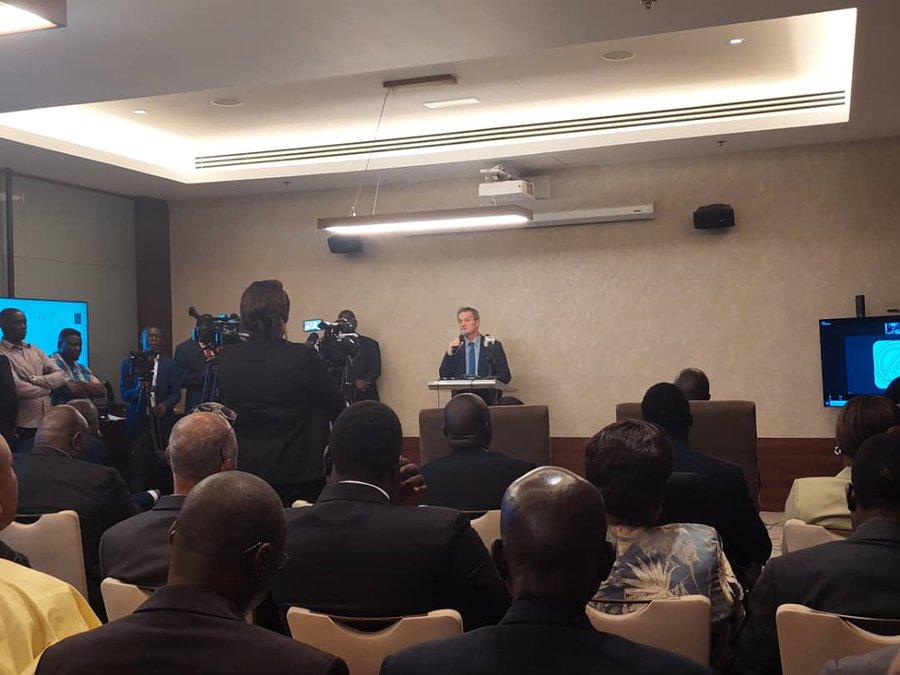
Juba, 23 October 2024
Your Excellency Dr Riek Machar Teny, First Vice-President of the Republic of South Sudan
Your Excellency James Wani Igga, Vice-President
Your Excellency Hussein Abdelbagi, Vice-President
Your Lordship Chief Justice
Honourable Ministers
The Chair and Deputy Chair and Commissioners of the JRC
Excellencies, Distinguished colleagues, Honourable Guests
Ladies and Gentlemen,
Good morning,
It is a great honour to participate in this workshop. On behalf of the European Union, I would like to express our appreciation for your presence and your commitment to judicial reform in South Sudan.
Judicial reform towards a strong and independent judiciary, accessible to all, is essential.
Essential for ensuring lasting peace, stability, and prosperity for all South Sudanese. Essential for trust and confidence in the state and its democratic institutions. Essential for upholding the rule of law.
Without the rule of law, peace cannot be sustained, human rights cannot be fully realized, and economic development will be stifled. Who would invest in a country without a credible judiciary and guarantee that the rule of law will be upheld?
A fair and transparent legal system is the cornerstone of any democratic society. Judicial reform is not only about improving the courts’ functionality and the appointment and promotion scheme of judges, but also about restoring justice, fostering public trust, and ensuring the protection of the rights and dignity of every citizen.
The Judicial Reform Committee (JRC) is entrusted by Article 1.17.6 of the peace agreement with the critical task of reviewing and proposing reforms to the judicial system. This includes restructuring the judiciary and ensuring that it operates with integrity, independence, and efficiency. In addition, Art 1.19.1.9 of the peace agreement foresees the establishment of a credible, independent and impartial constitution court which is an essential element to the constitution making process and should be established soon.
A recent Justice Needs and Satisfaction survey highlighted some of the critical gaps in the country’s legal system. It revealed that 1.75 million South Sudanese face legal problems each year, with around 60% involving land disputes, domestic violence, and crime. While traditional systems resolve 57% of these issues, nearly two million cases remain unresolved, contributing to heightened violence and insecurity. This backlog is further compounded by a weakened judicial infrastructure, a result of years of civil war. The need to clear backlogs of cases and reduce delays in case processing is one of the main hurdles to full access to the courts.
The focus of a judicial reform is on the institutions of the judiciary and the infrastructure that these institutions require for the effective delivery of justice. It is on strengthening judicial independence, promoting integrity and legitimacy, ensuring representation, and increasing the responsiveness of judicial institutions.
Let me point out some key priorities of the reform agenda:
- A reformed judiciary should ensure that laws are applied consistently and fairly. Selective enforcement of laws erodes public trust in the legal system.
- Access to justice: Judicial reforms should ensure that citizens have legal recourse when their rights are violated.
- Reform is essential to end impunity and deliver justice.
- Reforms of the judiciary should combat corruption, strengthen governance and restore public trust in the legal system. A transparent and reliable legal system is vital for economic growth, international investments, and protect property rights.
- A reformed judiciary should resolve disputes and hold perpetrators accountable for wartime atrocities. This will help prevent future conflicts.
- A well-functioning judiciary must be independent, impartial and effective.
Let me reaffirm our commitment to ensuring that the judicial reform process is inclusive, participatory, and gender-sensitive. Women, youth, and other marginalized groups must have a voice in shaping a justice system that serves the needs of all South Sudanese.
The EU has been supporting the South Sudan justice system since 2013. Our main purpose is a better and more accessible justice for all citizens of South Sudan, and fostering peace and reconciliation through transitional justice process.
The European Union Delegation has supported the Judicial Reform Committee from the day of its inception, by financing the Chair and Deputy Chair of the JRC and providing support through an IGAD programme on enhancing capacity for Peace and Security and the Max Planck Foundation project Supporting Constitution-Making, Legal Harmonisation and Judicial Reform in South Sudan.
Before I conclude, I would like to acknowledge the efforts of the Judicial Reform Committee through its Chair and Deputy but also all the Commissioners and all those who have worked tirelessly to advance this reform agenda. I know it has been a bumpy road but the end-result of your labours is finally here.
Let me also salute the work of the Max Planck Foundation who held workshops aimed at capacitating the JRC members and providing comparative knowledge on questions pertaining to the judicial reform process.
What we are witnessing today is of course only the start of the work. It is now essential to guarantee an efficient follow-up to the recommendations in order to create the legal system the South Sudanese deserve.
It is no secret that the need to extend the transition period for another two years was a disappointment to the European Union. It is now imperative that the key clauses of the peace agreement are implemented and elections can be held according to the new timetable. There is a saying that the best time to plant a tree was yesterday, the second best time is now. Action should not wait until the formal lapse of the current transition period.
Thank you once again for being here today. It is our sincere hope that the ideas and recommendations that emerge from this workshop and the JRC report will contribute to effective judicial reform.
_______________________________________