
European Union-Funded CIRCULAR Project Strengthens Sri Lanka's Readiness for the EU Packaging and Packaging Waste Regulation (PPWR)

Colombo, Sri Lanka, 18 August 2026: The European Union’s Packaging and Packaging Waste Regulation (PPWR) entered into force in February 2025 and applies generally from 12 August 2026, introducing legally binding requirements for all packaging placed on the EU market, including imports from Sri Lanka. The regulation introduces new obligations on recyclability, recycled plastic content, reuse, harmonised labelling, Extended Producer Responsibility (EPR), and traceability, making packaging compliance an essential requirement for businesses seeking continued access to the European market.
These requirements will have significant implications for Sri Lankan exporters particularly in the tea, spices, seafood, processed food, beverage, and FMCG sectors, as well as for local packaging manufacturers serving export-oriented industries. Businesses will need to review packaging design, material selection, sourcing practices, supplier traceability, certification processes, and sustainability reporting to maintain access to the EU market. Failure to adapt may result in increased compliance costs, supply chain disruptions, reduced competitiveness, and potential loss of market access.
To support Sri Lanka’s food export industry, packaging manufacturers, printing and related service providers, government institutions, industry associations, certification bodies and development partners, a seminar was organised in Colombo on 13-14 July 2026 on the EU’s Packaging and Packaging Waste Regulation. The two-day event equipped over 100 representatives of Sri Lankan businesses with practical knowledge and tools to prepare for one of the most significant regulatory changes affecting exports to the European Union.
"As the Packaging and Packaging Waste Regulation begins to apply, early preparation will be essential to help businesses adapt smoothly, preserve access to the EU market, and strengthen their position in an increasingly sustainability-driven global economy. The European Union is pleased to support Sri Lanka in building the knowledge, partnerships and practical readiness needed for this transition", said Dr Johann Hesse, Head of Cooperation, Delegation of the European Union to Sri Lanka.
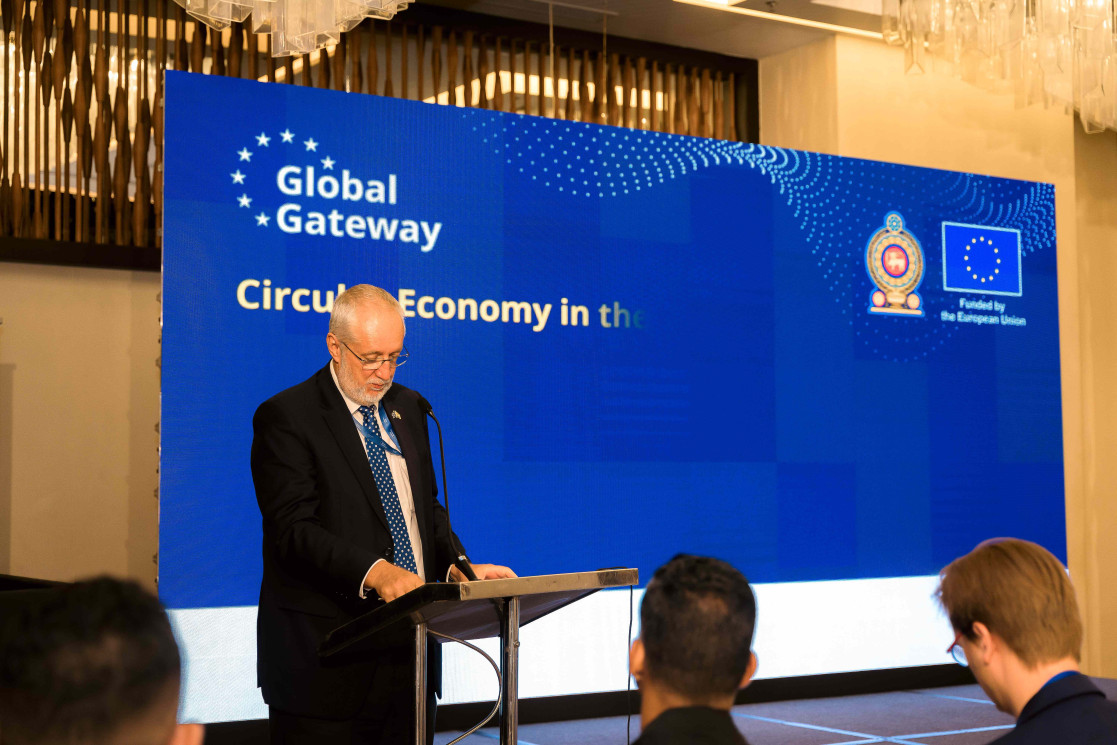
Expertise France, 2026
The seminar was organised with support from the European Union through the CIRCULAR – Circular Economy in the Food Sector Project, jointly implemented by Expertise France, the Food and Agriculture Organization of the United Nations (FAO) and Deutsche Gesellschaft für Internationale Zusammenarbeit (GIZ) GmbH.
Opening the seminar, Mahmoud Gaballah, Project Manager of the CIRCULAR Project at Expertise France, said, "The transition to sustainable packaging is no longer simply an environmental aspiration, it is becoming a business imperative. Through the CIRCULAR Project, we are promoting knowledge, innovation and resource efficiency to help Sri Lankan industries prepare for the future while building more sustainable and resilient value chains in the Food sector"
Preparing Sri Lankan Businesses for PPWR Compliance
Throughout the two-day seminar, international experts translated the PPWR's complex legal and technical requirements into practical business guidance. Participants gained a comprehensive understanding of the regulation's implementation timeline and its five core pillars; recyclability, recycled content, reuse, harmonised labelling and waste prevention, while exploring the operational changes required to achieve compliance. Particular attention was given to several key regulatory milestones, including the ban on Per-and polyfluoroalkyl substances (PFAS) in food-contact packaging from August 2026, the requirement for tea bags and selected packaging formats to be industrially compostable from February 2028, and the importance of strengthening supplier traceability and preparing technical documentation well in advance of implementation.
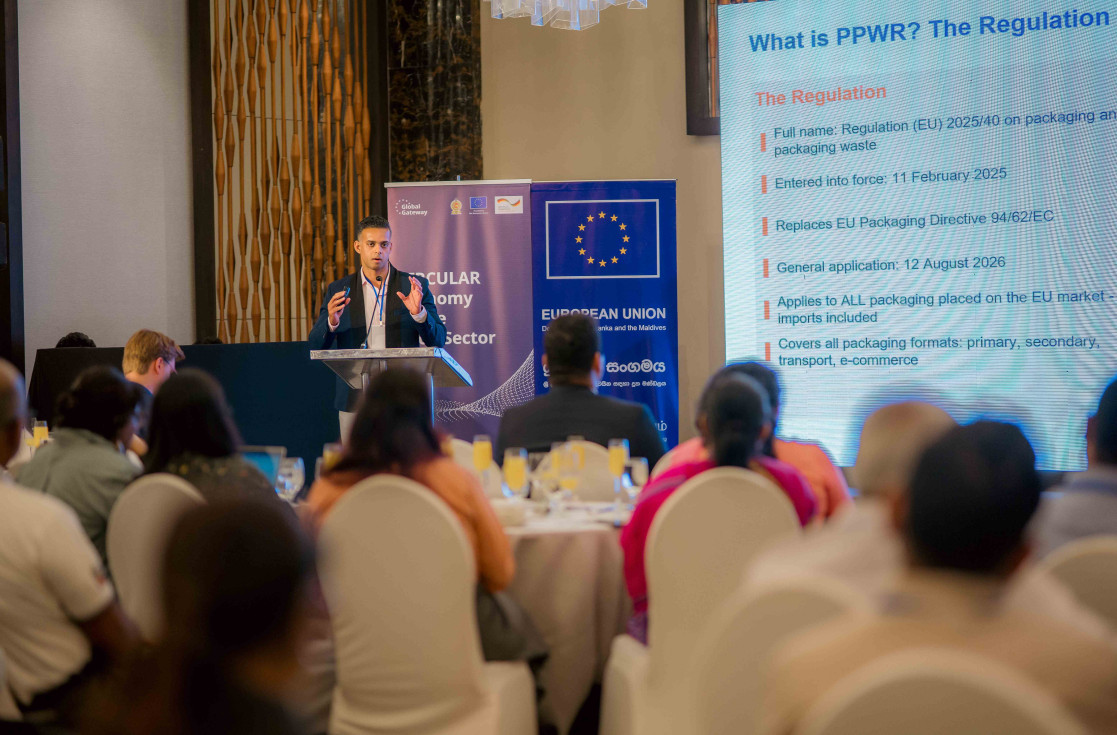
Expertise France, 2026
Building on this regulatory overview, participants explored practical pathways towards compliance, including packaging redesign, sustainable material selection, and supplier due diligence, certification, traceability and technical documentation. Through case studies and interactive compliance mapping exercises, businesses assessed the readiness of their own packaging portfolios and identified priority actions to meet future PPWR requirements. Discussions also highlighted the importance of investing early in packaging innovation and strengthening collaboration across the supply chain to remain competitive in the European market.
The seminar concluded with participants identifying priority actions for their organisations, including reviewing existing packaging portfolios, engaging suppliers, strengthening technical documentation, and planning the investments required to meet future compliance obligations. A central message that emerged from the seminar was that businesses must begin preparing now. Participants were encouraged to take early action to mitigate future risks, maintain access to the European market, and respond to the growing demand for more sustainable packaging solutions across global value chains.

Expertise France, 2026
Speaking about the learnings from the seminar, Nishan Perera, President of the Sri Lanka Institute of Packaging noted, “For Sri Lanka’s export-driven food and packaging sectors, understanding these complex EU regulations is very important. The resource people at this seminar were very informed about the regulations, their expertise about the regulations was very helpful for us to build a definitive and comprehensive roadmap.”
The CIRCULAR Project supports Sri Lanka's transition towards a circular economy by reducing food loss and waste and tackling single-use plastic pollution. By promoting sustainable production and consumption, innovation and collaboration across the food value chain, the project is helping build a more circular and resilient food sector.