Dushanbe Hosts Conference on Tajikistan’s Ratification of UN Torture Prevention Protocol
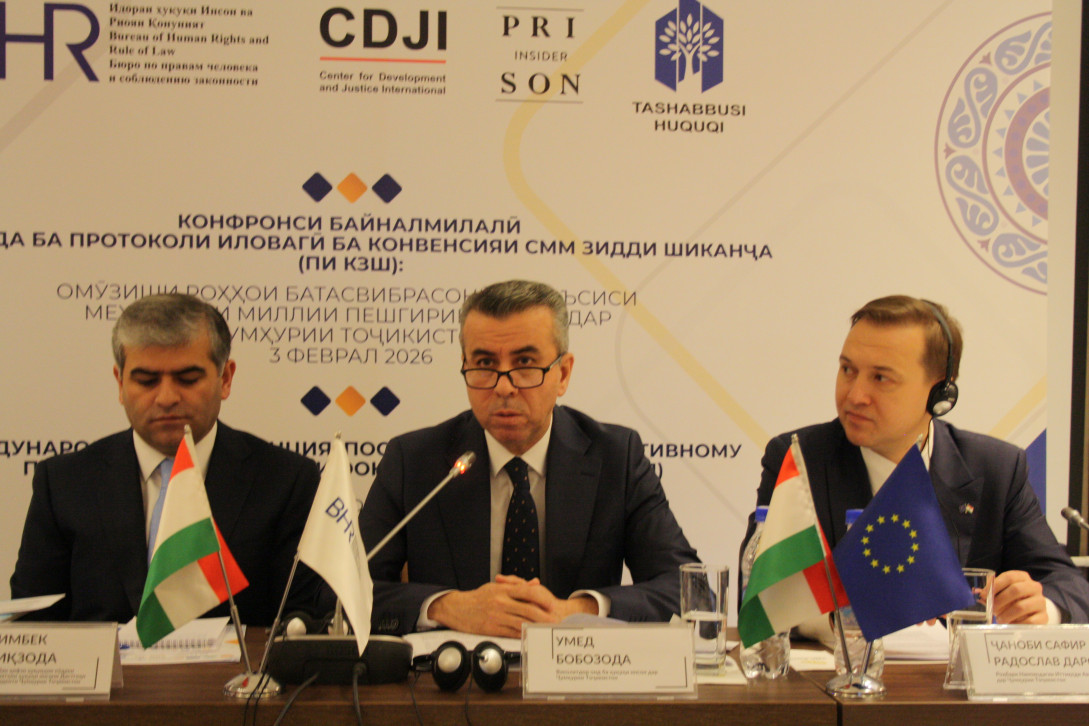
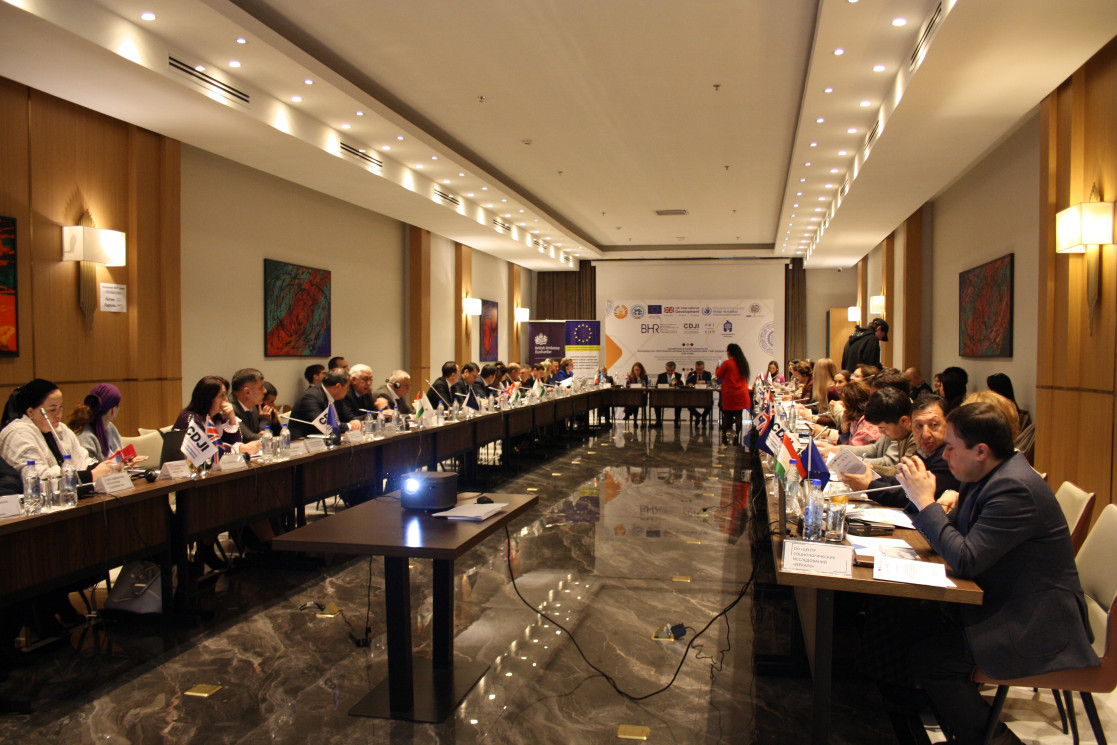
On 3 February, a high-level international conference was held in Dushanbe, dedicated to the Optional Protocol to the UN Convention against Torture (OPCAT), the exploration of pathways to its ratification, and the establishment of a National Preventive Mechanism (NPM) in the Republic of Tajikistan.
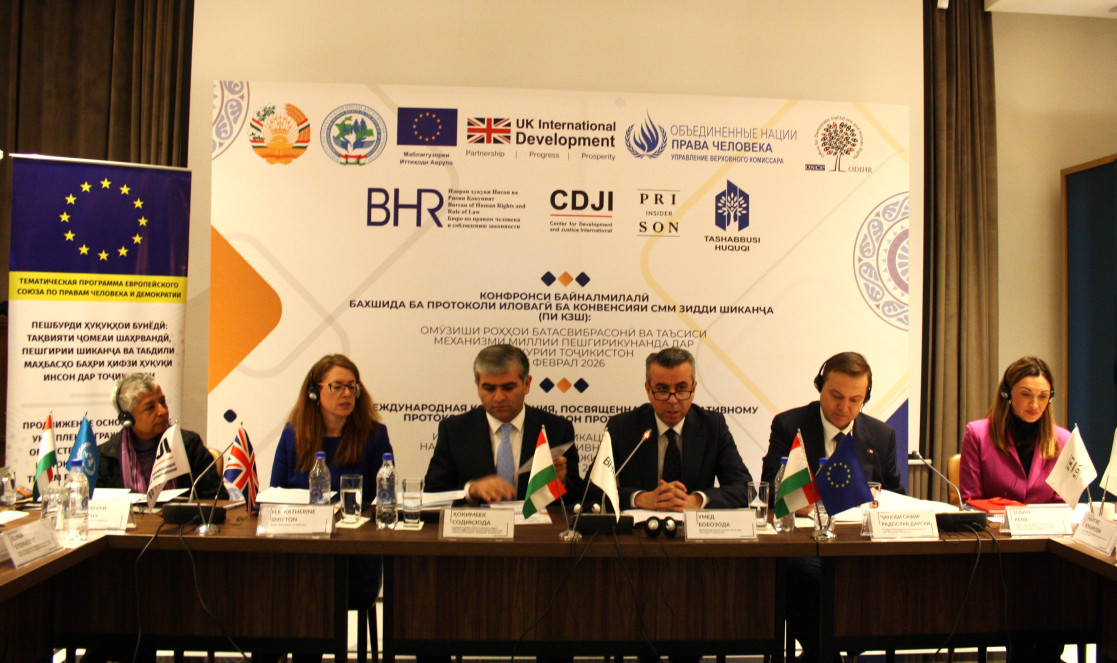
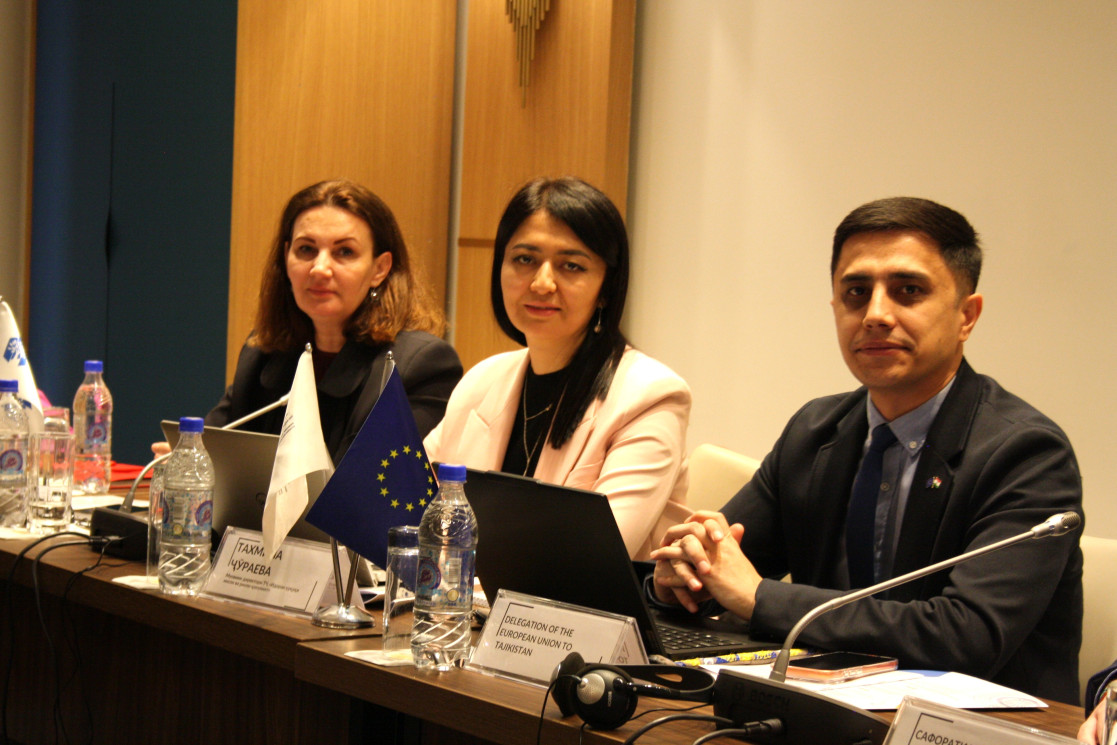
The event was attended by representatives of the Human Rights Guarantees Department of the Executive Office of the President of the Republic of Tajikistan, the Office of the Human Rights Commissioner (Ombudsman) of the Republic of Tajikistan and other state bodies of the country, as well as Ambassadors of the European Union, the United Kingdom and other countries accredited in Tajikistan, members of the UN Subcommittee on Prevention of Torture, , and representatives of international and national civil society organisations.
The conference was organised by the public organisation “Bureau of Human Rights and Rule of Law” jointly with the Office of the Human Rights Commissioner of the Republic of Tajikistan and a partner organisation— Center for Development and Justice International—within the framework of the implementation of the following projects:
“Advancing Fundamental Rights: Strengthening Civil Society, Preventing Torture and Transforming Prisons for Human Rights in Tajikistan”, funded by the European Union and implemented by the Bureau of Human Rights in partnership with the public organisation “Tashabbusi Huquqi” and the French organisation Prison Insider.
“Supporting National Human Rights Institutions and NPMs in Preventing Torture and Monitoring Places of Detention in Tajikistan and Uzbekistan”, funded by the UK FCDO in partnership with the Center for Development and Justice International (CIDJ).
Within the framework of these initiatives, a pilot group for monitoring places of deprivation and restriction of liberty was established in Tajikistan, comprising staff of the Office of the Human Rights Commissioner and representatives of civil society. Members of the group have received practical training, applied standardised monitoring tools and carried out joint visits to places of deprivation and restriction of liberty. As a result of this work, a comprehensive monitoring report with findings and recommendations is being prepared.
Delivering the opening remarks, a representative of the Human Rights Guarantees Department of the Executive Office of the President of the Republic of Tajikistan, Hokimbek Sodikzoda, noted: “For the effective implementation of the Optional Protocol to the Convention against Torture and Other Cruel, Inhuman or Degrading Treatment or Punishment, we need to carry out profound and systematic reforms prior to its ratification. Various documents have repeatedly emphasised the decision of the Government of the Republic of Tajikistan to ratify the Optional Protocol. Despite the considerable time that has passed, the continuous and joint efforts of the Government, international organisations, and civil society have never ceased, and significant progress can be observed towards the ratification of the said instrument”.
EU, BHR Tajikistan, 2026
In his speech, the Human Rights Commissioner of the Republic of Tajikistan, Umed Bobozoda, emphasized: “The issue of ratifying the Optional Protocol to the Convention against Torture has been included in the National Action Plans of the Republic of Tajikistan since 2012. Working and monitoring groups have been established under the Human Rights Commissioner, whose activities may form the basis for the introduction of a National Preventive Mechanism ensuring regular monitoring of places of deprivation and restriction of liberty in order to prevent torture”.
In his opening address, the Ambassador of the European Union to Tajikistan, Radoslaw Darski, stated: “Today’s conference is not an end in itself. It is an opportunity to deepen understanding, address concerns, and chart a realistic and nationally owned path forward. The European Union encourages Tajikistan to continue exploring OPCAT ratification with openness and ambition, and to engage all relevant stakeholders in shaping a strong pre-emptive framework”.
In turn, the British Ambassador to Tajikistan, Catherine Smitton, emphasised: “I welcome Tajikistan’s readiness to strengthen oversight of places of detention and call for the swift ratification of the Optional Protocol to the Convention against Torture. This will be an important signal of reform, particularly within the prison system, and a step towards sustainable development. The forthcoming Universal Periodic Review provides an appropriate opportunity to ratify the Protocol as part of a broad and ambitious agenda.”
The UN Resident Coordinator in the Republic of Tajikistan, Parvati Ramaswamy, stated that the ratification of the Optional Protocol to the Convention against Torture, as a practical and preventive instrument, would represent an important milestone for the country.
EU, BHR Tajikistan, 2026
“The Government of Tajikistan has already taken steps to strengthen the national legal framework and monitoring mechanisms in the area of torture prevention under the Convention against Torture, which was ratified in 1995. I call for continued dialogue and efforts to build trust in order to accelerate the ratification of OPCAT by the Government of Tajikistan,” Parvati Ramaswamy emphasised.
Speaking at the conference, Susan Kerr, Head of the Human Rights Department at the OSCE Office for Democratic Institutions and Human Rights (ODIHR), stated: “Civil society is a crucial part of the torture prevention ecosystem. That's why it's so important to us at ODIHR to work closely with civil society organisations. Dialogue and cooperation across the board are vital to drive the ongoing prevention process forward”.
The Director of the public organisation “Bureau of Human Rights and Rule of Law”, Nargis Zokirova, noted that the conference is aimed at developing strategic dialogue between state authorities, parliamentarians, the judiciary, civil society institutions and international experts, including representatives of the UN Subcommittee on Prevention of Torture. “The main objective of the event is to facilitate the process of OPCAT ratification and to discuss practical steps for the institutionalisation of the NPM in accordance with international standards,” she stressed.
EU, BHR Tajikistan, 2026
The event was held with financial support from the European Union and the British Embassy in Tajikistan through the FCDO, with co-funding from the Office of the UN High Commissioner for Human Rights and the OSCE Office for Democratic Institutions and Human Rights (ODIHR).
For further information, please contact the Director of the public organisation “Bureau of Human Rights and Rule of Law”, Nargis Zokirova: zokirovan@gmail.com.