
The European Union and Timor-Leste convene second Steering Committee meeting for the Regional Integration and Trade Project
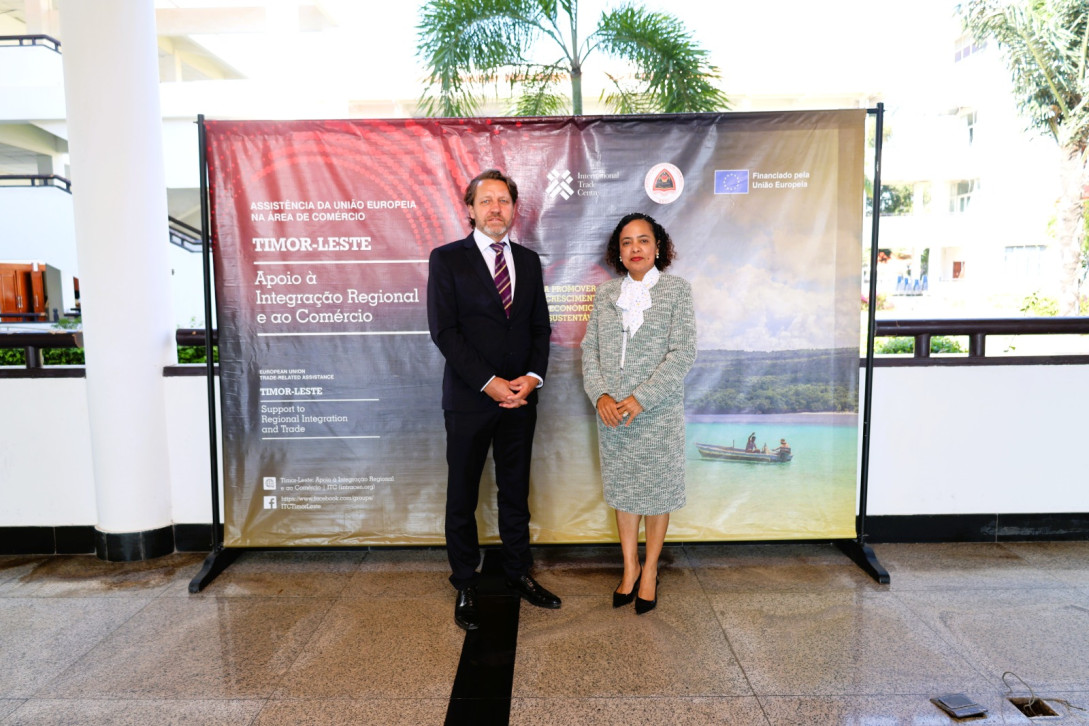
Co-chaired by the EU Ambassador to Timor-Leste, H.E. Thorsten Bargfrede, and the Vice-Minister for ASEAN Affairs, H.E. Milena Maria da Costa Rangel, the meeting also included the participation of the Vice-Minister of Trade and Industry. It brought together Steering Committee members from the Government, the private sector and civil society, alongside other invited representatives from these constituencies.
Participants reviewed progress in project implementation, discussed priorities and provided strategic guidance for the project’s remaining implementation period of 2026. They welcomed the project’s contribution to Timor-Leste’s historic accession to ASEAN and its continued support for post-accession implementation.
From accession to implementation
The project made a substantial contribution to Timor-Leste’s accession to ASEAN by supporting the preparation and negotiation of market-access commitments covering trade in goods, services, investment and the movement of natural persons. It also provided legal and regulatory analysis, strengthened coordination among government institutions and raised public awareness of the accession process.
With accession achieved, the emphasis is now on putting these commitments into practice. Work initiated during the accession process—including on investment, competition, consumer protection, intellectual property and the digital economy—will remain central, with an increasing focus on implementation. This includes translating regional commitments into national laws, policies and procedures and strengthening the institutions responsible for applying them.
Turning integration into economic opportunities
Committee members emphasized that regional integration must translate into tangible economic opportunities for Timorese businesses and citizens.
To achieve this, the project will support private-sector readiness and competitiveness, public–private dialogue, investment facilitation and wider awareness of the opportunities created by ASEAN membership. This will complement continued assistance on competition, consumer protection, intellectual property and the digital economy, helping ensure that stronger laws and institutions produce practical benefits for enterprises and consumers.
The Vice-Minister for ASEAN Affairs highlighted the importance of preparing Timor-Leste for developments in the digital economy, including artificial intelligence. The EU Ambassador identified additional areas in which ITC assistance could add value, including the blue economy—particularly maritime tourism and fisheries—opportunities linked to the EU–Pacific Economic Partnership Agreement, and stronger customs capacity.
The Vice-Minister of Trade and Industry underscored the need to help Timorese enterprises improve their productivity and competitiveness so that they can participate effectively in ASEAN markets and beyond.
Future assistance will be aligned with national priorities and provided within the project’s mandate and available resources. The Steering Committee reaffirmed that strong national ownership, effective institutional coordination and inclusive participation will be essential to turn regional integration into lasting benefits for the people of Timor-Leste.