
The EU at Geneva's Digital Week: Advancing Global Cooperation on Artificial Intelligence
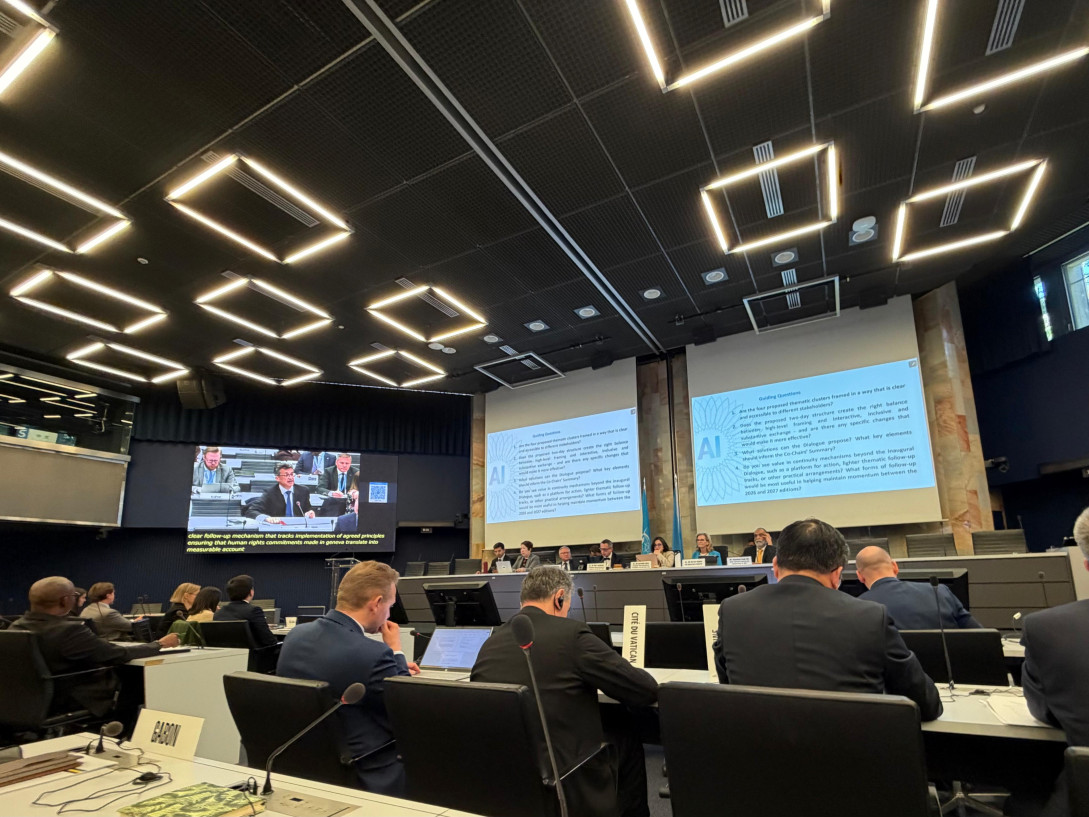
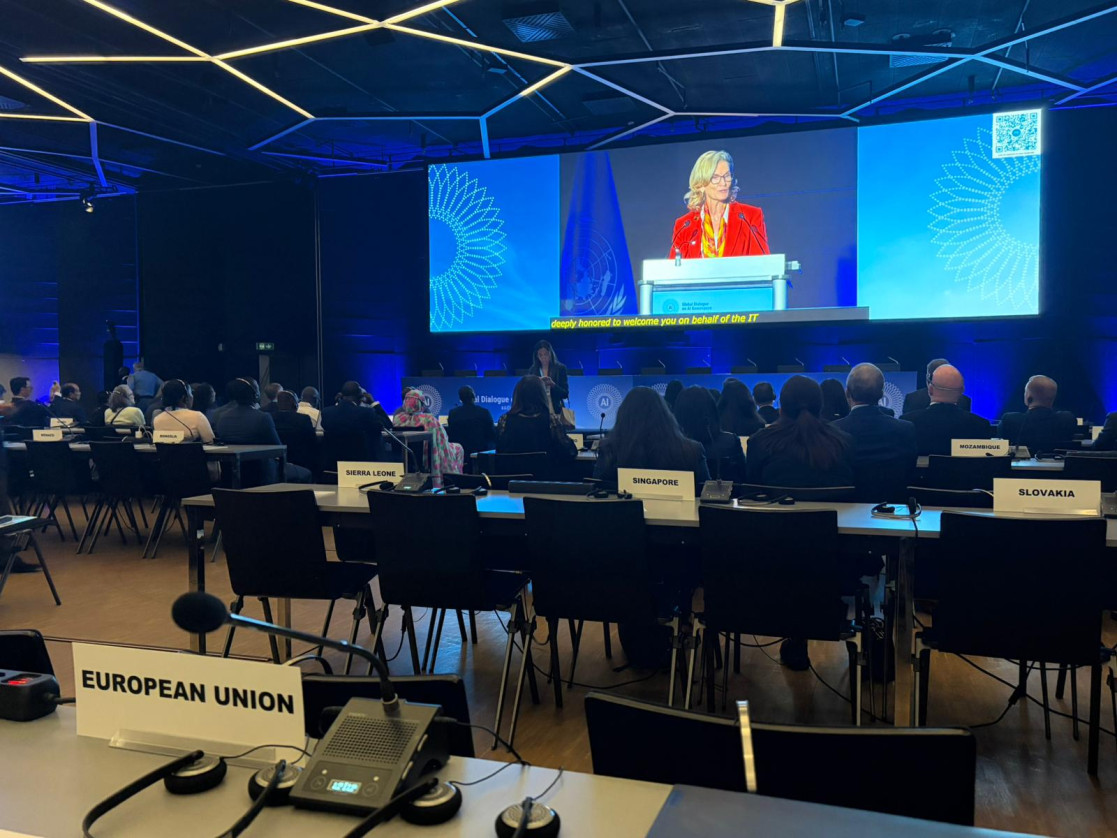
A milestone of the week was the first-ever UN Global Dialogue on AI Governance, which brought together representatives from more than 170 countries and over 4,200 participants from around the world. The Dialogue marked a significant step in placing artificial intelligence on the multilateral agenda and demonstrated growing recognition that international cooperation will be essential to harness the benefits of AI while addressing its risks.
One of the highlights was the address by UN Secretary-General António Guterres, who underscored the urgency of action, warning that “we may be the last generation able to set the terms on which humanity and machines coexist.”
Representing the European Union and its Member States, Roberto Viola, Director-General of DG CONNECT at the European Commission, participated next to EU Ambassador Deike Potzel, representing the EU Delegation throughout the week. He highlighted the importance of multilateral engagement at a time of rapid technological change in discussing how international cooperation can help maximise the benefits of AI while addressing its risks.

EU Delegation, 2026
A successful first Global Dialogue can lay the foundation for greater international cooperation on AI, which is truly needed in a fast-evolving AI landscape. It will have to base AI discussions on a credible, independent scientific baseline and thus create the conditions for effective multistakeholder collaboration to avoid a race to the bottom, whereby technological advances are pursued at any cost. | EU statement
Throughout the discussions, the EU emphasised its commitment to responsible and trustworthy AI innovation.While recognising AI's transformative potential for areas such as healthcare, energy efficiency, scientific research and sustainable development, the EU stressed that innovation must go hand in hand with safeguards, transparency and respect for fundamental rights. Therefore, the EU showcased its efforts to strengthen Europe’s AI ecosystem, including investments in AI Factories and AI Gigafactories, the development of a sovereign and sustainable AI infrastructure, and initiatives led by the European AI Office to promote innovation and trustworthy AI solutions. It also underlined the importance of evidence-based policymaking, supporting the work of the Independent International Scientific Panel on AI as a foundation for future governance discussions.
EU Delegation, 2026
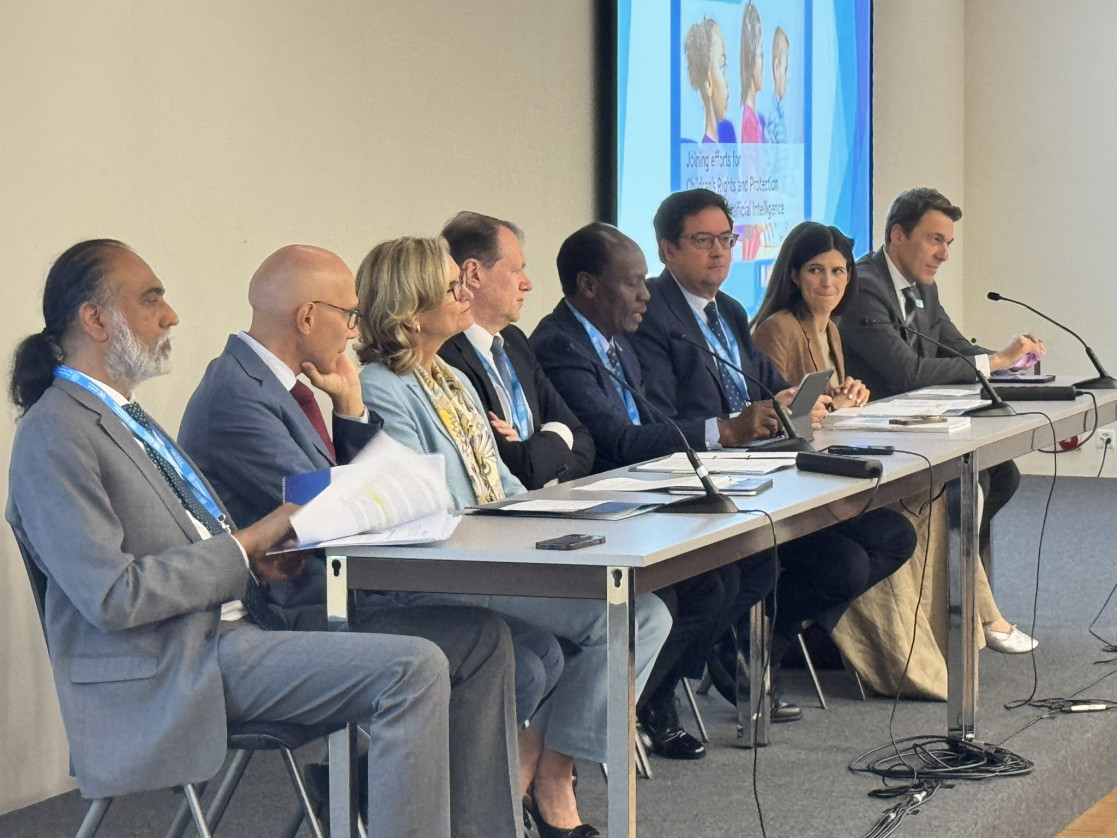
The fast evolution of AI carries considerable societal risks.
While AI can equip children with valuable skills and open new horizons for learning, it can also be used to manipulate, exploit, and harm them. AI presents unprecedented risks and harms to children's safety, physical, mental and cognitive development, and rights. The international community must therefore act decisively to ensure that AI is designed, deployed, and governed in a manner that safeguards children's rights, safety, well-being, and development in the digital age.
Similarly, while AI can support the efficient operation of power grids, it can also be weaponised to probe them for weaknesses. The very technology that models climate solutions also consumes increasing quantities of energy and water. The exponential growth of the AI economy is itself posing financial risks and exacerbating geopolitical pressures. And although generative AI is based on the work of cultural creators and journalistic media content, it now threatens to replace them - and, so far, without providing adequate remuneration.
The tension between transformative opportunities and new pressures and risks defines the central challenge before us. Meeting this challenge will require determined action, strengthened international cooperation, and a shared commitment to ensuring that AI serves the public interest.
EU Delegation, 2026
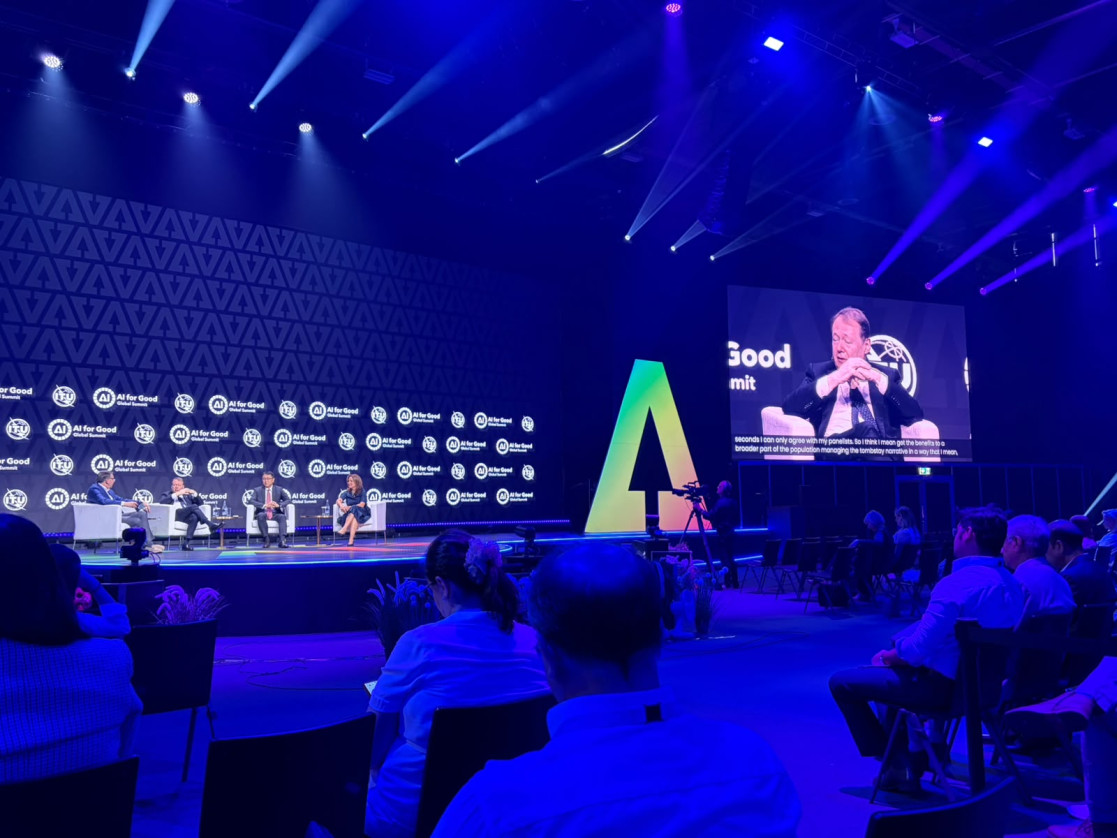
How to best govern AI?
The EU has adopted the approach of responsible and trustworthy AI innovation. We support the development and deployment of AI that is safe, secure, and sustainable, so that everyone can trust it. We want to unlock the potential of AI to reap its benefits, while implementing safeguards and mitigating the associated risks. Our approach is therefore both human-centric and grounded in international human rights law, placing individuals, their dignity, rights, freedoms and well-being at the centre of AI development and deployment. After all, there will be no innovation in AI without adoption, and no adoption without trust in the technology.
With this objective, the EU has adopted uniform risk-based AI rules across its single market. Our legislation only intervenes where the risk is too high or unacceptable, protecting health, safety, and fundamental rights freedoms of those living in the EU. Trust is necessary to support adoption and is in high demand by the industry itself.
A central message throughout the week was that no country can address the opportunities and challenges of AI alone. Effective governance requires international cooperation, inclusive multistakeholder participation and a shared commitment to ensuring that technological progress benefits everyone.
The EU comes to this dialogue seeking something durable: a shared commitment to the principle that technology and its benefits must serve all of humanity and the planet, leaving no one behind. | EU statement
EU Delegation, 2026