
Syria – one year on: the lessons learned and the opportunities going forward
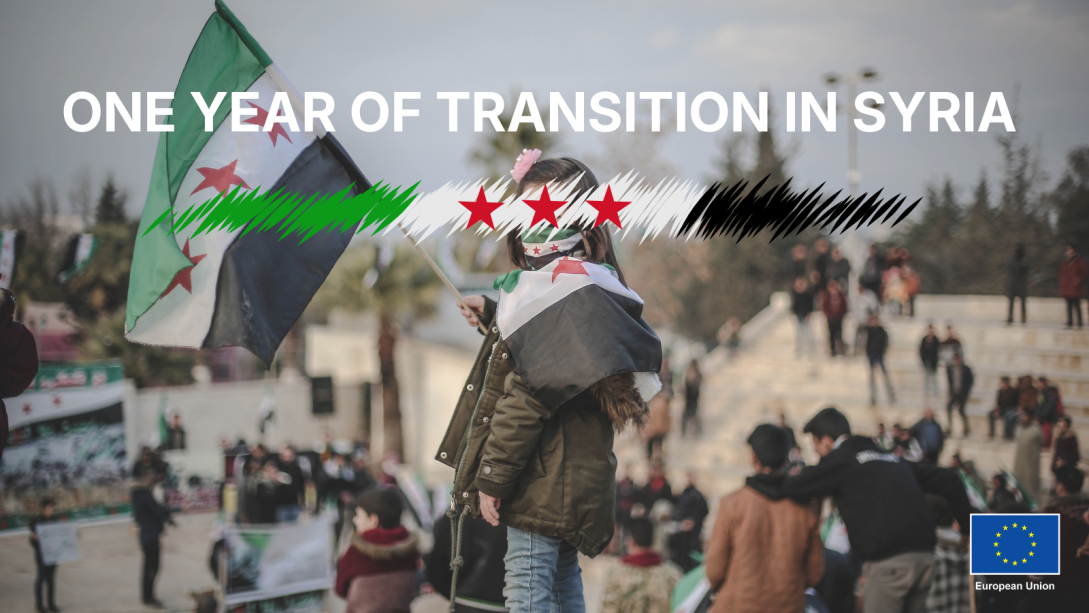
In his opening remarks, EU Ambassador Michele Cervone d’Urso, Deputy Head of the EU Delegation to the UN in Geneva, highlighted the positive elements, such as the creation of Syrian institutions for Missing Persons and for Transitional Justice, but also took note of negative developments. The Commission of Inquiry, for instance, reported that more than 3,000 Syrians have died in the different massacres on the Coast and in Sweyda last year, telling us that the political transition in Syria is not yet over.
The discussion reiterated the importance of accountability and transitional justice, bringing together Syrian civil society representatives as well as representatives of relevant UN mechanisms on Syria: The Commission of Inquiry, the IIIM, the Institution for Missing Persons. The EU strongly supports these bodies in this process, as Syria and many UN bodies need to learn how to trust each other again in order to work together for the common benefit of the Syrian people.
“There are laws to be approved on transitional justice and on NGO registration on which we are happy to help Syrian authorities. We are here to listen to what the civil society thinks of these developments. This is an exercise that will be all the more important for us in view of the upcoming High Level Political Dialogue that we will have with the Syrian government in Brussels, of which human rights and accountability will be an important component. “ – Deputy Head of Delegation Michele Cervone D’Urso
The speakers reminded that at this moment in time it is too soon to draw on all lessons learned. Yet they all agreed that it is time and that there is a need for Syria to move ahead, with its people being the ones most qualified and responsible to lead in this process and to restore confidence and a sense of belonging, reminding that the Syrian government bears responsibility to accept the views of all components of all of Syrian society. This is crucial, as a stable and credible state must be built on accountability, otherwise a country’s path will inevitably return it into conflict. The panel concluded that a transitional justice process will still take time, but it needs to be an inclusive and collective process to allow for people to arrive at the truth and for lessons to be learned.
The panellists included Monia Ammar (Commission of Inquiry on the Syrian Arab Republic), Robert Petit (Head of the IIIM) and several Syrian civil society activists from Families for Freedom, Justice for Life, Women Now, and the Syrian Center for Media.


