The EU’s Support to Ukraine’s Comprehensive Child Care and Child Rights Reform
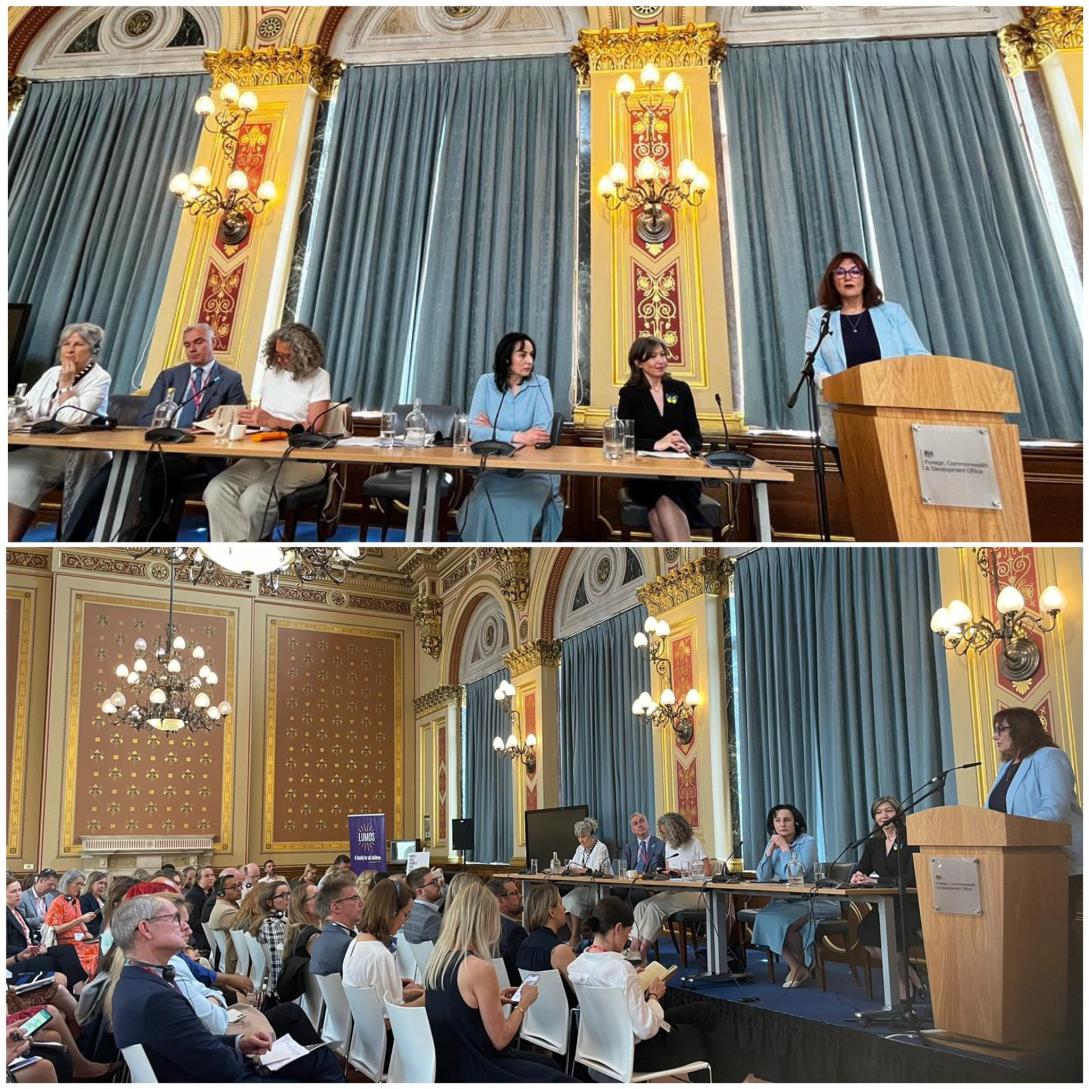
Dear Miss Brown,
dear Baroness Kennedy,
dear Minister Zholnovich,
dear Oksana, Ms Dholakia,
dear Mr Cori,
dear Ms Kurlyo,
dear partners, ladies and gentlemen,
A generation of Ukrainian children has experienced more than a year of, fear, loss tragedy and violence.
In just a second, they had to leave life as they know it behind them.
Russia’s illegal war of aggression in Ukraine is having a devastating effect on all Ukrainians, but especially children.
This is the reality on the ground.
This is why I warmly welcome today’s event and am encouraged by the strong engagement of this wide range of partners.
Protecting children is a key priority. And I feel that it is my obligation to ensure that this is the case both in the European Union and in Ukraine.
It is a forward-looking priority, as we seek to include a reformed child protection system and child rights reform in Ukraine’s reconstruction process.
From the EU’s perspective, the reconstruction is also closely linked with Ukraine’s EU accession aspirations.
The vision of this week’s conference, and the overall reconstruction of Ukraine, is to ‘Build Back Better.’
Without safeguarding Ukraine’s future generations, the reconstruction of the country will neither be complete nor sustainable.
We discuss the role of the private sector and innovative technology in UA's recovery.
Let us not forget that prioritising childcare and protection is fundamental to creating a future where every child can thrive and contribute to the country's economic revitalisation.
So, what have we done so far?
Around one fifth of Ukrainian children benefit from temporary protection in the EU.
Almost 40% of the people registering for temporary protection are minors.
Their protection while in the European Union is a priority for the Union and its Member States.
We have activated the Temporary Protection Directive to offer immediate protection to 4 million people, including children, who have fled to the European Union.
In addition to the support provided to Member States, the overall European Union support to Ukraine amounts at this point to almost €70 billion.
Child protection is a central feature of our support.
And President von der Leyen was clear on this point earlier this week regarding a new Ukraine Facility.
As announced on Tuesday, the European Commission proposes to foresee up to €50 billion from 2024 to 2027 to help Ukraine resist the aggression and rebuild a modern, prosperous country.
We work closely with all Member States and Schengen associated countries regarding the Solidarity Platform to ensure proper protection of the children who are now living in these countries.
The European Union and its Member States offer protection, shelter, access to healthcare, psycho-social support and education to Ukrainian children.
It is our joint responsibility to ensure that the best interest of these children is served.
That they benefit from national child protection support services which meet quality care standards, aligned with the highest European standards of deinstitutionalisation.
Member States have made significant efforts to ensure that Ukrainian children have access to the local schools and have all the necessary support for continuing the Ukrainian education curriculum online.
The Commission and the EU Agencies will continue to support the reception and care system for migrant children in Member States and Schengen associated countries through guidance, expertise, advocacy and funding.
Over 5,000 children from institutions have been evacuated.
The Commission is supporting Member States in ensuring that these children receive appropriate accommodation and care, under the continued supervision of their Ukrainian guardians.
The specific needs of those in vulnerable situations or persons with disabilities should be considered, in accordance with the UN Convention on the Rights of persons with Disabilities.
We can all agree that children returning to Ukraine must return to reformed, safe, family-based foster care or community-based care.
This is why we are assisting Ukraine in rebuilding their care system through a child rights approach.
From the European Union’s perspective it’s important that the childcare and protection system reflects the obligations under the Convention on the Rights of the Child.
The UN Committee on the Rights of the Child and the Committee on the Rights of Persons with Disabilities have done extensive work to clarify States Parties’ obligations to end institutionalisation.
On 2 June 2023, the Swedish Presidency of the Council issued the Stockholm declaration on protecting children in Ukraine and in the EU.
Almost all EU Member States endorsed the declaration to mobilise support among EU member States for continued engagement in to reform the child protection system in Ukraine.
The EU sees the reconstruction as the opportune moment to invest in deinstitutionalisation and in a comprehensive child rights reform.
This is a key aspect of the EU acquis. Therefore, as I have said, Ukraine’s accession perspectives are in our mind.
Reform of the social protection system is a key tool for the implementation of the Convention of the Rights of the Child.
The ongoing reconstruction of Ukraine is an opportunity to rebuild a completely accessible and inclusive society.
We need to keep the deinstitutionalisation and childcare reform high on the political agenda.
In this vein, we welcome your readiness, dear Oksana, and that of the Ukrainian authorities to engage in a reform of the current system of institutions for providing care to children permanently or temporarily deprived of parental care.
As announced by President von der Leyen during her visit to Kiev on the 2nd of February, the Commission will support this reform process with a secured 10 million euros project to provide expertise and financial support to Ukraine to design and implement this reform.
We are working with the Ministry of Social Policy and UNICEF to establish a Reform Support Office in the Ministry.
The Commission welcomes the appointment of the Head of the Reform Support Office, Ms Iryna Tulyakova.
A broad engagement of other Ukrainian institutions at all levels that have a role to play in deinstitutionalisation is also essential, to ensure broad ownership and success of the reform.
This reform should stretch across all generations, as not only children, but also many older people deserve a life in dignity, outside institutions and with appropriate care and social support.
The quality and success of the deinstitutionalisation reform will be an important benchmark for measuring Ukraine’s preparedness for accession.
These reforms are complex. They require the cooperation of a variety of actors at national, regional and local level.
We encourage a robust and inclusive coordination process.
Ladies and gentlemen,
Today we are talking about childcare reform.
But we need to embed this into the broader context of a comprehensive child rights reform in Ukraine.
We stand ready to advise you throughout this process.
Ongoing EU initiatives under the EU Strategy on the rights of the child could potentially serve as a blueprint and roadmap for this reform.
Another useful model is our European Child Guarantee. Its objective is to break the vicious cycle of poverty and promote equal opportunities by guaranteeing access to a set of key services for children in need.
Indeed, thanks to the application of the Temporary Protection Directive, Ukrainian children inside the EU already benefit from the provisions of the Child Guarantee.
Children are holders of their own set of rights.
We need to respect that.
Children have the right to be listened to and to participate in decisions on all matters concerning them.
This is set out in the UN Convention on the Rights of the Child.
It is also an EU commitment enshrined in the Charter of Fundamental rights of the EU.
Taking children’s ideas and views into consideration throughout the reform process is also a condition for efficient reforms.
I am therefore pleased that our new EU Children’s participation platform has launched a first on-and offline child consultation devoted to child protection taking place coming Monday.
I hope that this will become an inspiration for child participation also for Ukraine!
Children must be part of the solution.
In early 2024, the Commission will put forward an inspirational initiative on integrated child protection systems.
It will encourage all relevant authorities and services to better work together in EU Member States, in systems that put the child at the centre.
This initiative could become another important reference document guiding child protection reform inside Ukraine.
It would be remiss to not mention the trauma that the war inflicted on Ukrainian.
If we want to ensure that Ukraine’s society can recover, that its children can heal, we need to act. Already now.
In this regard, the Commission is preparing an e-learning project for reaching those Ukrainian children that need it.
Through professional support, it will help children overcome trauma caused by war and displacement and avert a war-scarred generation of children.
Before I conclude, I need to mention the unlawful deportation and transfer of Ukrainian children.
Since July 2022, the EU has imposed sanctions against 16 individuals responsible for the deportation and forced transfer of UA children.
We are equally determined to assist UA in the efforts to return the unlawfully deported and transferred UA children to their families and communities.
In that respect, cooperation with the UN and all agencies is key for the tracing of children and their returns.
Dear friends,
We must ensure that Ukraine’s reconstruction efforts and national reform processes mainstream children’s rights and needs throughout.
The European Union stands ready to support you in this process, together with our Member States, the Ukrainian authorities, our international partners, the United Nations and with children themselves.
For as long as it takes.
Ukraine cannot be rebuilt without its children.
Every child deserves equal opportunities to succeed.
By granting childcare, child rights and protection a strong place within Ukraine’s recovery agenda, we demonstrate our commitment to not only rebuild physical infrastructure.
We also commit to investing in the human capital that will drive long-term economic growth and social development.
For Ukraine’s future, for our common European future, for present and future generations.
Thank you.