Why the integrated approach to climate change and security in the Sahel must include women
As highlighted in the EU Strategic Compass, climate change exacerbates socio-economic instability in fragile countries and leads to increased security challenges for populations.
As part of the EU's broader engagement, the EU Regional Advisory and Coordination Cell for the Sahel - RACC, is attentive to the consequences of climate change and particularly its multiplier effects of instability and insecurity in the region.
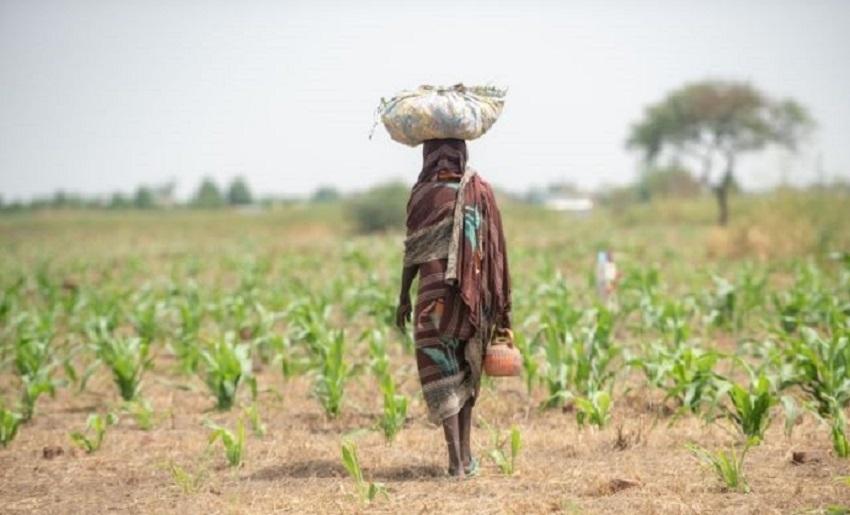
Marianne Flach, RACC's Human rights and Gender advisor, analyses this phenomenon from a gender perspective. For example, adaptation to climate change is likely to increase women's workload and the risks they face, particularly in their movements, searches, and collection of basic resources (e.g., water or wood), putting them at greater risk of violence (including sexual violence), kidnapping or human trafficking.
In addition, climate change has consequences for the recruitment of young people into armed groups and community militias. It also increases migration and population displacement in the region. By extension, men and teenagers belonging to these displaced populations are increasingly suspected of belonging to terrorist groups. They are targeted indiscriminately during certain military operations, particularly in Mali. These situations are multiplying as families' livelihoods, based on natural resources, are increasingly restricted. Under these conditions, the male population tends to migrate further and further away, often leaving women and children in areas of major insecurity, in very precarious situations.
According to Marianne Flach, even if we cannot consider a direct cause and effect relationship between climate change and conflicts, climate variability is likely to exacerbate, or even multiply, existing threats to the security of populations, food, health and economic instability. These observations are already a cause for concern in the Sahel and represent additional factors in the causes of conflicts and community rivalries between populations, particularly between sedentary and nomadic populations.
A recent paper by the Geneva Centre for Security Sector Governance rightly describes how women's rights organizations are advocating for the integration of the link between gender, climate change and security into the security sector reform process and ongoing peacebuilding efforts in Mali.
At the same time, the Women, Peace and Security National Action Plans of Mali and Niger specifically recognize the impacts of climate change on women. The National Action Plan on Women, Peace and Security in Chad, currently being developed with EU support, will include climate change.
The RACC, which integrates human rights and gender aspects into all its activities, advocates for the inclusion of climate change, gender and security in strategic documents, such as the country implementation plans of EU delegations operating in the Sahel.
In its advisory work with the G5 Sahel, the RACC ensures that climate change issues are reflected in the draft gender and human rights policy.
As the RACC's Human Rights and Gender Advisor points out, "in this approach, which is still too little known, it is a matter of providing responses adapted to local situations; there is no 'universal' solution. The most important thing is to consider women as part of the solution, and not only as victims of a situation, of fatality".