UNODC and EUMAM MOZ Launch Specialised Training on Victim Assistance in Terrorism Cases in Mozambique

Running from the 14th to 17th April 2026 in Maputo, the training brings together officers from the Mozambican Defence Armed Forces (FADM), the Police of the Republic of Mozambique (PRM), and the National Criminal Investigation Service (SERNIC). It is the third initiative of its kind under the broader project “Support to Strengthening Criminal Justice in Mozambique”, which aims to reinforce the country’s institutional response to terrorism within a human rights framework.
Mozambique continues to face a severe and evolving terrorist threat, particularly in Cabo Delgado province, where ongoing conflict has claimed more than 6,000 lives and displaced over one million people. This humanitarian crisis underscores the urgent need for coordinated victim-centred approaches within the criminal justice system.
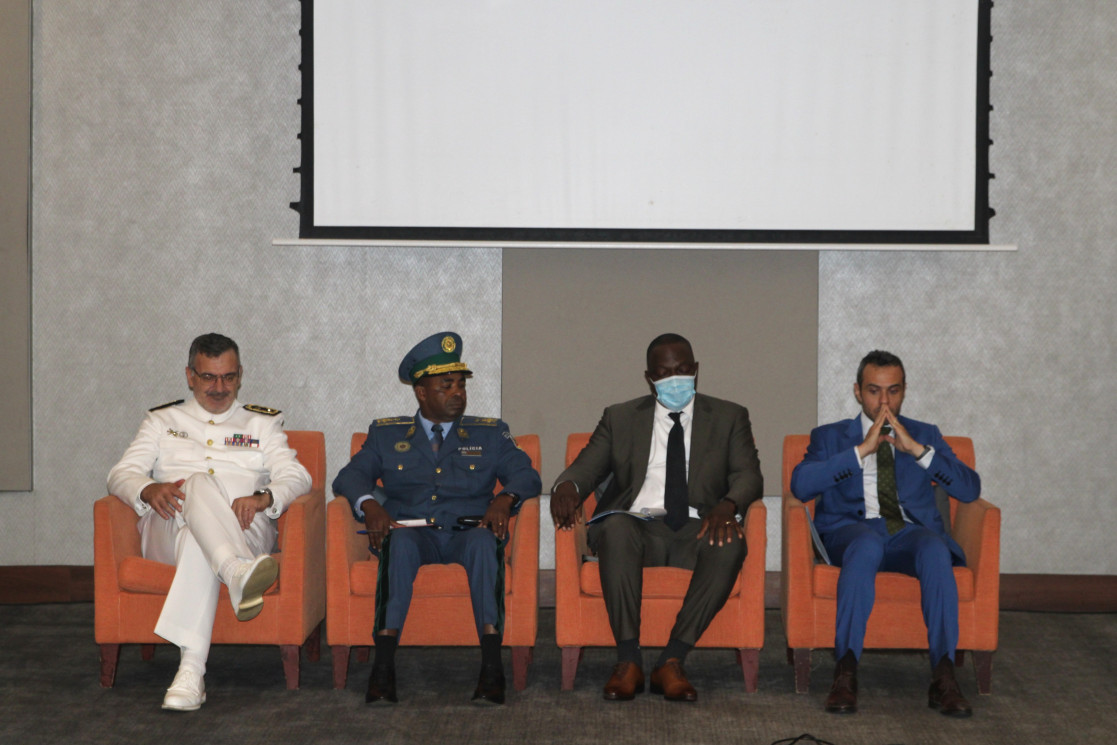
Speaking at the opening ceremony, Mr. Antonio De Vivo, Head of the UNODC Office in Mozambique, stressed the centrality of victim support to effective counter-terrorism efforts: “protecting victims of terrorism is not only a humanitarian obligation. It is a central component for strengthening the rule of law and preventing violent extremism." He further noted that Mozambique stands on "the frontline of the global evolution of terrorism,” calling for institutional capacity that extends well beyond purely military responses.
Commodore César Pires Correia, Mission Force Commander of EUMAM MOZ, echoed this call for a coordinated, whole-of-government approach: “The response to terrorism cannot be exclusively military. It requires an integrated, coordinated and multidisciplinary approach, involving the defence and security forces, the justice system and other state services.” He underlined that “this training also represents a concrete opportunity to strengthen cooperation among these various institutions”.
Mr. Lázaro Machava, representing the Director-General of SERNIC, His Excellency Ilídio José Miguel, highlighted the strategic importance of the initiative for Mozambique's security and justice sectors: “This training is a crucial and a strategic decision. Strengthening the professional capacity of our personnel is fundamental to effectively respond to emerging criminal phenomena, particularly terrorism and transnational organised crime.”
Finally, the First Deputy Police Commissioner, Commander of the Public Order and Security Branch of the Police of the Republic of Mozambique, Fabião Pedro Nhancolo, opened the training, commending the work of the financial effort of the European Union, wishing that such activities can be further replicated in Cabo Delgado and Nampula.
European Union Military Assistance Mission in Mozambique, 2025
The training equips participants with practical tools to ensure dignified, safe, and needs-based assistance to victims. Core areas of focus include the application of international protocols, identification of vulnerable individuals, integration of gender and age considerations, and prevention of secondary victimisation. By strengthening coordination between security forces and justice institutions, the initiative also seeks to enhance public trust in state institutions and build a more sustainable national response to terrorism.
The United Nations Office on Drugs and Crime (UNODC) is a global leader in the fight against illicit drugs and international crime. UNODC operates in all regions of the world through an extensive network of field offices.
EUMAM MOZ helps the Quick Reaction Forces (QRF) of the Mozambican Defence Armed Forces (FADM), to achieve a sustainable operational cycle in accordance with International Humanitarian Law. It combines advising, mentoring and specialised training.
The training is funded by the European Union as part of its ongoing commitment to peace, security, and the rule of law in Mozambique and the wider region.

European Union Military Assistance Mission in Mozambique, 2025