European Union as a global security actor and its contribution in the GCC and the Middle East
Your Excellencies,
Mr Chairman,
Ladies and gentlemen,
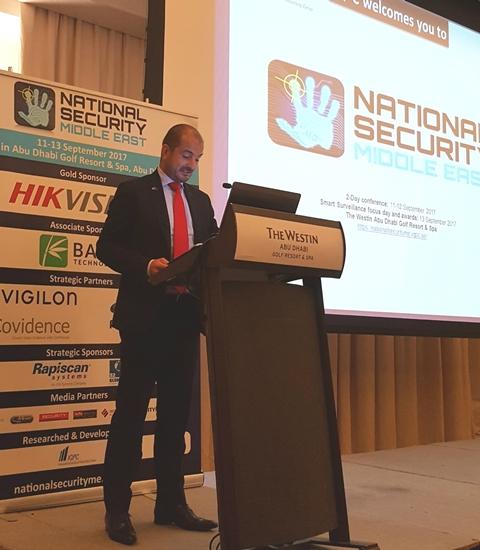
It is indeed an honour to address you this morning, and I sincerely thank the organisers for inviting me to deliver this keynote speech.
I am here to present you with a few elements on why the European Union is becoming increasingly a global security actor. I will also stress what the EU is currently doing in the wider Middle East and more specifically in the GCC, in order to help improve regional security.
First and foremost, I would like to recall that the European Union is a unique economic and political union between 28 European countries that together cover much of the continent and gather 500 million people.
The idea of this European Union was born to promote economic integration in order to prevent any upcoming wars in Europe. The founding fathers of EU thought that countries that trade with one another and become economically interdependent are more likely to avoid conflict. And this proved efficient for the last 65 years, during which EU citizens remained "united in diversity", which is the European motto. The Nobel Peace Prize awarded to the European Union in 2012 serves as a symbol of a successful project to advance peace, reconciliation, democracy and human rights in Europe. Let me stress that the EU is the first group of countries in the world to be awarded this honour.
Now the European Union is the first trading partner and the first foreign investor for almost every country in the globe as well as it is the largest supplier of development and humanitarian aid in the world.
But you will tell me: true, however, what has the EU achieved in the field of security and defence. In other words, the EU, how many divisions ?
And you would be right to ask since it took some time for the EU to truly develop a genuine security policy. We had to wait until the entry into force of the Maastricht treaty in 1993 to talk about a Common Foreign and Security Policy and 2003 to see the first operational missions in the field. Since 2003, the EU has initiated over 30 crisis-management missions and operations using capabilities provided by the Member States – I will give a few examples of them later in my presentation.
Those missions, since the entry into force of the Lisbon Treaty in December 2009 include " joint disarmament operations, humanitarian and rescue tasks, military advice and assistance tasks, conflict prevention and peace-keeping tasks, tasks of combat forces in crisis management, including peace-making and post-conflict stabilisation". In addition, these tasks "may contribute to the fight against terrorism, including by supporting third countries in combating terrorism in their territories[1]".
Over the last years, and especially since 2016, things have been moving fast and the EU has stepped up its engagement to take its share in the responsibility for global security and towards a European Union of security and defence.
Before going to a certain number of examples of how we are trying to make a difference, I will tell you the reasons why.
I will not surprise you if I tell you first that this is of course triggered by the fact that there is a strong call by European citizens exposed to dangers – not least terrorism - for a more United Europe around the matters of security and defence;
We also realized that events outside our borders are increasingly affecting our own security. A safer European union is therefore one that can engage outside our borders, supporting our partners through humanitarian aid, through our development policies and also with military means when necessary;
And last, because we can do it and we need to do it the European way. We have as European Union a unique mix of tools that no other actor on the global scene has. We have the unique experience of having built regional integration through cooperation. The fact that we created the European Union when we realized that making business was much more convenient than making war ! And this is a very powerful basis to work with our partners in the world on the basis of cooperation and partnership to build security and guarantee that there is an integrated approach to security. Because we believe, that security is not just military, and that you need to have a sustainable security approach, that security is also the rule of law, human rights, democracy, good governance, but also humanitarian aid, development cooperation and conflict prevention. And we believe we can also be an inspiration to partners.
This approach is notably depicted in the Global Strategy for the European union's Foreign and Security Policy presented in June last year by the High Representative of the Union for Foreign Affairs and Security Policy, Federica Mogherini.
A full package of measures has been adopted since then, including new financial incentives in support of European defence cooperation under the European Defence Action Plan[2], and concrete proposals for closer cooperation between the EU and NATO[3], which include 42 common concrete projects from cyber to maritime cooperation.
Let me mention as well, four concrete measures that are really important in order to step up our actions:
First, we –meaning the EUMS and the EU – will invest together and we are stepping up a coordinated annual review of national defence budgets. This is going to start this autumn and this is potentially revolutionary for the way in which Member States can spend their money on defence;
Second we will research, produce and buy together – thanks to the European Defence Fund established in June this year. This is a real game changer for the European defence industry, including the small and medium enterprises;
Third, we will train our troops together; the recent inauguration of a new European Tactical Airlift Training Center in Spain, that aims at increasing the EU’s airlift capabilities by addressing shortages and increasing interoperability, is one clear example of it.
And fourth, we will steer our missions together – with the new command centre for military training missions, which has been established in June in Brussels.
As you can see, a European Union of Security and Defence is finally taking shape.
I would also like to tackle of course the issues of Terrorism and Cybersecurity.
In June, the Council adopted conclusions on EU external action on counter-terrorism. The Council reiterated its strong and unequivocal condemnation of terrorism in all its forms and manifestations, committed by whomever and for whatever purpose.
Noting that terrorism constitutes one of the most serious threats to international peace and security and that the EU has a vital interest in continuing to work with partners at the bilateral, regional and multilateral levels in countering this diverse threat, the Council addresses in its conclusions:
- Counter-terrorism structures, to reinforce the EU's capacity to enhance counter-terrorism cooperation, including in EU delegations through counter-terrorism / security experts;
- Internal-external nexus, to ensure greater coherence between internal and external actions in the field of security, strengthening the role of Justice and Home Affairs agencies with regard to third countries, and noting that with the addition of the fight against terrorism to the Feira missions through the Council conclusions of May 2017, CSDP missions and operations have a stronger role in combating terrorism;
- Strengthened cooperation with the Middle-East and North Africa, Western Balkans, Turkey, Sahel and the Horn of Africa, through enhanced political dialogue, more counter-terrorism projects and financial support for counter-terrorism and countering and preventing violent extremism, and reinforced strategic communications, in particular through StratComms Task Force South;
- Strengthened international cooperation, in particular with key strategic partners, such as the United States, Australia, Canada and the Schengen partners as well as regional and multilateral bodies, in particular the United Nations, NATO, the Global Counter-terrorism Forum, Interpol and the Global Coalition against Da'esh;
- Strengthening the EU response in key thematic areas, such as preventing and countering violent extremism, the need to effectively address online recruitment and radicalisation, the acute challenge of foreign terrorist fighters, in particular the issue of returnees, aviation security, firearms trafficking, the issue of terrorist financing and money laundering and the links between serious and organised crime and terrorism.
In parallel, securing network and information systems in the EU is essential to keep the online economy running and to ensure prosperity. The European Union works on a number of fronts to ensure cybersecurity in Europe, from raising the capabilities of the Member States to implementing the international cooperation on cybersecurity and cybercrime.
The cybersecurity strategy for the European Union and the European Agenda on security provide the overall strategic framework for the EU initiatives on cybersecurity and cybercrime. The Digital Single Market Strategy also recognises the importance of trust and security. By completing the Digital Single Market, the EU could boost its economy by almost €415 billion per year and create hundreds of thousands of new jobs. But for new connected technologies and services to take off Europeans need trust and confidence.
Tackling cybersecurity challenges together is one of the three emerging challenges identified in the mid-term review. The actions to be implemented are:
- by September 2017, the Commission will review the EU Cybersecurity Strategy and the mandate of the European Union Agency for Network and Information Security (ENISA), to align it to the new EU-wide framework on cybersecurity.
- to propose additional measures on cybersecurity standards, certification and labelling to make connected objects more cyber secure.
Further, the EU is active in an EU-US Working Group on Cybersecurity and Cybercrime, as well as in other multilateral fora, such as the Organisation for Economic Co-operation and Development (OECD), the United Nations General Assembly (UNGA), the International Telecommunication Union (ITU), the Organisation for Security and Co-operation in Europe (OSCE), the World Summit on the Information Society (WSIS) and the Internet Governance Forum (IGF). Strengthened network and information security will also help better deter cybercrime. The European Cybercrime Centre is established within Europol and is designed to act as the focal point for the fight against cybercrime in the EU.
So what is the EU doing in the Gulf and in the wider Middle East ?
As you may know, the EU is diplomatically engaged in wide array of diplomatic actions, bilaterally and multilaterally in order to tackle the crises in the wider region.
But I would like to focus on the CSDP missions that have been put together.
As I referred to earlier in the more "conceptual part of my presentation", the European Union has undertaken many overseas operations, using civilian and military instruments in several countries in three continents (Europe, Africa and Asia), as part of CSDP. There currently are 16 missions and operations. Out of the 16 missions, ten are civilian ones and six military.
Let me flag some that might be of interest for the wider region, also given the interest of the UAE and the Gulf in the security of their outer borders :
- EUCAP SOMALIA (Jul 2012)
In July 2012, the EU launched EUCAP Nestor, a civilian mission which assists host countries develop self-sustaining capacity for enhancement of maritime security. At its launch, EUCAP Nestor was mandated to work across the Horn of Africa (HoA) and Western Indian Ocean (WIO). As of the end of 2015, following a strategic review of the Mission, activities focus solely on Somalia (including Somaliland). The Mission Headquarters is currently located in Mogadishu.
EUCAP SOMALIA is a part of the EU Strategic Framework for the Horn of Africa, an excellent illustration of the EU’s Comprehensive Approach to Fighting Piracy, which comprises a broad set of activities (political, diplomatic, development, security and humanitarian). The Mission complements the other CSDP mission and operation in the region, EU NAVFOR ATALANTA and the EU Military Training Mission (EUTM) Somalia, as well as EU programmes funded under the Union’s Instrument contributing to Stability and Peace (Critical Maritime Routes Programme – CMR) and the European Development Fund (Regional Maritime Security Programme – MASE). The Mission also works closely with key international and regional organisations, including the United Nations, in particular UNSOM, UNODC and UNDP, the African Union, the Inter-Governmental Authority on Development (IGAD), the International Maritime Organisation (IMO) in addition to NGO Oceans Beyond Piracy (OBP).
- EUTM SOMALIA (Apr 2010)
Since 2010, EUTM Somalia has contributed to the training of approximately 5.000 Somali soldiers with a focus on the training of Non-Commissioned Officers (NCOs), Junior Officers, specialists and trainers. Training was initially delivered in Uganda due to the political and security situation in Somalia, in close collaboration with the Ugandan People’s Defence Forces (UPDF). The training of the Somali National Armed Forces (SNAF) was focused on commanders from company to battalion level, in addition to specialist training in the areas of military police, civilian-military cooperation, intelligence and combat engineering. This training is reinforced with modules on international humanitarian law and human rights, and the protection of civilians.
- EUNAVFOR ATALANTA (Dec 2008)
The European Union Naval Force (Op ATALANTA) Somalia - Operation ATALANTA was launched on 8 December 2008 and is conducted in accordance with United Nations Security Council's resolutions. The Operation has been extended by the European Council until December 2018 and has the following objectives:
- Protects vessels of the World Food Programme (WFP) and other vulnerable shipping.
- Deters and disrupts piracy and armed robbery at sea.
- Monitors fishing activities off the coast of Somalia.
- Supports other EU missions and international organisations working to strengthen maritime security and capacity in the region.
Data collated since 2008 demonstrate that EU NAVFOR, in co-operation with her counter-piracy partners, has become highly effective in preventing attacks before they happen.
At the height of Somali piracy in January 2011, 736 hostages and 32 ships were being held by pirates. By July 2017 that number has dropped to no hostages and ships being held.
Since the launch of the Operation in 2008, EU NAVFOR – Operation ATALANTA has:
- Had a 100% success rate in providing protection to WFP vessels delivering food / aid to the Somali people and to AMISOM shipments critical to the success of the African Union operation in Somalia.
- Ensured the protection of other vulnerable shipping within the IRTC and the High Risk Area.
- Contributed to the deterrence, prevention and repression of acts of piracy and armed robbery at sea off the coast of Somalia.
- Transferred suspected pirates to competent authorities with a view to their prosecution and conviction as a result of its close co-operation with regional governments such as those of The Republic of the Seychelles, Mauritius and Kenya.
Moreover, EU NAVFOR has conducted and supported numerous Safety of Life at Sea (SOLAS) rescue missions in the area, helping local, regional and international trading and fishing vessels in distress.
Let me also quote briefly EUBAM Libya, which was put together in May 2013 to support the Libyan authorities in improving and developing the security of the country’s borders or EUPOL COPPS Ramallah, an important element in the improvement of security in the occupied Palestinian territories (started January 2006), by contributing to the establishment of sustainable and effective policing arrangements and in advising Palestinian counterparts on criminal justice and rule of law related.
Allow me as well to underline the possible upcoming mission in Iraq.
Liberation of Mosul is a highly symbolic progress in the defeat of Da'esh. EU Statement of congratulations was immediately published. Iraq paid a high price for this result, in terms of both military and civilian lives, and this is the moment to recognise their sacrifices.
This is not the end of the military operations as very sensitive areas remain in the hands of Da´esh (Tal Afar, Hawidja, parts of Anbar Province). More important, the territorial defeat of Da'esh is only one of the challenges. "Winning the peace" with the population is an even more challenging and urgent task for Iraqi Government.
The strong EU message to all the communities is that only a united Iraq can rebuild the social fabric destroyed by years of war and overcome sectarianism. Now is the time for reconciliation and state-building to turn the page and break the long cycle of violence.
Iraq is in need of international support to face these huge challenges. EU is committed to support and is stepping up its efforts. More than 200M€ are programmed for 2017.
At this critical time and upon invitation of the Iraqi Government, the EU Member States agreed in June 2017 to examine the deployment of a CSDP civilian mission (EU SSR Advice & Assistance Iraq) to support the Iraqi authorities' security sector reform program in cooperation and coherence with other international partners.
Based in Bagdad, the Mission would be limited in time and scope and sufficiently flexible to adapt to the developing situation in Iraq.
On a more direct implication of the EU in the Gulf and the UAE
Given the limited time frame that we have, I would like to highlight the following elements:
- Our regular cooperation on security matters with the UAE, for example, within the annual EU-UAE dialogue on Counter-Terrorism – first edition took place in 2016, with the presence of the Gilles de Kerchove, the EU counter terrorism coordinator;
- The signature of the Agreement on Strategic Cooperation in the fight against serious crime and terrorism between the United Arab Emirates (Ministry of Interior) and the European Police Office (EUROPOL) on 7 September 2016 in Abu Dhabi that is a strong political message to foster cooperation on security matters. The UAE is the first country in the Middle East and Gulf to sign such an Agreement with Europol. Common priorities of Europol and UAE, such as fight against terrorism, organized crime and cybercrime are laying foundation for future cooperation to exchange of best practices. Deepened cooperation with the GCC-Pol in the future should be considered to expand cooperation in the region.
- In addition, the EU partnered with the UAE as a board member of the Hedayah CVE Centre (Countering Violent Extremism) in Abu Dhabi since 2012. The EU is providing a budget of €5 million for the period 2015-2018.
- The UAE is also hosting a regional secretariat of the European Union CBRN (chemical, bacteriological, radiological and nuclear threats) Centre of Excellence for risk mitigation since June 2014. This initiative is funded by the EU Instrument for Stability which is the EU's main instrument supporting security initiatives and peace-building activities in partner countries around the world.
The CoE Initiative was launched in 2010 and aims at the mitigation of and preparedness against risks related to CBRN materials and technologies. The Initiative takes an all hazards approach towards the origins of risks to include natural, accidental and criminal. Its scope is wide and includes topics such as CBRN material proliferation, illicit trafficking and export controls, biosafety and biosecurity, counter-terrorism, natural pandemics, civil protection and defence.
The CoE Initiative helps to promote and enhance cooperation at national, regional and international levels, with a long-term objective of developing a coherent national and regional CBRN risk mitigation policy for prevention, preparedness and post-crisis management.
The United Arab Emirates and the Abu Dhabi Police are hosting the CoE Initiative for the Gulf Cooperation Council Countries. The organisation of the first Inter-Arab Nuclear Detection and Response Exercise FALCON (Abu Dhabi, 23-25 February 2016), under the auspices of this initiative is a first positive outcome that should stress the role and potential of the Centre.
- We are also working hand in hand with local authorities in tracing illicit materiel in some parts of the peninsula.
In its Decision of 22 October 2015, on "supporting a global reporting mechanism on illicit small arms and light weapons (SALW) and other illicit conventional weapons and ammunition to reduce the risk of their illicit trade", the Council dedicated more than 3 M € to this mechanism and has mandated Conflict Armament Research Ltd of the technical implementation of the project.
The EU specifically funds the iTrace project, which provides policy makers with the precise, verified information required to understand weapon transfers in detail and, thereby, develop effective, evidence-based weapon management and control. The project combines an extensive programme of in-conflict field investigations with the world’s most powerful public access weapon tracking database (http://www.conflictarm.com/itrace/).
Over the last year, CAR experts have documented and traced illicit materiel (weapons, ammunition, IEDs and related materiel) notably in Yemen. The results of their assessments are accessible on the internet.
---
In the confusion we are facing, you can be sure that the European Union will remain a stable, reliable, predictable partner for many and for security in the sense of a collective security based on cooperation. This is the way we are working, this is the way the world can count on us to continue to work.
Thank you.
[1] Article 43(1) of the Treaty of the European Union (TEU)
[2] adopted in November 2016 by the Commission
[3] Following the EU-NATO Warsaw Joint Declaration of July 2016