EU sanctions against Russia
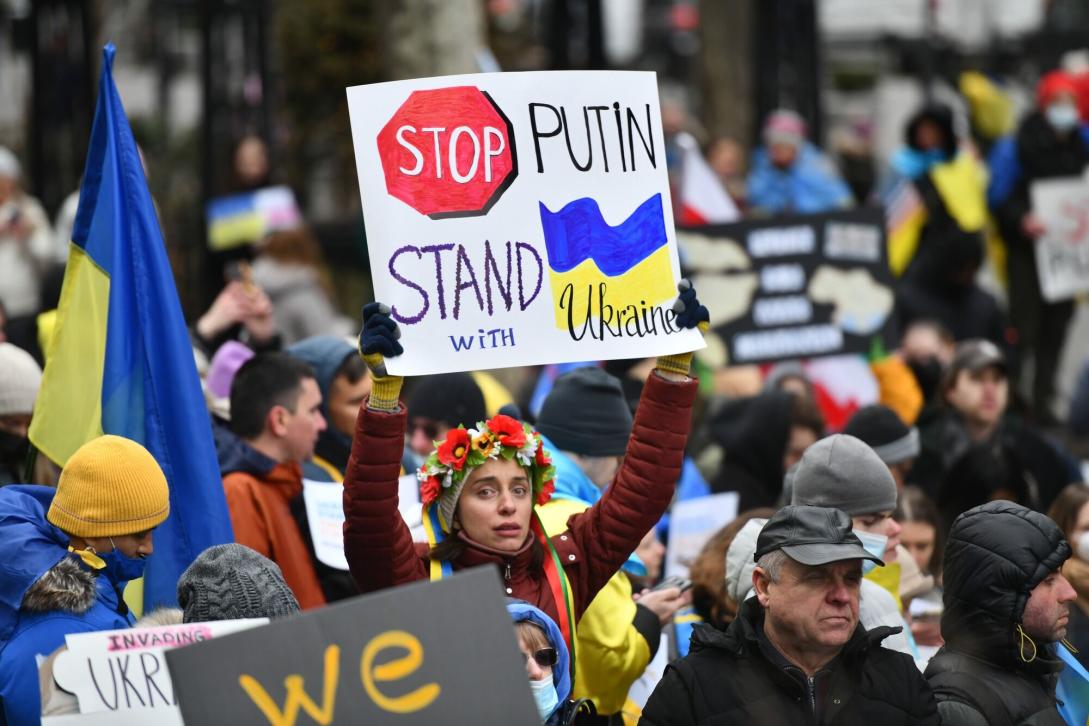
The EU has imposed massive and unprecedented sanctions on Russia in response to the latter’s aggression against Ukraine on 24 February 2022, and the illegal annexation of Ukraine's Donetsk, Luhansk, Zaporizhzhia and Kherson regions. These supplement existing measures imposed on Russia since 2014 following the annexation of Crimea and Sevastopol and the non-implementation of the Minsk agreements. The sanctions consist of targeted individual sanctions and sectoral economic sanctions that pursue three key objectives: reduce Russia’s capacity to continue its war of aggression against Ukraine, including by compressing its economy and energy sector, with long-term consequences; degrade Russia's military capabilities; and hold accountable those responsible for violations of international law and human rights.
In addition, the EU also takes sanctions in response to Russia’s destabilising activities and the Union and its partners, as well as , and in view of the human rights violations and repressions in Russia.
Sanctions in view of Russia’s war of aggression against Ukraine
EU sanctions in respect of actions undermining or threatening the territorial integrity, sovereignty and independence of Ukraine apply to a total of of over 2 600 persons, organisations, companies, and other entities. The list of sanctioned individuals includes prominent figures like Russian President Vladimir Putin, Foreign Affairs Minister Sergey Lavrov, former President of Ukraine Viktor Yanukovych, Roman Abramovich and other leading businesspersons, members of the Russian State Duma and the National Security Council; but also less known members of the judiciary, local politicians and people responsible for the illegal deportation and military re-education of Ukrainian children, for the atrocities committed in Bucha and Mariupol, for the missile strikes against civilians and critical infrastructure and for the looting of Ukraine’s cultural heritage. Sanctioned entities include those belonging to or associated with the Russian defence and military and industrial complex, banking/financial, aviation, IT or machine building companies, as well as entities linked to the energy sector and Russia’s shadow fleet, which play a crucial role in supporting Russia’s capacity to raise revenues and wage war.
Comprehensive sectoral sanctions restrict trade relations and financial transactions with Russia, include a ban on EU services to Russia and affect the defence, energy and transport sectors in Russia. The EU has imposed restrictions on propagandistic media and unreliable Russian broadcasting activities in Europe and adopted diplomatic and visa measures, as well as an information obligation for the movement of Russian diplomats within the EU
Major action has been taken by the EU to curb Russia’s energy revenues, through a ban on the import of seaborne crude oil and refined oil petroleum products, paralleled with an international, G7 oil price cap. Imports of Russian liquefied natural gas (LNG) to the EU are being phased out by 2027. Russia’s shadow fleet, established to circumvent sanctions and composed of substandard and poorly maintained vessels, poses significant threats to the environment and critical maritime infrastructure. The EU has sanctioned hundreds of shadow fleet vessels which are subject to a port and services ban within the EU. In addition, actors cross the entire value chain of the shadow fleet which enable its operations - in particular oil traders, shipping and managing companies in Russia and third countries, or supportive flag registries - have also been listed.
Moreover, around €260 billion in Russian Central Bank assets have been immobilised in the form of securities and cash in the jurisdictions of the EU, other G7 partners, and Australia, with more than two thirds of those immobilised in the EU.
In May 2024, the EU agreed to use net windfall profits to support Ukraine’s self-defence and reconstruction. In June 2024, the G7 decided to make available approximately $50 billion leveraging the extraordinary revenues of the immobilized Russian sovereign assets, sending an unmistakable signal to President Putin, and stepping up the West’s collective efforts to disarm and defund Russia’s military industrial complex. In October 2024 the EU adopted rules allowing for the allocation to the EU budget and channelling through the Ukraine Loan Cooperation Mechanism of these extraordinary revenues. In December 2025, the EU also prohibited, on a temporary basis, transfers of Central Bank of Russia assets immobilised in the EU back to Russia.
Russia's illegal annexation of Crimea and the city of Sevastopol
In 2014, the EU imposed economic sanctions targeting exchanges with Russia in specific economic sectors, in response to the illegal annexation of Crimea. In March 2015 EU leaders decided to align the existing sanctions regime with the full implementation of the Minsk agreements, which was scheduled to take place at the end of December 2015. Due to the lack of progress, economic sanctions have been extended successively for six months at a time.
Deterring the support to Russia’s war of aggression against Ukraine
The EU has also imposed sanctions on third country actors that support Russia's war efforts, including actors from Belarus, Iran, and the Democratic People’s Republic of Korea.
With regards to Belarus, the EU adopted targeted individual sanctions and targeted sectoral sanctions, including restrictions on trade, including firearms, dual-use goods, and goods and technology in the aviation, space and defence industry; a ban on Belarusian road transport operators; a SWIFT ban on certain Belarusian banks; a prohibition on transactions with the Central Bank of Belarus; limits on financial inflows from Belarus to the EU; and a prohibition on the provision of euro-denominated banknotes to Belarus. Additional trade measures were adopted to mirror those already in place against Russia.
In July 2023, the EU set up a new sanctions regime to address Iran's military support of Russia's war of aggression against Ukraine, targeting Iran's development and production of unmanned aerial vehicles (UAV) used in Russia’s illegal war of aggression against Ukraine. It also includes sectoral restrictions on UAV component parts.
Since February 2024, the EU has also imposed sanctions on companies and individuals involved in the shipping of Democratic People’s Republic of Korea armaments to Russia.
Deterioration of the human rights situation in Russia
The EU remains deeply concerned about the continuing deterioration of the human rights situation in Russia, especially in the context of Russia’s war of aggression against Ukraine, and strongly condemns the severe expansion of restrictive legislation, the systematic and intensifying repression against civil society and human rights defenders, as well as the unabated crackdown on independent media, individual journalists and media workers, political opposition members and other critical voices active throughout the Russian Federation and outside the country.
In its conclusions of 22 March 2024 the European Council called for the immediate and unconditional release of all political prisoners in Russia and an end to the persecution of the political opposition. Furthermore, it called for work to be taken forward in the Council to establish a new sanctions regime in view of the situation in Russia.
In May 2024, in the aftermath of the death of the opposition politician Alexei Navalny in a Siberian prison, the Council established a new sanctions framework against those responsible for serious human rights violations or abuses, repression of civil society and democratic opposition, and undermining democracy and the rule of law in Russia.
Addressing Malicious Behaviour and Hybrid Threats by Russia
On 8 October 2024, the Council adopted a new framework of restrictive measures in response to Russia’s destabilising actions, addressing a deliberate and systematic pattern of malicious behaviour attributed to Russia, such as cyber-attacks, acts of sabotage, disruption of critical infrastructure, physical attacks, information manipulation and interference, and other covert or coercive actions.
This new sanctions regime allows to target those responsible for hybrid activities against the Union and its Member States, as well as third countries and international organisations. In May 2025 the framework was expanded to allow the Council to target the financial backers of destabilising activities, such as providers of crypto currencies; to suspend the broadcasting of media outlets involved in spreading Russia-driven information manipulation and interference, as well as to impose a transaction ban with regards to tangible assets used in destabilising activities.
See also:
Follow the link to access:
- The Council's policy page on EU Sanctions Against Russia
- The EC's page on Sanctions adopted following Russia’s military aggression against Ukraine
- News about renewed sanctions: Russia's illegal annexation of Crimea and the city of Sevastopol: EU renews restrictive measures until 23 June 2026
- Factsheet: EU sanctions against Russia following the invasion of Ukraine (PDF)
- Timeline: EU sanctions against Russia
JOŠ PRIČA