
European Union and United Nations Launch Regional Programme to Advance Gender Equality and Prevent Gender-Based Violence in Central Asia
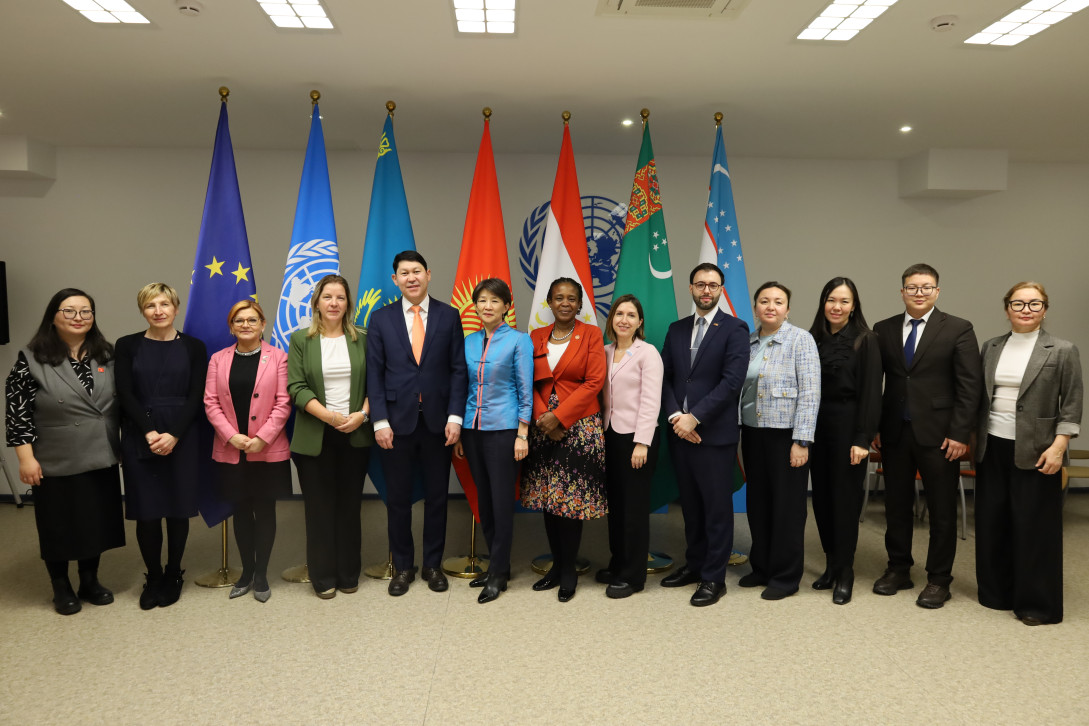
“Empowerment of women and girls, prevention of all forms of gender-based violence and promotion of lasting measurable progress in gender equality is crucial for further development of the region. The CHANGE, that reflects the strong partnership between the European Union and the United Nations, will be another programme supporting the efforts and cooperating with the countries of Central Asia in advancing the gender equality in the region,” highlighted Ms. Aleška Simkić, Ambassador of the European Union to the Republic of Kazakhstan.
Globally, UN estimates that around one in three women and girls has experienced violence in her lifetime. To tackle this reality, Central Asian states demonstrate growing political will and institutional commitment to combat gender‑based violence, translated in improved legislation and policy frameworks. These could be linked to an increased number of reports, but stigma coupled with persistent gaps in protection continue to prevent reporting. recent positive changes in national legislation.
“Gender-based violence cannot be addressed by institutions alone — it demands sustained societal change,” said Ms. Sarangoo Radnaaragchaa, UN Resident Coordinator in Kazakhstan. “The United Nations is committed to advancing gender equality and supporting solutions that address the root causes of gender-based violence through inclusive dialogue and long-lasting partnerships.”
The programme is expected to contribute to a reduction of gender-based violence in Central Asia by promoting social norms that increasingly reflect zero tolerance for violence; strengthening the capacity, coordination and advocacy of civil society organizations to prevent and respond to GBV; and expanding women’s economic empowerment and access to sustainable livelihoods, recognising economic independence as a key protective factor against violence.
“Effective national reforms in Kazakhstan have strengthened protection mechanisms, thereby empowering women and ensuring the nation’s sustainable development. Regional cooperation is essential, fostering exchanges of good practices to eradicate violence and discrimination against women and girls”, said Didar Temenov, Director of the Multilateral Department of the Ministry of Foreign Affairs of Kazakhstan. “A notable showcase of a robust regional commitment to address GBV was the UN Human Rights Council resolution Presented by Kazakhstan on the elimination of domestic violence”.
At the same time, economic inequalities, including lower female labour‑force participation and the disproportionate burden of unpaid care, limit women’s ability to seek safety and support. Evidence across the region indicates that sustainable progress requires long‑term prevention efforts that challenge harmful attitudes, strengthen community‑based actors and expand women’s economic opportunities.
“Gender-based violence is not only a human rights violation but a major barrier to inclusive and sustainable development,” said Katarzyna Wawiernia, UNDP Resident Representative. “Through this Multi-Country Programme, the United Nations and the European Union are combining expertise, partnerships and resources to support governments in delivering practical, measurable change.”
Persistent discriminatory social norms remain an important area for action. Findings from the 2023 Gender Social Norms Index highlight gender bias across Central Asia, underscoring the need for sustained investments in prevention, awareness-raising, and behavioural change initiatives.
“The launch of the CHANGE programme underscores the power of partnerships in our collective journey to eliminate all forms of GBV, a pervasive human rights violation, by prioritizing evidence-based strategic pathways at legislative, policy, system, household and individual levels”, said Chinwe Ogbonna, UNFPA Country Representative in Kazakhstan and Country Director for Kyrgyzstan and Turkmenistan. “Together, the European Union, United Nations and national partners across Central Asia, can, and will contribute meaningful results for the women and girls we serve, as we count down to Agenda 2030 for Sustainable Development”.
The programme recognizes civil society as a critical driver of prevention and response efforts. Across Central Asia, civil society organizations play a vital role in reaching communities, supporting survivors, and addressing the social norms that perpetuate violence.
“Civil society lies at the heart of effective prevention efforts, especially those working on the front lines to challenge harmful norms and support women and girls,” said Dr. Ceren Güven Güres, Head of the UN Women Central Asia Liaison Office and Representative of the Kazakhstan Country Office. “Through the EU-UN CHANGE programme we are strengthening these frontline actors, expanding women’s opportunities, and driving the social transformations needed to reduce gender‑based violence across Central Asia.”
The programme will run from 2026 to 2028 and cover all five countries in Central Asia, creating a shared regional framework to address gender-based violence while responding to national priorities and local realities.
For more information, please contact:
UNDP: undp.kz.media@undp.org
UNFPA: kazakhstan-sro.office@unfpa.org
UN Women:unwcokaz@unwomen.org