
Supporting Ukraine in 2026: The Path to a Just and Lasting Peace
On 24 February 2026, we mark a solemn moment: four years since the start of Russia's invasion of Ukraine. An aggression against a sovereign and independent nation in the heart of Europe; a clear violation of the United Nations Charter and international law.
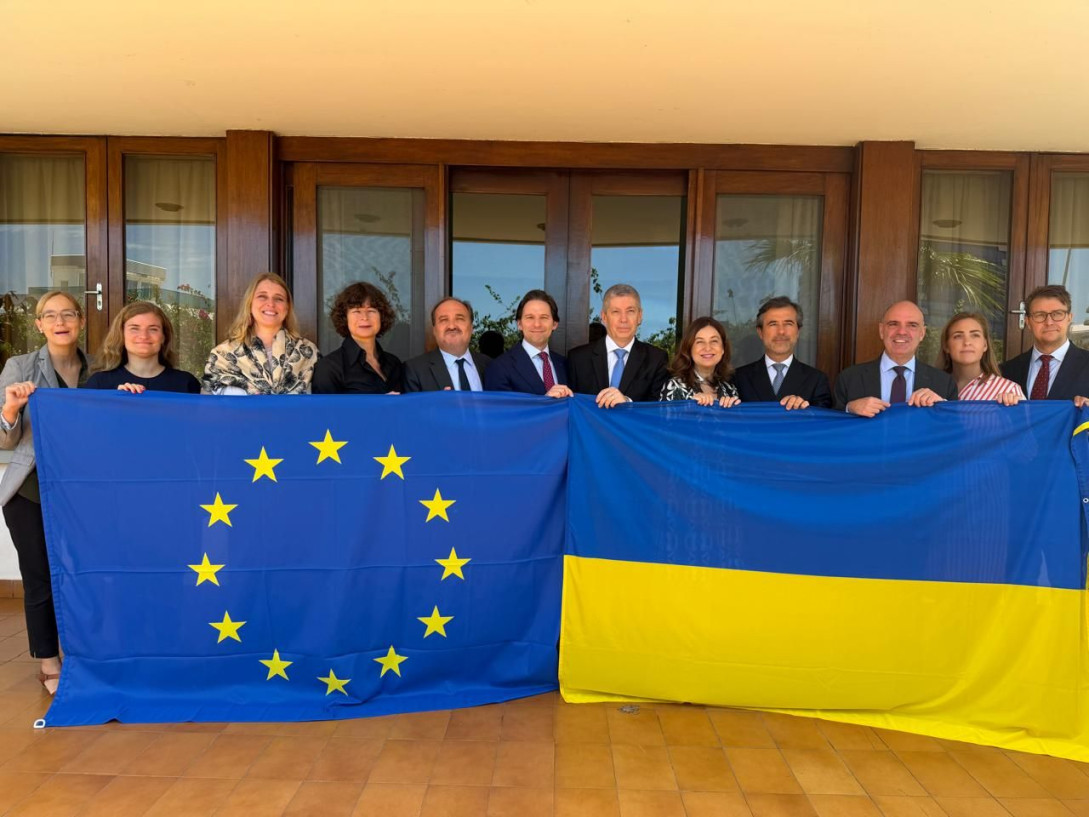
As representatives of the European Union and its Member States, together with the Ambassador of Ukraine, we remain united in our commitment to support Ukraine in its quest for a just and lasting peace.
The consequences of this aggression are being felt around the world, not just in Ukraine or Europe. Politically, this war has deepened divisions between nations, eroded trust in international institutions and diverted attention and resources from pressing global challenges such as climate change, growing inequalities and development challenges. Economically, it has disrupted global food and energy supply chains, causing inflation and resulting in an increase in the number of people living in extreme poverty.
From a human perspective, the Ukrainian people have endured great suffering, loss of life, devastating attacks on their cities and the destruction of essential infrastructure. Furthermore, in an act that is particularly shocking and has been duly documented by human rights organisations, thousands of Ukrainian children have been forcibly deported to Russia.
At the time of writing, Ukraine is facing a harsh winter under missile and drone attacks in Kyiv and other cities, forcing countless families to endure sub-zero temperatures without access to energy, heating or water. In a premeditated move, Russia is using the cold as an additional tool of oppression.
However, the resilience of the Ukrainian people remains unshakeable, calling for international solidarity. From the outset, they have stood firm against Russia's aggression, safeguarding their sovereignty and forming a barrier in defence of the rule of law.
As Europeans, we are well aware of the importance of the rule of law, the foundation on which we built the European Union after the devastation of the Second World War. By rejecting the “law of the strongest”, we have managed to build a united and prosperous Europe. Our commitment to international law and the United Nations Charter is not an attachment to an “outdated” status quo, but rather a commitment to the future, based on an experience that has ensured us shared peace, security and prosperity.
The European Union and its Member States have been Ukraine's main supporters, providing continuous political, military, financial and humanitarian assistance. This support is both a political choice and a security necessity. Ukraine's future is inseparable from Europe's security, and only sustainable peace can prevent further instability on the continent. Ukraine and the European Union cannot be excluded from decisions concerning their future security: any agreement that excludes their voices would lack legitimacy and durability.
While Ukraine has shown readiness for a just peace, Russia's behaviour – perpetuating attacks on civilian targets and infrastructure, adding to its list of war crimes, subjecting elderly people, women and children to the cold – is characteristic of a nation waging a war of attrition against an innocent population. Rewarding aggression would be a severe blow to global security, legitimise the use of force to alter borders and destabilise the international order.
Even with much of its agricultural capacity destroyed and persistent attacks on ports and other infrastructure, Ukraine continues to contribute to global food security by maintaining food supplies to several states. In 2024–2025, Mozambique received $16.5 million in humanitarian assistance through the ‘Grain from Ukraine’ initiative, funded by several European partners and distributed by the World Food Programme to the most vulnerable populations in the north of the country.
In an international context marked by instability, Mozambique is also exposed to the shock waves of this conflict, given the risks arising from the volatility of international markets and the unpredictability of global power balances.
Ukraine is fighting for its right to exist as an independent state, for respect for its own identity and culture, and for the freedom to decide its own future: aspirations that echo Mozambique's own journey.
The international community must act decisively to increase pressure on the aggressor, ensure accountability for the crimes committed and, above all, achieve a comprehensive, just and lasting peace.
After four years of war, the future remains uncertain. Europe will always stand by Ukraine and its people as they continue to fight for their children, their country and a rules-based international order. 2026 must be the year this war of illegal aggression comes to an end!
Op-ed signed by:
Ambassador of Ukraine (Rostyslav Tronenko), Head of the European Union Delegation (Antonino Maggiore), and the Ambassadors and Heads of Mission of the Netherlands (Elsbeth Akkerman), Ireland (Patrick Empey), France (Yann Pradeau), Germany (Ronald Münch), Spain (Teresa Orjales), Finland (Satu Lassila), Italy (Gabriele Annis), Portugal (Jorge Monteiro), Sweden (Andrés Jato), and Belgium (Delphine Perremans).