
EU and Kazakhstan Reinforce Cooperation on the Development of the Trans-Caspian Transport Corridor
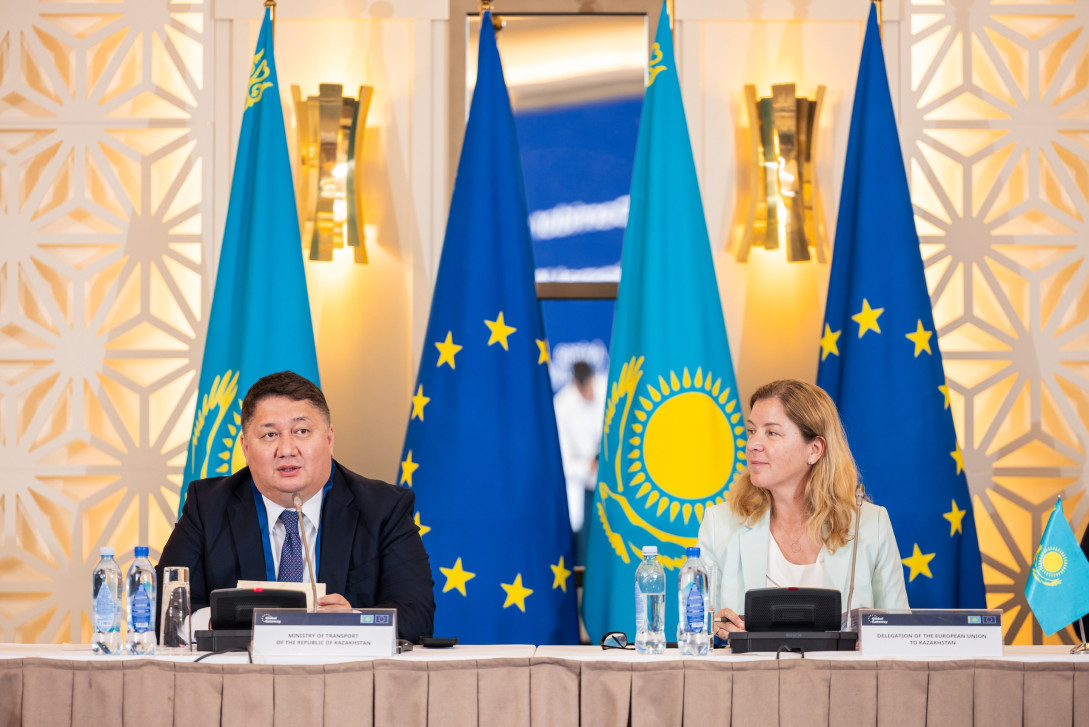
The workshop brought together representatives of government institutions, international financial institutions, national companies, development partners and the private sector to review progress achieved to date and discuss the next steps towards strengthening transport connectivity between Europe and Central Asia. It was co-chaired by the Deputy Minister of Transport of the Republic of Kazakhstan, Talgat Lastayev, and the Ambassador of the European Union to Kazakhstan, HE Ms. Aleska Simkic.
The event took place ahead of the high-level meeting on the Trans-Caspian Transport Corridor on June 23, 2026 aimed to broaden cooperation among all countries along the corridor.
Ambassador Simkic said: “Through our EUR 30 Mill Trans-Caspian Transport support programme and other projects, the European Union supports the modernisation of facilities in the Port of Aktau and the preparation for the complex modernisation of the Beyneu – Sekseul road and facilitates the approximation and digitalisation of cross-border procedures. Together with EU banks and business, EU Member States, and in close cooperation with our Central Asian partners, we are making concrete progress in making the corridor faster and more reliable.”
Under the EU’s Global Gateway strategy, the TCTC has become a key priority for strengthening sustainable connectivity between Europe and Central Asia with an important role of Kazakhstan as major Eurasian transport hub. In recent years, freight volumes along the corridor have increased by more than 3.5 times, while transport times between China and Europe have been significantly reduced as a result of various infrastructure projects and of improvement of transport-related processes. Approximately EUR 2.5 billion has already been committed by the European Union and the international financing institutes since 2024 to concrete projects across the region.
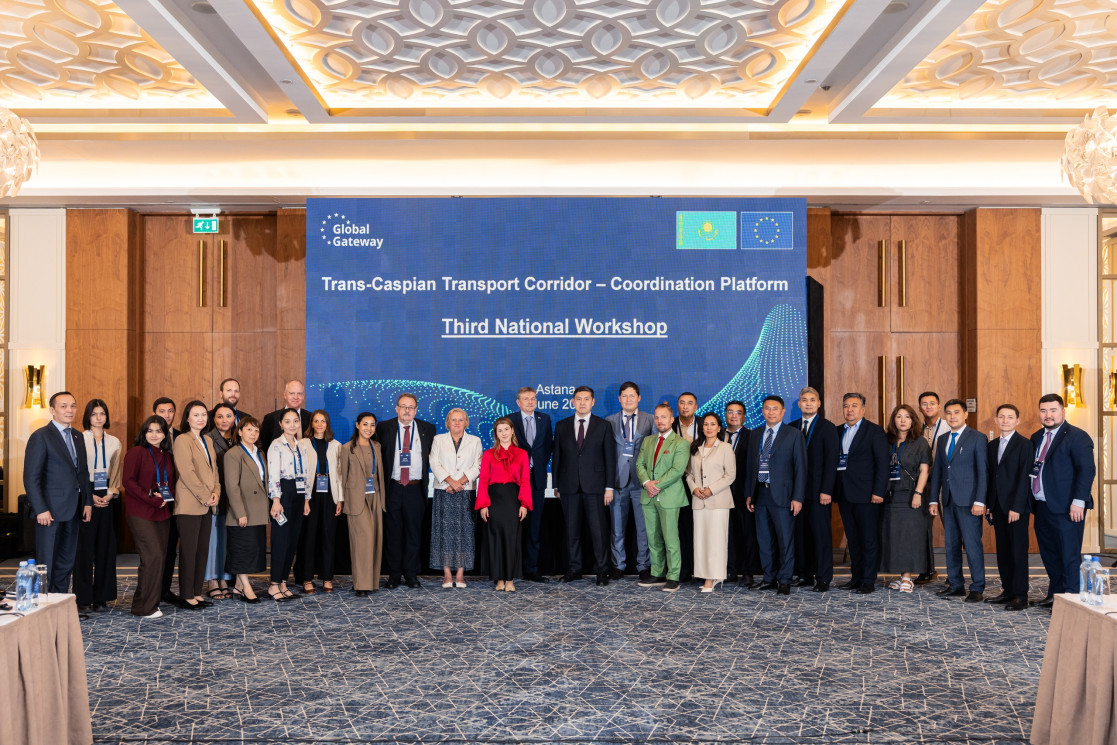
EUDEL KZ
During the workshop, participants discussed the modernisation of the Ports of Aktau and Kuryk, the development of road, rail and logistics infrastructure along the main routes of the TCTC corridor, the mobilisation of private investment and other measures to further improve corridor performance.
At the conclusion of the meeting, participants reaffirmed their commitment to continued cooperation on infrastructure development, digital transformation, regulatory improvements and new investment projects aimed at further strengthening the role of the Trans-Caspian Transport Corridor as one of Eurasia’s key trade and connectivity routes.