
New funding and support bring renewed hope for the Mountains of Central Asia Biodiversity Hotspot

Consisting of two of Asia's major mountain ranges – the Pamir and the Tien Shan – the Mountains of Central Asia Biodiversity Hotspot spans seven countries: southeastern Kazakhstan, most of Kyrgyzstan and Tajikistan, eastern Uzbekistan, western China, northeastern Afghanistan, and a small part of southeastern Turkmenistan.
The mountain range contains globally important biodiversity and ecological corridors. Yet wildlife across the area faces a wide range of pressures, including habitat loss and fragmentation, unsustainable use of species and ecosystems, wildlife crime, climate change and other human pressures.

© Bakhtiyor Mirzoev / Fauna & Flora
Addressing these challenges requires strong local institutions, effective collaboration and sustained investment in civil society. CEPF’s investment model places these priorities at its core, and Fauna & Flora is well positioned to help deliver this vision.
As the newly appointed Regional Implementation Team (RIT) in this hotspot, Fauna & Flora will work closely with CEPF to tackle the range of threats to biodiversity in the region, and will build stronger and more sustainable locally led conservation of the area. A central part of the programme is to strengthen, regionally, the capacity of civil society organisations – including local NGOs and community-based organisations – to create a more resilient conservation community capable of delivering lasting conservation impact on the ground. This investment will include enabling access to a small grants mechanism, complimented by delivery of hands-on mentoring, peer learning, partnership building and technical support.
Ubayd Gulamadshoev, RIT Team Leader, Fauna & Flora, comments: “Nature conservation is most effective and sustainable when it is delivered by local people, for local people. Over the next five years, with the help of CEPF, Fauna & Flora will strive to build a stronger, more connected and resilient conservation community across the Mountains of Central Asia. In doing so, we hope this critical biodiversity hotspot can continue to thrive, supporting the wonderful nature of this region, and all of the people who rely on it.”
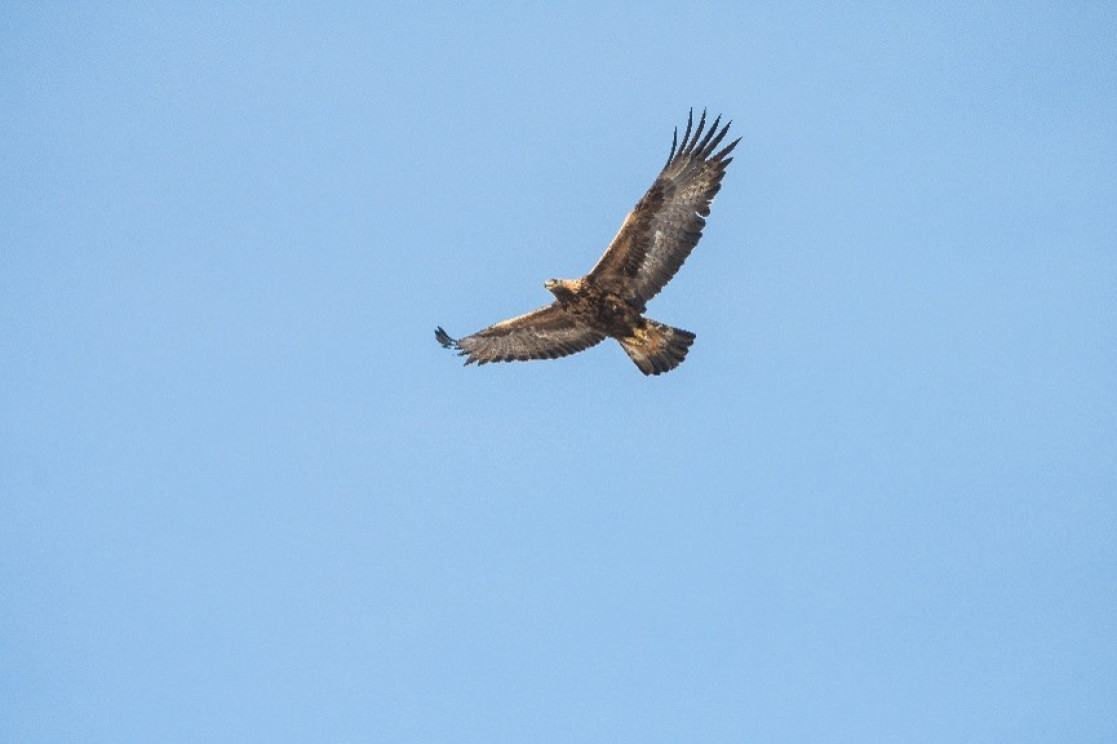
© Tilman Peters / Altyn Dala
Brecht Verhelst, CEPF Grant Director, said: “The biodiversity of the Mountains of Central Asia is of global importance, yet it faces growing pressures from habitat loss, unsustainable resource use and climate change. Building on the achievements of CEPF's first investment phase, this new partnership with Fauna & Flora will strengthen civil society, foster collaboration among conservation stakeholders, and expand engagement with governments and the private sector. By promoting evidence-based conservation and locally led action, we can increase resilience to climate change and deliver greater, longer-lasting impacts for both biodiversity and communities across the hotspot.”
Fauna & Flora operates a long-standing conservation programme in Central Asia. The organisation has over 25 years of experience leading biodiversity conservation and capacity building across the region, including parts of the Mountains of Central Asia Biodiversity Hotspot. Over the next five years, Fauna & Flora will partner with CEPF as its RIT, supporting the delivery of CEPF’s vision for the Mountains of Central Asia and ensuring lasting conservation impact across this globally important hotspot.
More information on CEPF’s programme can be found here: https://www.cepf.net/our-work/biodiversity-hotspots/mountains-central-asia
About the European Union
The European Union is an economic and political union of 27 European countries. It is founded on the values of respect for human dignity, freedom, democracy, equality, the rule of law and respect for human rights, including the rights of persons belonging to minorities. It acts globally to promote sustainable development of societies, environment and economies, so that everyone can benefit.
The CEPF investment in the Mountains of Central Asia is supported by EU Action Capacity Development for the Implementation of the Kunming-Montreal Global Biodiversity Framework (ACT-61939) funded by the European Union through AFD.
About Fauna & Flora
Fauna & Flora is a nature conservation charity protecting the diversity of life on Earth. For the survival of species and habitats, the planet and people.
As the world’s first international conservation charity, Fauna & Flora has been shaping best practice in community-focused conservation for over 120 years. Today, the charity works closely with local conservation partners in over 40 countries to protect habitats, revive the ocean, reduce extinctions, stop illegal wildlife trade, combat climate change and influence global policy and corporate sustainability. www.fauna-flora.org
About Critical Ecosystem Partnership Fund (CEPF)
CEPF is a joint initiative of l’Agence Française de Développement, Conservation International, the European Union, Fondation Franklinia, Fondation Hans Wilsdorf, the Global Environment Facility, the Government of Canada, the Government of Japan, the Hempel Foundation, The Nature Conservancy and the World Bank. A fundamental goal is to ensure civil society is engaged in biodiversity conservation.