The EU in the Arctic
The European Union plays an important role in supporting sustainable development and addressing the challenges facing the region, while promoting Arctic cooperation among like-minded partners.
On This Page
- The EU’s new Arctic policy
- Arctic geopolitics
- Arctic diplomacy
- EU cooperation with Greenland
- Sustainable Development in the Arctic
- Inclusive partnerships for Arctic communities and future generations
- Cooperation with Indigenous People
- Youth in the Arctic
- Climate change in the Arctic
- Scientific cooperation in the Arctic
- EU Special Envoy for Arctic Matters
In Focus
Factsheet "EU in the Arctic"
EU space activities supporting sustainable life, work and research in the Arctic.
The EU’s Arctic policy
Developments in the Arctic regions have far reaching impacts beyond the region, affecting both the EU and the wider world. While Arctic states bear primary responsibility for issues within their territories, many challenges, such as climate change are cross-border, making regional and multilateral cooperation essential.
Adopted in October 2021, the EU’s Arctic Policy promotes peaceful cooperation, climate action and sustainable development, with a strong focus on Indigenous Peoples, local communities and future generations. The EU’s engagement is guided by three priorities: protecting the climate and environment, supporting sustainable development, and promoting peace, stability and cooperation.
In light of the changing geopolitical and geoeconomic context, the EU will update its Arctic Policy in 2026. Building on the 2021 Joint Communication, the update will continue addressing ongoing challenges such as climate change, sustainable development and scientific research, while responding to additional priorities including security, defence, connectivity and economic security.
-
Image
-
Image
 Copyright
Shutterstock
Arctic geopolitics
The Arctic regions are experiencing growing geopolitical tensions and geo-economic competition, driven by their strategic location, wealth of natural resources and emerging polar transport routes. Since Russia’s war of aggression against Ukraine, the region has entered a new geopolitical context, with traditional fora for dialogue disrupted and hybrid and military activities increasing, reshaping the Arctic and Europe’s security landscape.
Suspension of regional cooperation with Russia
In response to Russia’s unprecedented military aggression against Ukraine, and the involvement of Belarus, the European Union, together with its Member States and like-minded partners, has suspended cooperation with Russia and Belarus in several regional frameworks, including the Barents Euro-Arctic Council and the Council of the Baltic Sea States.
The EU continues to support cooperation on Arctic matters with like-minded interlocutors through relevant bodies and appropriate channels.
Arctic diplomacy
In a region undergoing rapid climate, geopolitical and economic change, the EU works closely with Arctic States, like minded partners and regional organisations to uphold cooperation, address shared challenges and integrate Arctic issues into its wider external relations.
The Arctic Council, established in 1996 by the eight Arctic States, remains the primary intergovernmental forum for cooperation among the eight Arctic States and Indigenous Peoples. Denmark (as the Kingdom of Denmark), Finland and Sweden are Members, several EU Member States are Observers and the EU participates as a de facto observer, contributing to the Council’s work and subsidiary bodies, particularly on environmental, climate and scientific issues.
Since its first Communication on the Arctic in 2008, the EU has strengthened its Arctic policy framework and diplomatic presence. The EU engages bilaterally with Arctic States and stakeholders through its network of Representations and its diplomatic network of EU Delegations across the region, as well as through the European Commission Office in Nuuk, Greenland. The EU’s diplomatic work in the Arctic regions is coordinated by the Special Envoy for the Arctic.
-
Image
 Copyright
Shutterstock
EU cooperation with Greenland
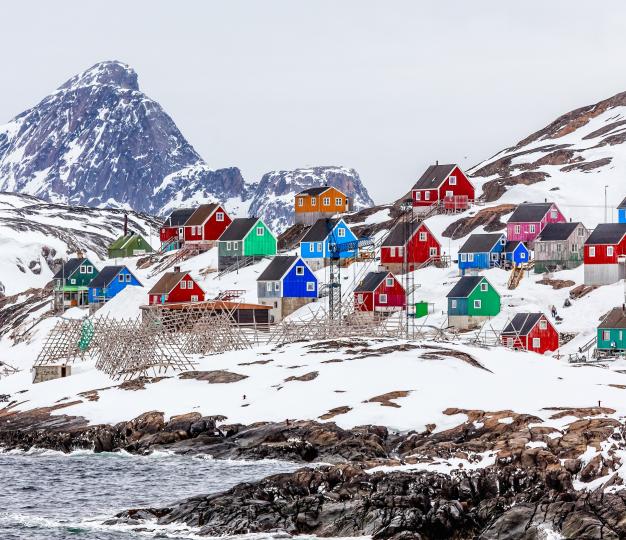
Greenland is an integral part of the EU’s Arctic Policy. The EU has long-standing relations with Greenland based on its status as an Overseas Country and Territory (OCT). As the largest recipient of EU financial support under the OCT scheme, Greenland receives direct support for its own priorities in education and green growth, including sustainable raw materials and renewable energy.
The EU aims to further strengthen its partnership with Greenland. To this end, the European Commission has proposed to more than double EU financial support from EUR 225 for the period 2021-2027 to EUR 530 million in 2028–2034 under the next Multiannual Financial Framework.
A key milestone in EU–Greenland relations was the opening of a European Commission Office in Nuuk in March 2024, enhancing cooperation and increasing the visibility of EU action on the ground.
The EU stands firm against attempts to undermine the sovereignty of our partners, and we remain committed to upholding the principles of national sovereignty, territorial integrity, and border inviolability, as enshrined in the UN Charter.
Sustainable Development in the Arctic
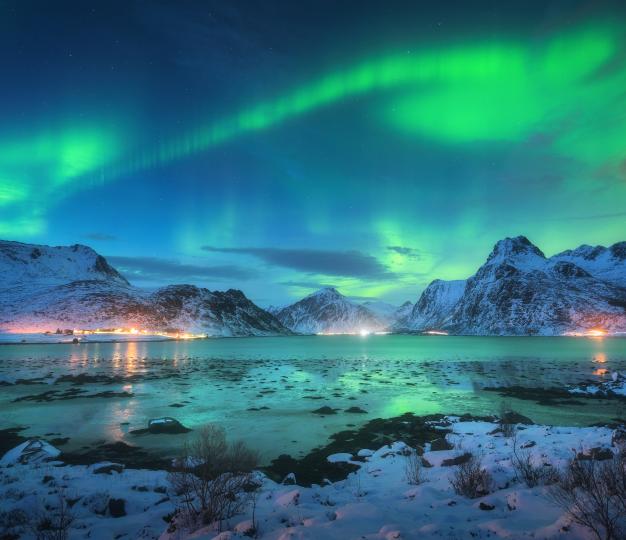
The EU wants to ensure a robust green and blue transition both at a global level and in the Arctic. The EU stimulates change in several key areas, including carbon-neutral energy, hydrogen, sustainable extractive industries, e-based learning, e-health, connectivity and infrastructure, sustainable tourism, green technologies, fisheries and agriculture. The EU pushes for oil, coal and gas to stay in the ground, including in Arctic regions.
-
Image
 Copyright
Shutterstock
Inclusive partnerships for Arctic communities and future generations
Cooperation with Indigenous People
People are central to sustainable development and resilient societies. A sustainable way forward requires inclusive dialogue and participation in decision-making at all levels. The EU regularly holds discussions with Arctic stakeholders and maintains contact with the Sámi Council. Each year, the EU Arctic Forum and the Indigenous Peoples’ Dialogue bring together participants from across the Arctic region. Indigenous knowledge is highly valuable and an integral part of our Arctic research activities.
Youth in the Arctic
The EU maintains an active dialogue with Arctic youth through regular consultations with Arctic youth representatives. The annual Arctic Youth Dialogue is an EU initiative that brings together young people from diverse backgrounds to address topics like sustainable and inclusive economic development, ocean management, and youth-inclusive policymaking. Arctic youth organisations also take part in Erasmus+, with Iceland and Norway fully associated to the programme.
The EU-funded “Youth Together for Arctic Futures” project brings young people together to co-create sustainable Arctic solutions and deliver youth-driven policy recommendations to decision-makers. Read the policy recommendations from the 2025 Arctic Youth Dialogue.
Arctic Urban Regional Cooperation (AURC)
Launched in 2024, the Arctic Urban Regional Cooperation (AURC) initiative supports collaboration among local Arctic authorities on sustainable urban and regional development challenges and solutions through peer-to-peer knowledge sharing. . After two years of implementation, AURC has delivered tangible results, including strengthened cross-regional cooperation, shared best practices, and concrete actionable outcomes — read the AURC information brochure for further information.
The AURC programme supports 15 local Arctic authorities from Finland, Sweden, Norway, Greenland, Iceland, Canada, and the United States.
Climate change in the Arctic
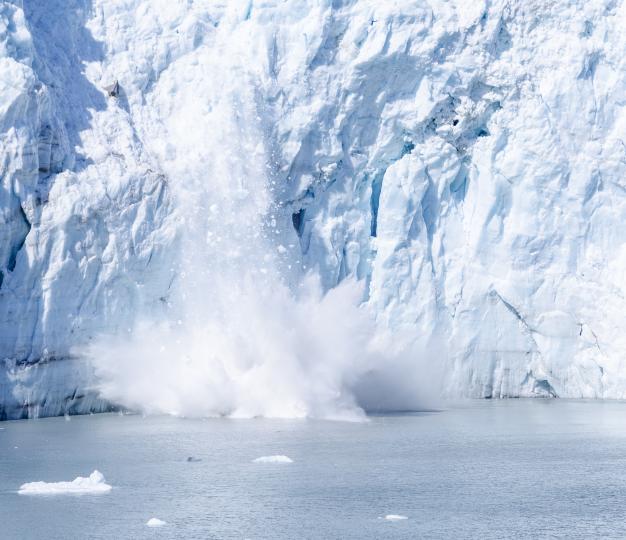
Climate change is the most comprehensive threat the Arctic regions are facing and has reached an unprecedented crisis point. The Arctic is warming three to four times faster than the global average. Arctic sea ice cover is at its lowest level since at least 1850. Projections indicate that the Arctic could experience practically ice-free conditions during summer at least once before 2050.
The EU recognises its own impact on the Arctic regions and addresses it through coordinated action, in close cooperation with national, regional and local authorities, and Arctic communities. The EU acts against major sources of pollution affecting the Arctic regions on land, at sea, and in the air, including plastics and marine litter, black carbon, harmful chemicals, transport emissions and the unsustainable exploitation of natural resources.
-
Image
 Copyright
Shutterstock
-
Image
 Copyright
Shutterstock
Preserving the Arctic Marine Environment
The entry into force in 2021 of the International Agreement to Prevent Unregulated Fishing in the High Seas of the Central Arctic Ocean is a vital step to protecting the unique richness of the Arctic waters. Signed in 2018 by the EU, Canada, Iceland, Denmark, Norway, USA, China, Japan, South Korea, and Russia, the agreement will commit the parties to not authorize any vessel flying its flag to engage in commercial fishing in the high seas portion of the central Arctic Ocean
Thawing permafrost
As global temperatures rise, permafrost thaws, releasing greenhouse gases that threaten to cause irreversible changes in the Arctic regions and beyond.
Gaining more knowledge on this phenomenon is essential as more than 70% of Arctic infrastructure and 45% of oil extraction fields are built on permafrost.
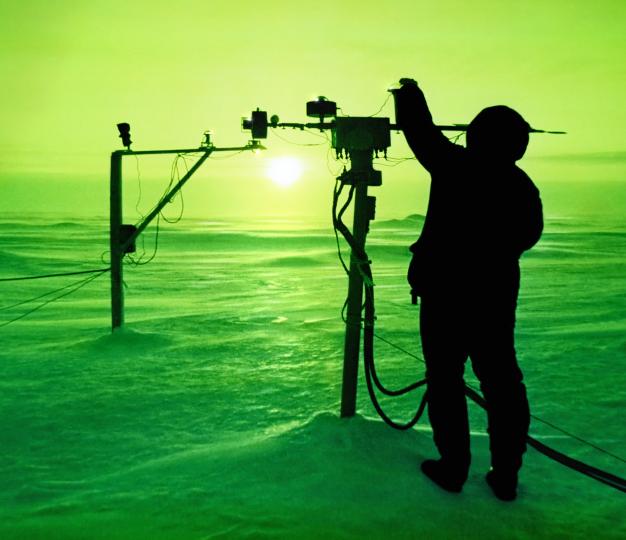
The EU is strengthening knowledge of this process, using satellite observation and measurements from aircraft, ships and ground-based stations. EU-funded research supports the development of adaptation and mitigation measures and improves understanding of impacts on communities and sustainable development. Previous EU-funded projects, including Nunataryuk and Arctic Passion, have contributed to create Arctic observation systems, while the Joint Research Centre’s FROST-QUAKE project examines the effects of thawing permafrost on critical infrastructure across the Northern Hemisphere.
Further research and closer cooperation with Arctic states is essential to collect data, improve monitoring services and develop mitigation measures for permafrost areas, thereby enhancing environmental and health security.
-
Image
 Copyright
Shutterstock
Scientific cooperation in the Arctic
Reducing black carbon emissions
The EU supports the Arctic Council’s indicative target of reducing black carbon emissions reaching the Arctic by up to 33% below 2013 levels by 2030. The EU encourages all Arctic states to support their Arctic communities’ transition towards renewables energy sources, reducing reliance on diesel for electricity use and lowering black carbon emissions. The EU also works to reduce black carbon emissions through a multilateral approach with the US, Canada and other like-minded countries, building on Arctic Council initiatives and, in line with actions set out in the recent Zero Pollution Action Plan.
European Polar Coordination Office
The recently established European Polar Coordination Office (EPCO) connects the European polar research community and policymakers. It coordinates the EU Polar Cluster and the Catalyst Platform which were developed through two EU PolarNet projects, bringing together 25 partners. EPCO is managed by the European Polar Board and based in Umeå, Sweden.
Horizon Europe
The EU is a major funder of Arctic research. Under the Horizon Europe framework programme (2021-2027), the EU has so far contributed a total of €163 million on Arctic research and an additional €17 million to polar research. Projects under Horizon Europe study a wide range of topics from climate change and pollution to connectivity, and biodiversity, and are carried out in close collaboration with Arctic communities.
Factsheet: EU Contribution to Arctic Science & Innovation
Learn more about EU Arctic
research initiatives and how the EU supports science
and innovation in and for the Arctic, promoting cooperation, multilateralism, openness and reciprocity.
Special Envoy for Arctic Affairs, Claude Véron-Réville

In September 2024, Ms Claude Véron-Réville took up the role as Special Envoy for Arctic Affairs.
The EU institutional engagement in Arctic matters is based on the EU’s Arctic policy, published in October 2021. In her role as Special Envoy for Arctic Affairs, Claude Véron-Réville is working to adapt the EU’s Arctic Policy to today’s challenges and to drive forward the EU’s Arctic policy in collaboration with Commission services. She works closely with EU Member States in the Council and the European Parliament as well as with the EU’s external partners.
Climate change remains the most comprehensive threat to the Arctic regions and the world. “Even if the geopolitical landscape has changed since 2022, the challenges within the Arctic remain.” Such challenges include interests in resources in Arctic regions such as fish, gas, oil, coal and critical raw materials. The Arctic regions are also becoming increasingly interesting for installation of wind farms, data centers, cables and similar equipment. Careful consideration has to be given to local inhabitants including indigenous peoples, maritime safety and sensitive ecosystems.