
BTSF Workshop on EU Import requirements and controls of food of animal origin
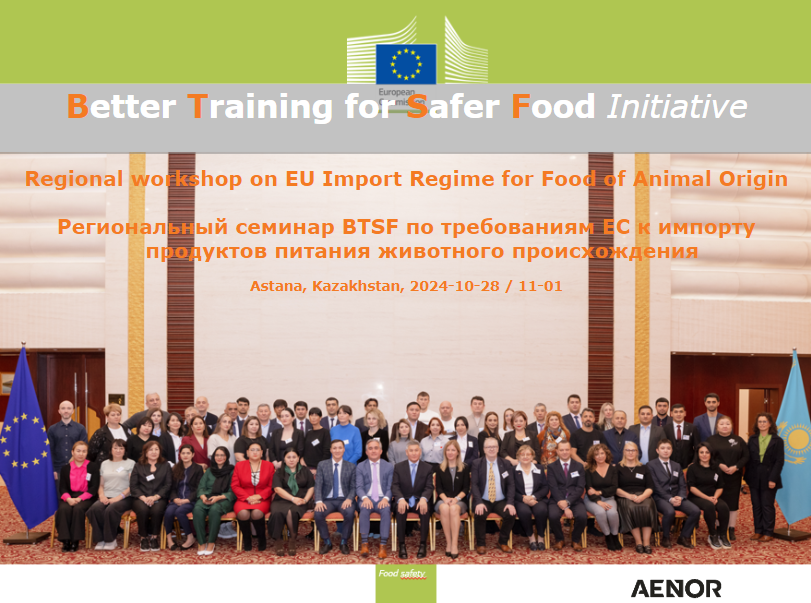
The workshop saw participation from 54 attendees, hailing from eight countries in the region: Armenia, Azerbaijan, Georgia, Kazakhstan, Pakistan, Tajikistan, Türkiye, and Uzbekistan. Most participants were senior official veterinarians from national authorities as well as representatives from private sector organizations. The training was designed to enhance delegates' understanding of pertinent EU regulations for exporting and marketing products of animal origin within the EU.
Mr. Amangaliy BERDALIN, Vice Minister of Agriculture of Kazakhstan, and Mrs. Aleška SIMKIĆ, Ambassador of the EU Delegation to Kazakhstan, led the opening ceremony. They encouraged participants to gain insights into the EU legal framework to enhance trade relations and market access for non-EU countries.
Representatives from DG SANTE attended as well, including Mr. Jan Bloemendal from the Bilateral Relations Unit, who introduced the workshop's content coverage, and Mr. Desmond Maguire, Head of the BTSF team in the Audits and Analysis Unit, who provided an overview of BTSF training resources available for all non-EU countries on official controls and the BTSF ACADEMY accessibility tools that makes these materials available in multiple languages.
Senior EU experts from Latvia, Poland, Estonia, and Spain gave presentations and led engaging group activities as part of the training. They covered export certificate requirements for food of animal origin, including public health, animal health, animal welfare, composite food products, microbiological criteria, residue monitoring plans, and antimicrobials use requirements.
Participants took part in lively discussions and exchanged information, clarifying concepts in both Russian and English, which helped everyone to understand better.
The private sector was invited to participate on the first and second days, during which the requirements that food business operators must consider if they wish to export to the EU were presented.
The participants had the opportunity to network, share experiences, and learn from various regional situations.