
Consolidation of efforts in training on identification and profiling
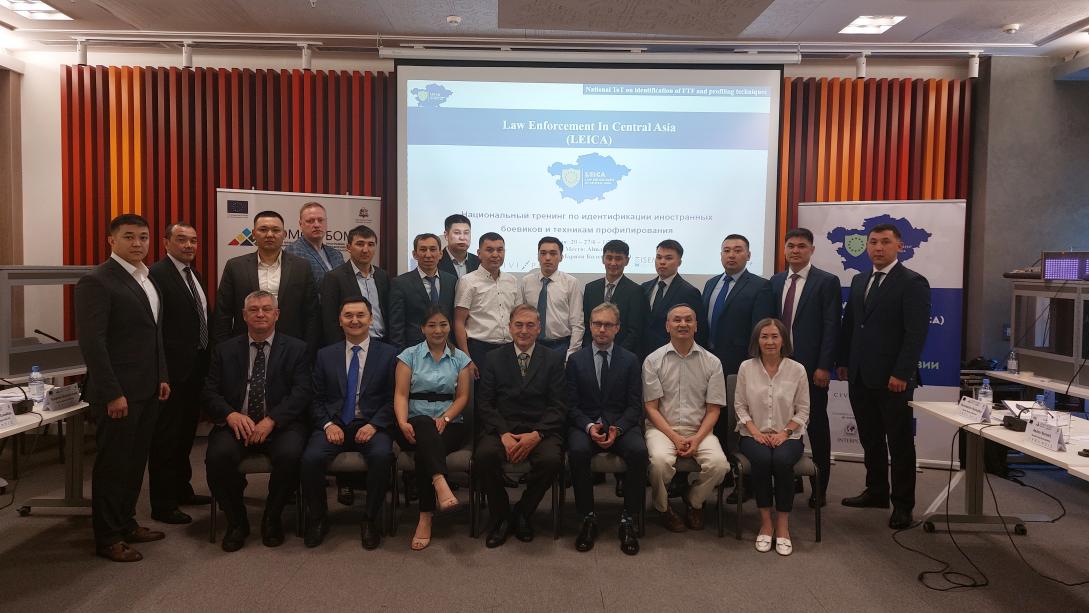
From 27 June to 1st July, the Border Management Programme in Central Asia (BOMCA) in partnership with the United Nations Office on Drugs and Crime Programme for Central Asia (UNODC) and Law Enforcement in Central Asia Project (LEICA) held a training of trainers (ToT) in Almaty on identification and profiling techniques for experts from law enforcement agencies of Kazakhstan. The training enhanced the knowledge and skills in the methodology of identification and profiling of foreign terrorist fighters, irregular migrants and drug traffickers.
The expertise during the workshop was delivered by the UNODC, BOMCA and LEICA experts, who shared the European best practices in field of identification and profiling. In the framework of ToT, experts provided basic and advanced training curricula developed on the basis of the European Union’s best practices and a set of materials for further training of staff in the field. Thus, the newly trained national experts are equipped to conduct trainings in their agencies.
This workshop is a part of series of activities dedicate to preparation of the national training experts and strengthening of identification and profiling mechanisms in the region. Similar activity was implemented for Tajikistan last year and Kyrgyzstan on June 20-24, 2022.
About BOMCA
The Border Management Programme in Central Asia (BOMCA), funded by the European Union (EU), aims to enhance security, stability and sustainable growth in the region, while supporting cross-border cooperation and improving living conditions for people in the border areas of Central Asia. Since its implementation in 2003, BOMCA has played a leading role in strengthening cooperation between border control authorities through the application of the concept of integrated border management, as well as in bringing border control in line with international and EU standards.
BOMCA’s tenth phase, launched in April 2021, covers four areas: institutional development of border management agencies, improvement of detection capacities, trade facilitation, and improvement of cross-border cooperation. With a budget of EUR 21.65 million and an implementation period of 4.5 years, BOMCA 10 is the largest regional initiative in the field. It is implemented by a consortium of border management institutions of selected EU member states and the International Centre for Migration Policy Development led by the State Border Guard for the Republic of Latvia.