
€15 million of EU Support for Better Border and Migration Management in Montenegro
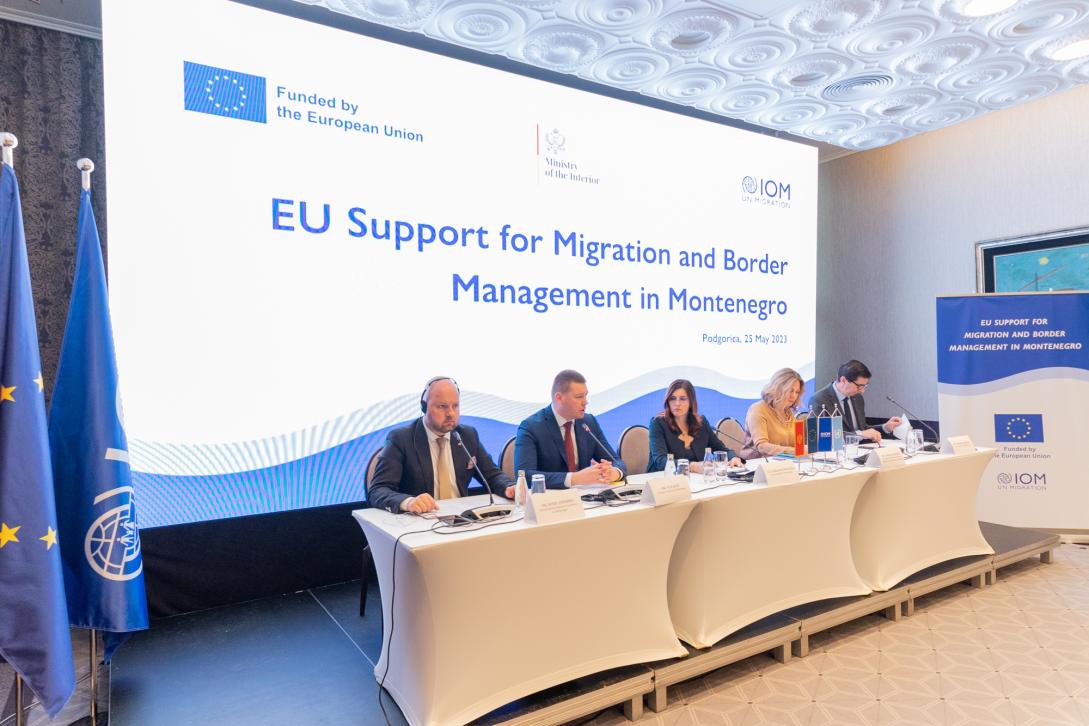
Relevant stakeholders in the field of migration and border management attended the ceremony, as well as the Minister of Interior of Montenegro – Filip Ažić, EU Ambassador to Montenegro – Oana Cristina Popa, and Senior Programme Coordinator of the IOM for Migration Management in the Western Balkans – Donatella Bradić. These participants officially addressed the attendees, emphasising the effective cooperation and successful implementation of the programme.

EU Ambassador Oana Cristina Popa said that the topic of managing irregular migration and safeguarding borders in the EU and the Western Balkans is very important for the EU. “The EU has dedicated more than €200 million for the Western Balkans in the area of migration and borders, focusing on anti-smuggling, border management, judicial and police cooperation, strengthening capacities, and key infrastructure and equipment. Montenegro is a key partner, and we have many joint challenges to tackle. This project will bring forward more knowledge, the building of key necessary infrastructure, and the purchase of equipment, which will help increase the capacities of Montenegrin authorities, ensuring safer borders for all of us. Montenegro can prove that it continues to be a reliable and committed partner when it comes to migration management,” Ambassador Popa said.

The Minister of Interior of Montenegro, Filip Adžić, thanked the EU Delegation and other international partners for their support to Montenegro in strengthening border management capacities. The Minister stated that by continuing the implementation of the new concept of integrated border management, additional strengthening capacities, and the joint actions of the involved authorities, Montenegro will reduce the threats to border security, ensure the smooth flow of people and goods across the state border, prevent all forms of cross-border crime, and prevent irregular migration. In this way, Montenegro will truly be at the forefront of the European Union, achieving our common goal of enhancing the security of our citizens and those of the EU.

Senior Subregional Programme Coordinator of the IOM for Migration Management in the Western Balkans, Donatella Bradić, commended the Government of Montenegro for the progress made in establishing and operationalising the integrated border management. The increased challenges in combating migrant smuggling and human trafficking will remain a priority among the IOM's goals at both regional and national levels, as well as regional coordination and capacity development. This project will certainly ensure that the set objectives are further strengthened.
Through this important intervention, Montenegro will strengthen its technical capacities to implement the EU complementary system of identification and registration of migrants, such as Eurodac. The registration and identification system for migrants in line with EU standards is a precondition for the EU accession, so cooperation and the exchange of expertise with EU member states will be integrated into the project’s workflow.

As migration flows in the Western Balkans become more complex, the European Commission’s 2022 report for Montenegro identified shortcomings and needs for further strengthening of institutions in the field of border management and border security.
Within this project, the IOM will carry out a series of systemic interventions over the next four years to align national legal frameworks with international and EU standards. The project will include several key components focusing on the construction of the National Coordination Centre, the establishment of a system for the registration and identification of migrants (EURODAC), and the strengthening of the infrastructure for border monitoring, accompanied by the corresponding capacity-building component.
This project represents a significant step in the EU accession process, particularly in the context of Chapter 24 of the accession negotiations, aiming to contribute to the achievement of strategic goals set out in the Integrated Border Management Strategy (IBM) and the Schengen Action Plan in the areas of border security, identification and registration of migrants, information management, and overall border surveillance and management in accordance with human rights at blue and green borders.
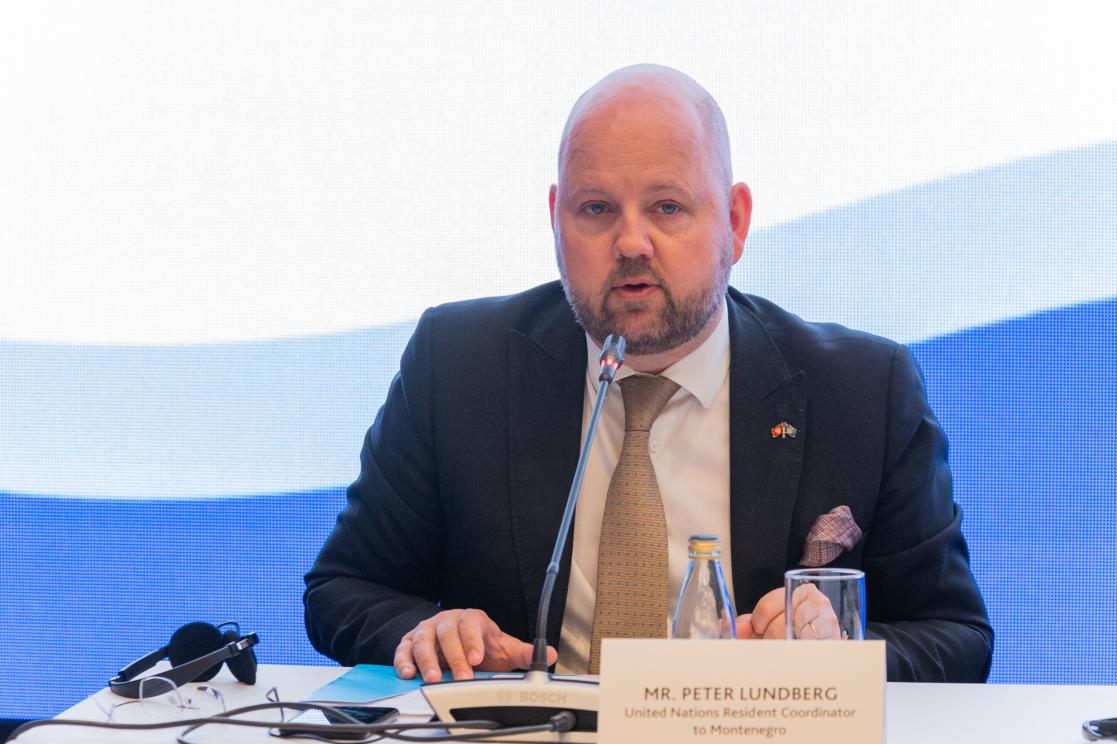
The IOM's activities are planned through the new UNSDCF 2023-2027 in Montenegro, which is an integral part of the Strategic Priority 3 of the UNSDCF: Social cohesion, people-centred governance, the rule of law, and human rights. The IOM Office in Montenegro remains dedicated to supporting the government on its EU accession path, in achieving sustainable development goals, and supporting the Global Compact for Migration in line with its mandate, said UN Resident Coordinator in Montenegro, Peter Lundberg.
As part of its support to the country in the field of migration and together with its partners, IOM Montenegro will continue to work on developing a functional, effective, and integrated border management system through targeted activities, including infrastructure improvement, the strengthening of technical capacities for border monitoring, the identification and registration systems, and capacity building for professionals to implement integrated border management.


