
A New Customs Control Centre Established to Combat Smuggling and Enhance Customs Controls with the Support of the European Union
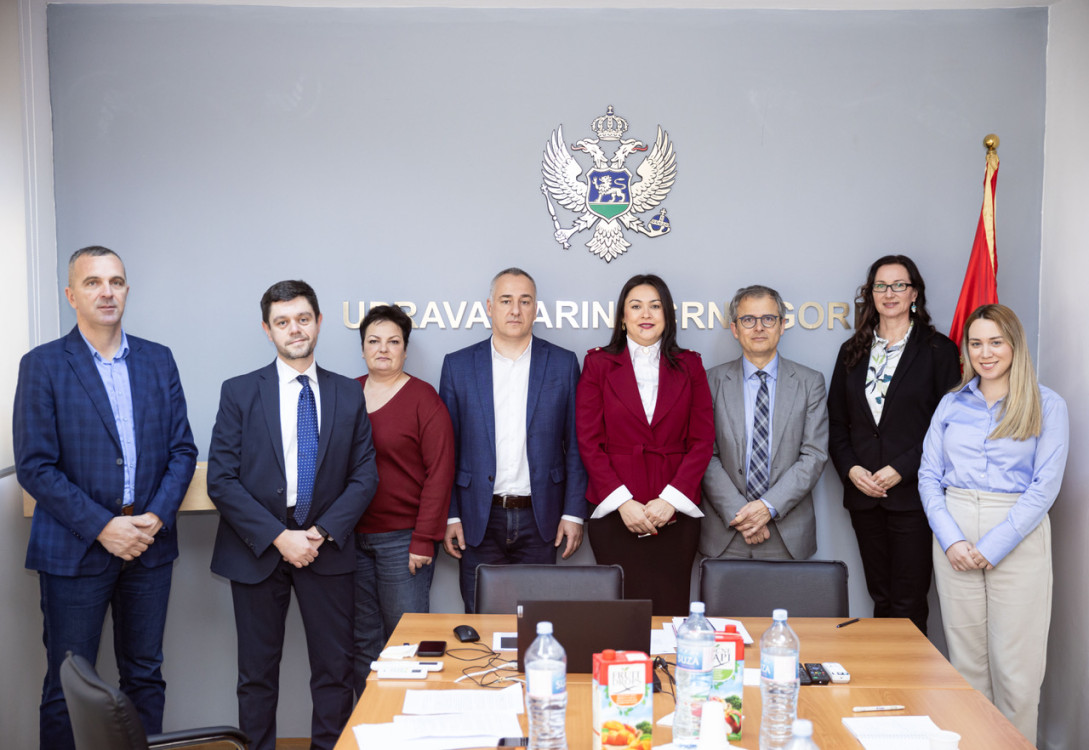
Today, an inaugural meeting was held at the Customs Administration of Montenegro to mark the implementation of the project “Establishment of the Customs Control Centre”, funded through a direct grant from the European Union. This significant initiative aims to strengthen the country’s capacity to combat smuggling and improve border management.
The European Union is providing €1.35 million in grant funding, while the Government of Montenegro is contributing €150,000. The project will be implemented over 24 months, from February 2026 to February 2028.
The establishment of the Customs Control Centre represents a key milestone in the modernisation and digital transformation of the Customs Administration of Montenegro. The project envisages the creation of appropriate premises and technical infrastructure for the Centre in accordance with operational and security standards, thereby enabling the coordination, supervision and analysis of customs control activities in real time.
Through the integration of video surveillance systems, automatic number plate recognition and container number reading technologies, digital weighing systems, and customs information databases, data exchange will be enhanced, and capacities for monitoring, analytics, and decision-making will be significantly strengthened. An integrated supervision and information management system will connect key customs locations, including the Customs Administration Headquarters, the Port of Bar, and the busiest border crossings. In parallel, customs officers and technical staff will undergo specialised training to ensure the efficient use and maintenance of the advanced systems.
“This project represents a decisive step in aligning Montenegro with the highest European Union standards in the field of border management and the fight against international smuggling networks. The establishment of the Customs Control Centre is not merely a technical upgrade, but the foundation of the digital transformation of Montenegrin customs and a clear investment in the future external borders of the European Union. It will facilitate the work of all customs officers and contribute to preventing the entry of prohibited and dangerous goods into the Montenegrin market,” stated Bernard Brunet, Head of the Cooperation Sector at the Delegation of the European Union to Montenegro.
“By strengthening institutional capacities, the Customs Control Centre will enhance Montenegro’s ability to combat cross-border crime, cigarette and narcotics smuggling, illegal arms trafficking and other forms of customs fraud. At the same time, it will facilitate lawful trade flows by improving the transparency, efficiency and predictability of customs procedures. This balance between control and trade facilitation will not only reinforce national security and fiscal stability but will also further enhance Montenegro’s international reputation as a credible and reliable customs partner. Through this transformation, Montenegro will gain a more secure customs territory, stronger protection against illicit trade, and faster, more transparent customs procedures that serve both the state and the business community,” stated Maja Vučinić, Acting Director of the Customs Administration of Montenegro.