
Young people protect the environment and discover cultural heritage in Panamá Viejo

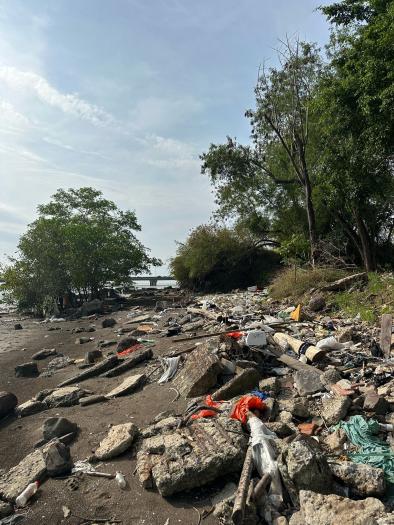
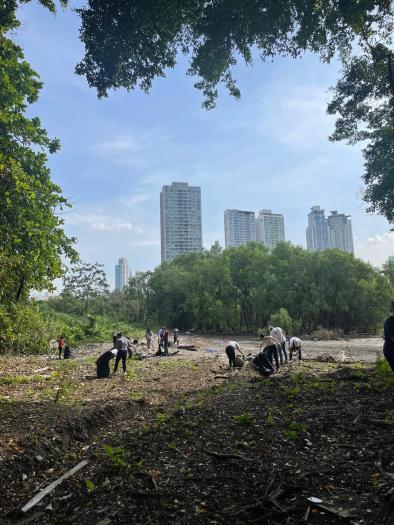
Over 30 participants from the European Union Delegation in Panama, the EU Youth Sounding Board in Panama, Team Europe Youth, students from the University of Panama, and other volunteers joined forces on 14 March to collect waste around the Genoveses area of Panamá Viejo. This activity reflected both the European Union's efforts in green diplomacy, expressed through annual beach clean-ups under the #EUBeachCleanUp initiative, and its commitment to protecting and promoting cultural heritage through the Cultural routes, Natural crossroads project.
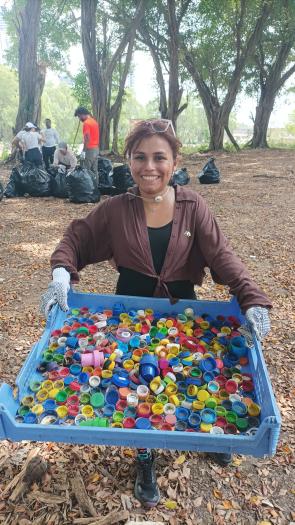
After five hours of hard work, participants filled more than 70 bags of rubbish. Among the items found were a car bumper, fences, tyres, boots, boxes, toothbrushes, straws, bottles, chairs, pipes, and plastic bags. Plastic bottle caps were also collected with the aim of using them in creative activities, such as colourful murals. The before-and-after comparison left no doubt about the impact of the effort.
This demanding clean-up task raised environmental awareness among young people, highlighting the urgent need to change our habits to prevent pollution in nature. At the same time, the activity fostered essential skills such as teamwork, resilience, and adaptability. It also offered young participants the opportunity to network and engage in cultural exchange between Panama and Europe.
After sharing reflections and experiences over lunch, members of the Youth Loudspeaker and Team Europe Youth continued the day with a guided tour of Panamá Viejo. Led by María Isabel Arrocha, Panama's expert in the Cultural routes, Natural crossroads project, the young Europeans and Panamanians explored this early settlement, the forerunner of Panama City. They learned about its foundation within the context of Spanish expeditions, its lifestyle — including ceramics and traditional dishes that remain popular today — and its power structures, among other aspects. They were particularly inspired by the powerful women of the past, from the Lady of Panamá Viejo to those who became traders to support their families.
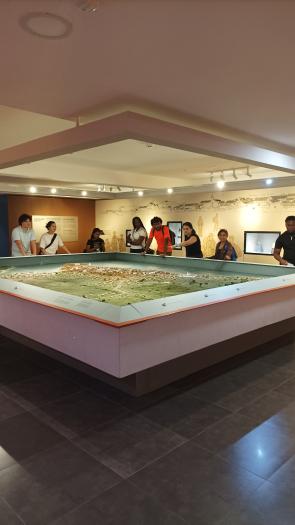
The young participants examined the site's model, recognising the beach they had just cleaned, formerly the location of the Casas Reales. They also learned about the attack by English pirate Henry Morgan via the Camino de Cruces, in his quest for treasures that passed through, but never remained in, Panama — underscoring the historical links between Peru and the Spanish Empire. Urban legends, such as the true origins of the Altar de Oro, were also debunked, and they gained insight into the management model of the Panamá Viejo Trust.
The group then explored reconstructions of period homes and shops. Finally, they visited the remains of Panamá Viejo and enjoyed the panoramic views from the emblematic Cathedral tower, where they glimpsed the cobblestones of the Camino de Cruces and the Camino Real beneath the modern streets. Activities like this inspire young people to delve deeper into Panama's fascinating history, reflect on its role as a bridge between worlds, and share their knowledge with family and friends.
Gallery
-
Image

UE en Panamá
-
Image
UE en Panamá
-
Image
UE en Panamá
-
Image
UE en Panamá
-
Image

UE en Panamá
-
Image

UE en Panamá
-
Image
UE en Panamá
-
Image

UE en Panamá