
Russian war in Ukraine also threatens African interests
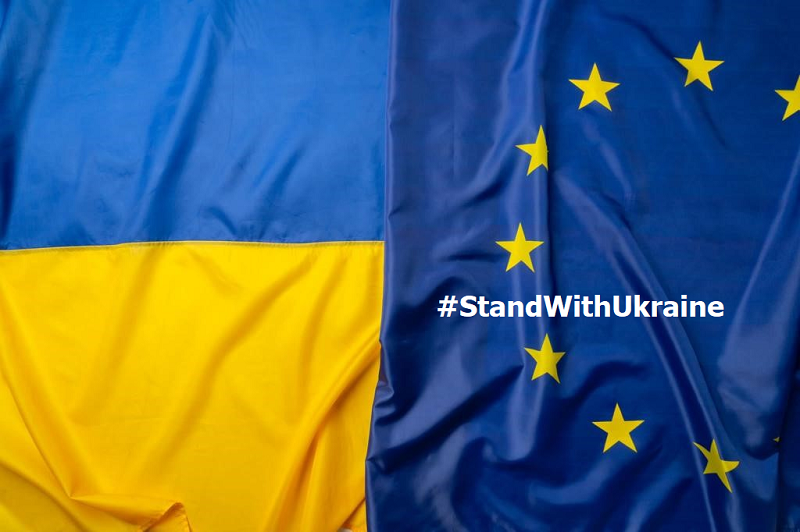
A month ago, on February 24, Russian President Vladimir Putin brought Russian army tanks into Ukraine, after massing a large number of troops on Ukraine's borders. This invasion of Ukrainian territory has brutally called into question the most fundamental principles of international law. This unprovoked and unjustified military aggression constitutes a flagrant violation by Russia of the United Nations Charter, which enshrines the fundamental principle of the independence, integrity and territorial sovereignty of a State. Ukraine, for its part, is a victim of Russian aggression and the actions it is currently undertaking are carried out in accordance with the right of self-defence also enshrined in the Charter.
This war has terrible consequences. Russia carries out barbaric attacks against civilians, including children. The rules of international humanitarian law are the subject of particularly serious violations by Russian troops who carry out indiscriminate strikes on urban areas where the risk of killing civilians is obvious, including on hospitals and a maternity hospital.
Every second, a Ukrainian child joins the unfortunate cohort of refugees – numbering 3.4 million today. Ten million Ukrainians – a quarter of the population – were forced from their homes overnight. Europe has mobilized from the very first days to come to the aid of all the refugees, who have been received in neighboring countries, in Poland, Hungary, Romania, the Czech Republic, Slovakia or Moldova, and who for some continued the journey to other countries. This also includes non-Ukrainians forced to leave the country because of the war, including many African citizens, including students. Ongoing contacts are being held at all levels between EU Member States and the Ukrainian and Moldovan authorities to ensure that their access to European territory is facilitated: according to the latest UN figures, 162,000 non-Ukrainian citizens, including a large number of African citizens, were evacuated. We share the concerns of African states about the situation of their nationals, who are also victims of the brutal consequences of Russian aggression. Many European citizens who lived in Ukraine had to flee this war. The States bordering Ukraine have organized themselves to receive these refugees without distinction of nationality of any person fleeing the conflict. Poland, which alone has taken in a total of more than 2 million refugees, has shown itself, like all the other countries, to be of unparalleled generosity towards all those fleeing the war, Ukrainians like the others. They are not mistaken, who are turning to Europe where they know they will be welcomed with respect and compassion, and not to Russia, where they could just as well flee.
The conflict in Ukraine is not just a European conflict. The consequences of the Russian invasion of Ukraine will be lasting and profound also for the world order as a whole, including for the African continent. This war will undoubtedly mark a decisive turning point and will induce major geopolitical changes, with which all countries will be confronted more or less directly.
In this context, we are all the target of Russia's large-scale campaigns of disinformation and manipulation of facts, which try to give a justification to a war that has none and to reverse the responsibilities. It is imperative to clarify the facts and recall Russia's primary and total responsibility in this war. As such, it is not the EU sanctions that are responsible for the rise in wheat prices. It is the invasion of Ukraine by Russia which is the cause of this increase in prices, because Ukraine can no longer export its wheat, of which it is one of the main producers in the world. European sanctions do not concern the agricultural sector. We are mobilized and united to denounce Russian propaganda and vigilant against Russian attempts to divide the world. However, we already perceive the impact of this war on food security, particularly in Africa, and we are mobilized to respond to it.
It is time, for all democracies, for unity and firmness. Stopping this war and stemming its impact on security and the world economy requires a general mobilization, such as that demonstrated recently within the UN bodies and which showed the isolation of Russia. The international community, led by the European Union, has mobilized in a united, supportive and determined manner to support Ukraine in the face of this aggression. Sanctions on an unprecedented scale have been adopted in cooperation with partners and allies to break President Vladimir Putin's ability to continue his attacks, with a single objective: the end of aggression, the return to peace. These sanctions are not aimed at the Russian people, who have not decided to fight this war, but they inevitably affect them, just as they affect us too. It is up to President Putin to put an end to this aggression and its consequences.
Very recently, the European Union and Africa confirmed their desire to open a new page in their relations at the EU-AU Summit held on February 17-18 in Brussels, to build a common future. Today, this crisis in Ukraine calls on us to implement, together, this strategic partnership between the European Union and Africa and to defend, hand in hand, our common objectives of peace, security and stability, in full respect of international law and conventions. Through the geographical proximity and the historical ties that unite us, the security of Europe depends on the security of Africa and vice versa. Together we can act. Such violations, such violence have no place in the 21st century.
German Embassy
Austrian Embassy
Belgian Embassy
Spanish Embassy
Finnish Embassy
French Embassy
Italian Embassy
Embassy of the Grand Duchy of Luxembourg
Embassy of Greece
Hungarian Embassy
Dutch Embassy
Polish Embassy
Portuguese Embassy
Embassy of the Czech Republic
Romanian Embassy
European Union