
EU Reaffirms Commitment to International Criminal Justice and South Sudan's Transitional Justice
Friday, 17 July 2026
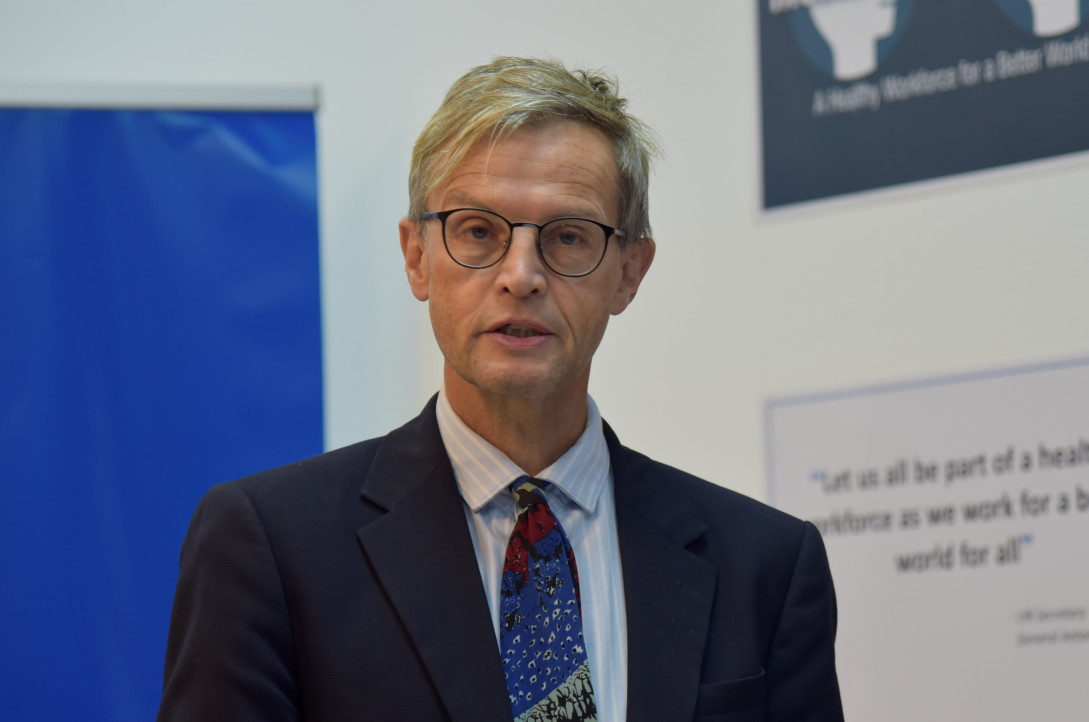
Remarks of the Charge d’Affaires of the European Union, Lothar Jaschke, at the commemoration of the International Day of International Criminal Justice
Dear Ladies and Gentlemen
Thank you for the invitation to be part of this ceremony.
I vividly remember the launch of the reform of the judiciary in South Sudan, based on the recommendations of the Judicial Review Committee which the EU supported. We welcome and support the process towards an accessible, independent, impartial and effective justice system for all in South Sudan. We do this in many parts of the world.
A fair and transparent legal system is the cornerstone of any democratic society, fostering public trust and ensuring the protection of the rights and dignity of every citizen.
Justice is the basis of peace within our societies and peaceful relations of individuals. Justice has a beautiful face if it works and if it makes sure that no one is above the law, but all are subject to the same rules. This is the Rule of Law. The EU’s DNA. The EU is founded on the values of respect for human dignity, freedom, democracy, equality and rule of law and human rights.
As much as justice is the basis for a democratic society, international justice is the basis for the world order. Its cornerstone is the UN Charter. The UN Charter prohibits violence and the threat of violence. The European Union’s foreign policy is guided and inspired by these principles and is calling out violations wherever they happen.
The cornerstone of international justice is the International Criminal Court. Its statute was adopted on 17 July. This is the reason why we commemorate the International Day for International Criminal Justice today. The ICC is the only permanent international criminal jurisdiction with a universal vocation. The goal of the Rome Statute is to bring justice to the victims of the most serious crimes ensuring the effective prosecution of their perpetrators.
The European Union is resolved to defend the integrity of the Rome Statute and the universality and independence of the Court and calls on all States to cooperate with the ICC and supports reform processes aimed at improving the effectiveness of the Court.
The EU also supports transitional justice initiatives and international justice mechanisms related to specific countries, just as the transitional justice process in South Sudan. We do support the process through a three-year regional programme of 5 million Euro managed by the EU Delegation to the AU. Its core objective is to facilitate the domestication of the African Union Transitional Justice Policy and implementation of the related Roadmap. The project includes support for Victim Support Groups and engages youth to participate in transitional justice using digital storytelling.
At the global level the EU launched, in 2024, a 21 million Euro project to fight against impunity for international crimes and contribute to the primacy of international law. The project will also raise awareness of and build support for the ICC and its mandate.
The European Union will continue to engage in efforts to support civil society, lawyers, pro-sectors and all courageous individuals who work in the field of international criminal justice and who seek justice for atrocity crimes. Civil society and human rights defenders play a crucial role in the denunciation of human rights violations and breaches of international humanitarian law, thus promoting accountability and justice.
Justice is more than a promise; it is a service. It is indispensable for peace.
Read More:
__________________________________