
Solidarity Statement from Development Partners at the United Nations Dialogue on Ending Gender-Based Violence in Tanzania
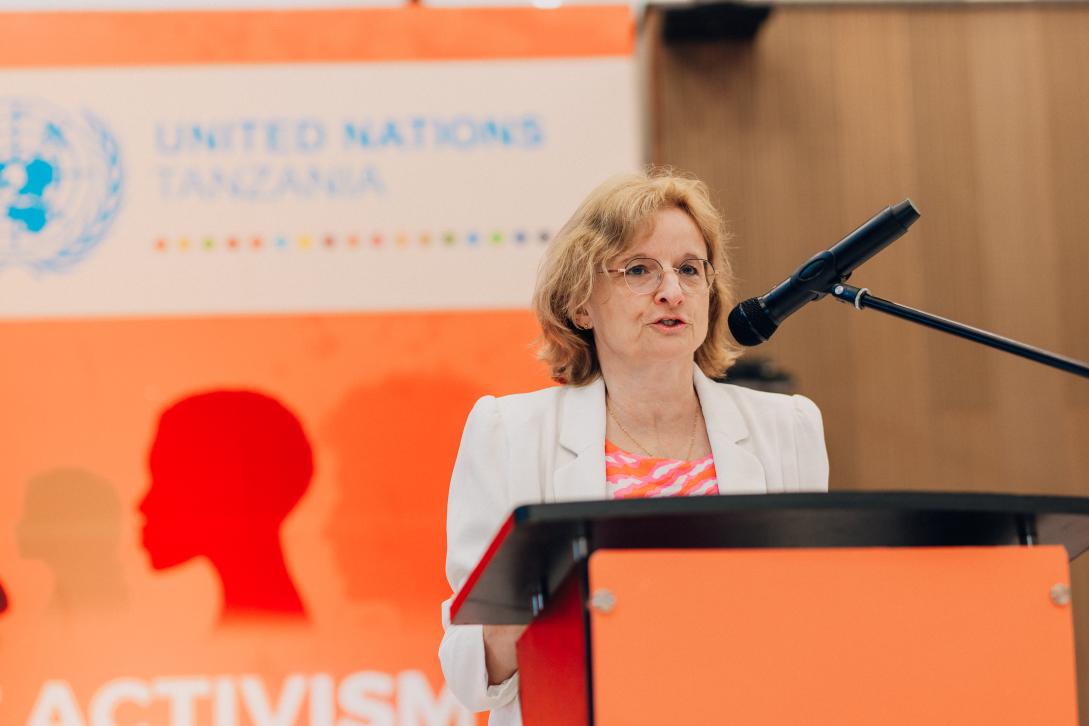
Speech delivered by the European Union Ambassador on behalf of the Development Partners Group on Gender Equality
All protocol observed.
Honorable Minister of Community Development Gender, Women and Special Groups,
Distinguished Representatives of United Nations Agencies and Donor Partners.
Activists and Advocates of Gender Equality,
It is an honour to speak to you today on behalf of the development partners in Tanzania committed to end gender-based violence and advance gender equality.
The EU delegation to Tanzania has this year been the chair of the Donor Partners Group on Gender Equality, together with co-chairs, Canada and UNICEF, whose representatives I would like to thank. The groups counts on more than 30 members of bilateral and multilateral partners.
On behalf of the collective group, we want to express our solidarity with the survivors of gender-based violence and our unwavering commitment to end it.
Tanzania has shown leadership in its efforts to tackle gender-based violence, and as development partners, we stand alongside you.
We want to recognize the tireless work of Tanzanian authorities, organizations, and advocates at the forefront of this effort. Your leadership is inspiring.
2024 has been an important year for Tanzania with the launch of two key documents: the new Gender and Women Development policy, and the 2nd National Plan of Action to End violence against Women and Children. Hongera Sana to the Government of Tanzania (and Zanzibar which is also on this way), but also to the civil society engaged and partners supporting the country in these steps.
As we end the year, the 16 days of Activism Against Gender-Based Violence reminds us that we are at a pivotal moment in our collective effort to build a safer, more equitable world for women and girls, as we go towards Beijing 30 Years.
The dialogue today on, "Realizing the Promise of 2030: Accelerating Action to End Violence Against Women and Girls", reminds us that we - Development partners and Tanzania - made a “promise” 30 years ago to women and girls around the world: that every woman and girl should enjoy a life free from discrimination, exclusion, and violence.
Violence against women and girls is not only a violation of human rights: it is a persistent barrier to the progress. It is limiting opportunities, destroying lives, and holding back sustainable development. Yet, together, we can change this reality.
Let me highlight the importance In this regard of the 2nd National Plan of Action to End Violence Against Women and Children. It is a comprehensive and strategic framework that lays out the concrete actions needed to tackle violence in all its forms. This Plan has been instrumental in setting priorities. It should serve national authorities to mobilize the necessary resources and establishing accountability mechanisms across the country. And also to development partners to support where most needed.
Significant progress has been made in understanding the challenges and gaps of the previous Plan, which will help the implementation of this new Plan. However, much work remains to be done. Today, we are reminded that the fight against gender-based violence is ongoing and requires continuous collaboration, dedication, and creativity.
Ladies and gentleman,
Colleagues and authorities,
A key milestone in this year journey was the also the High-Level Strategic Dialogue between the government of Tanzania and its development partners. This Dialogue, which focused on gender equality, demographic shifts, and the challenges and opportunities of youth, was a moment for reflection on our collective achievements and a call to action for the future.
It underlined the need for holistic approaches that consider the demographic realities of Tanzania: the high number of youth presents both an opportunity and a challenge. While it provides a dynamic force for development, it also brings increased vulnerability, especially for young women and girls.
It is important to invest in the youth through education, empowerment, and opportunities for engagement, including in the fight against gender-based violence.
No one should face violence because of their gender, age, or status. This is not just a moral imperative; it is essential for achieving the Sustainable Development Goals (SDGs). We cannot achieve these global goals if we do not take bold action to address gender-based violence.
As development partners, we are proud to be part of Tanzania’s journey towards gender equality. We support the National Plan of Action to End Violence Against Women and Children and continue to work closely with the government, civil society, and other stakeholders to strengthen its implementation.
We are committed to accelerating action to end violence, ensuring that survivors have access to the support they need, and we all work to prevent violence before it starts.
Together, we are focusing on several key areas:
- Strengthening Legal and Policy Frameworks: We support the Tanzania government’s efforts to create and enforce laws that protect women and girls from violence and strengthen coordination for implementation and reporting. These efforts are critical to holding perpetrators accountable and ensuring justice for survivors. We support a strong legal and policy environment for the protection of women and girls – such as increasing the minimum age of marriage to 18 for girls.
- Empowering and Engaging Youth: Young people are not just the future—they are key actors in the present. We are working to empower youth, particularly adolescent girls and young women, to become leaders in their communities, groups and at all levels and sectors, advocating for their rights and actively participating in efforts to end gender-based violence.
- Support for Survivors: Survivors of gender-based violence need legal protection, access to health care, safe spaces, counselling, and social reintegration programs delivered through a strong case management system. We are committed to supporting these efforts, ensuring that survivors can rebuild their lives with dignity and that they are not left alone.
- Changing Attitudes and Social Norms: Ending gender-based violence requires a cultural shift. We are working together to challenge harmful social and gender norms and transform attitudes that perpetuate violence. This includes raising awareness, promoting positive masculinities, working closely with men and boys, parents/caregivers, and key influencers like traditional and faith leaders, and fostering a culture of respect and equality.
Development partners in Tanzania are committed to accelerating action to ensure that the promise of 2030—a world free from violence against women and girls—is not just a vision, but a reality.
We work alongside the government and people of Tanzania in this, and together, we will continue to advance for gender equality and the empowerment of women and girls.
Together, we can make lasting change. Together, we can make the difference. Pamoja tunaweza !
Ashanteni Sana!