
Speech by EU Ambassador to Tanzania at the Opening of the European Union Youth Debate Contest
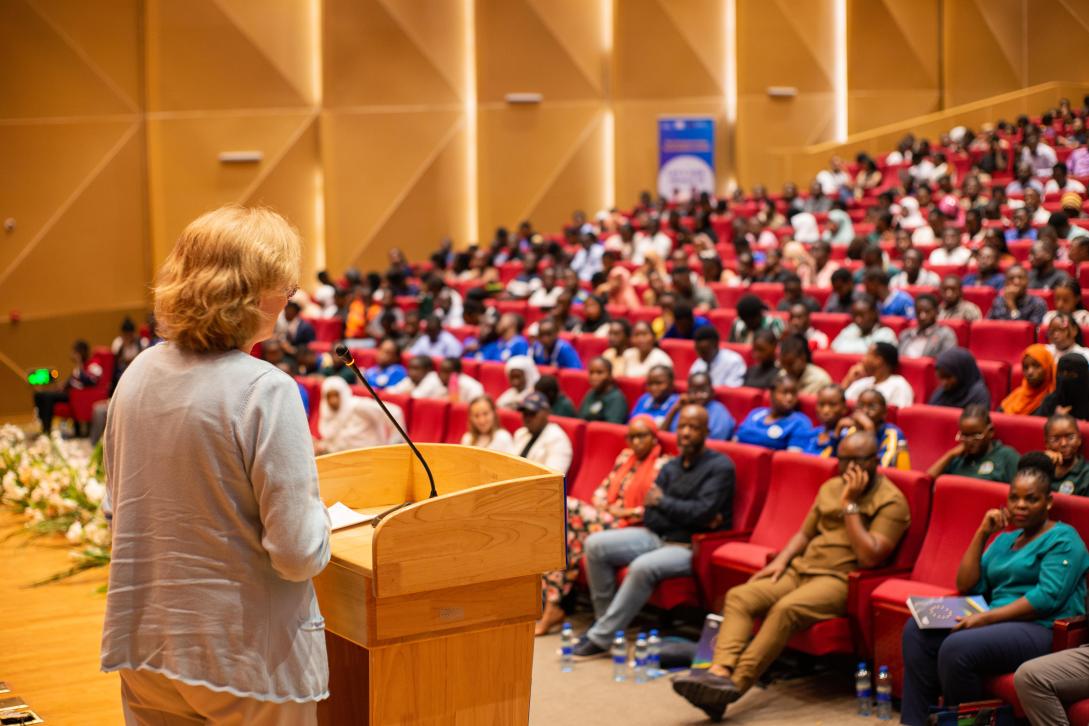
Good morning, everyone. Usually, when I am invited to events like this, I begin by expressing how much of an honor it is to be part of the occasion. Today is no different—I am indeed honored to be standing here, surrounded by so much youthful energy.
However, I will admit, today feels a little nostalgic for me. Years ago, when I was your age, I was in the same position as many of you. I vividly remember participating in debate simulations where we would take on roles like ambassadors, ministers, or experts. These simulations were designed to replicate real-world negotiations like those we see in the European Union or the United Nations.
Through evidence-based debates, we discussed important issues, refined our public speaking confidence, and, more importantly, learned to respect and value different opinions.
For me, these experiences left a mark on my professional development. Today, as EU Ambassador, I rely on the ability to listen to diverse perspectives from my team and various stakeholders. This ability has been crucial in helping me make informed decisions.
That is why initiatives like this debate contest are so important—especially for young people, who form a majority not just in Tanzania, but across the world.
Before today, I had the pleasure of attending two debates supported by the European Union. The first was organized by the East African Community at Ardhi University, and the second was at Sokoine University of Agriculture in Morogoro, where I participated alongside my fellow EU Ambassadors. We were impressed not only by the quality of the debates but also by the creative ideas and contributions from young people. My fellow Ambassadors and I discussed how we could encourage more debates like these—and this is where the idea for the EU-organized debate competition was born.
Our goal is simple: to engage as many young people as possible in these discussions. To achieve this, we introduced a unique element—to have these debates through social media platforms. This is an area where youth voices resonate most loudly.
How many of you here are on a social media platform? Exactly!
Social media is where you are, and it allows us to reach more people, promote dialogue, and amplify your voices. I must say, I was truly impressed by the submissions we received on social media. The evaluation committee had a tough job in selecting the finalists. I especially want to congratulate all of the participants who took part in the social media debate.
To the final 20 participants who made it to today’s live debates, a big congratulations! I am particularly happy to see that 12 of the finalists are women because, during the call for applications, the number of women applying was much lower. But the quality of their applications has been outstanding. Ladies, congratulations!
As Team Europe—the EU and its Member States—we are committed to youth engagement. And for this, I want to especially thank the Embassy of Poland, who will award the three best speakers of this debate contest with a trip to Poland during the summer.
This debate is just one example of how we aim to make young voices heard. For those who may not know, we also have the Youth Sounding Board. The Youth Sounding Board aims to create a space for the meaningful involvement of young people in the EU’s international cooperation policy and advises the Ambassador of the European Union to Tanzania on youth participation and empowerment. How many of you have heard about it?
Last year, we launched the first cohort of 25 vibrant youth from an incredible pool of nearly 800 applicants from all over Tanzania. This demonstrates the thirst among young people to contribute to decision-making. Some of the board members are here today—one of them, Paul Siniga, is even hosting this event! The Youth Sounding Board is part of our broader Youth Action Plan, which we launched in 2022 right here in Tanzania. It reflects our recognition of young people as essential partners in shaping policies and driving change.
I don’t want to appear biased toward today’s motion, “Having your own business guarantees a more sustainable income than a regular job.” But I will say this: our support for youth works in both directions.
On one hand, we offer fully funded scholarships like Erasmus+ to help students study abroad, gain exposure, and acquire skills that can make them employable or inspire them to create their own businesses. On the other hand, we support young entrepreneurs through programs like Funguo. I see that one of today’s judges, Zena Msonde, is a beneficiary of the Funguo program and has successfully started her own business in the transportation sector.
To the debaters, my advice is simple: don’t be afraid to tackle difficult topics. Growth happens when we step out of our comfort zones. Debates teach us to be open-minded, collaborate, and understand opposing viewpoints—skills that are crucial for solving complex challenges.
This is the first EU-organized debate, but it’s certainly not the last. Our intention is to make this an annual series, continuing to engage universities across Tanzania and ensuring even more students get the chance to participate.
Before I conclude, I want to apologize in advance as I have a meeting to attend and won’t be able to stay for the entire event. But I’ll be following the livestream and can’t wait to see the amazing ideas you all bring to the table. And I will be with you for the finals tomorrow!
Good luck to all the debaters, and let the debates begin!