
Children in Crisis: Spotlight on Underfunded Humanitarian Emergencies
Background
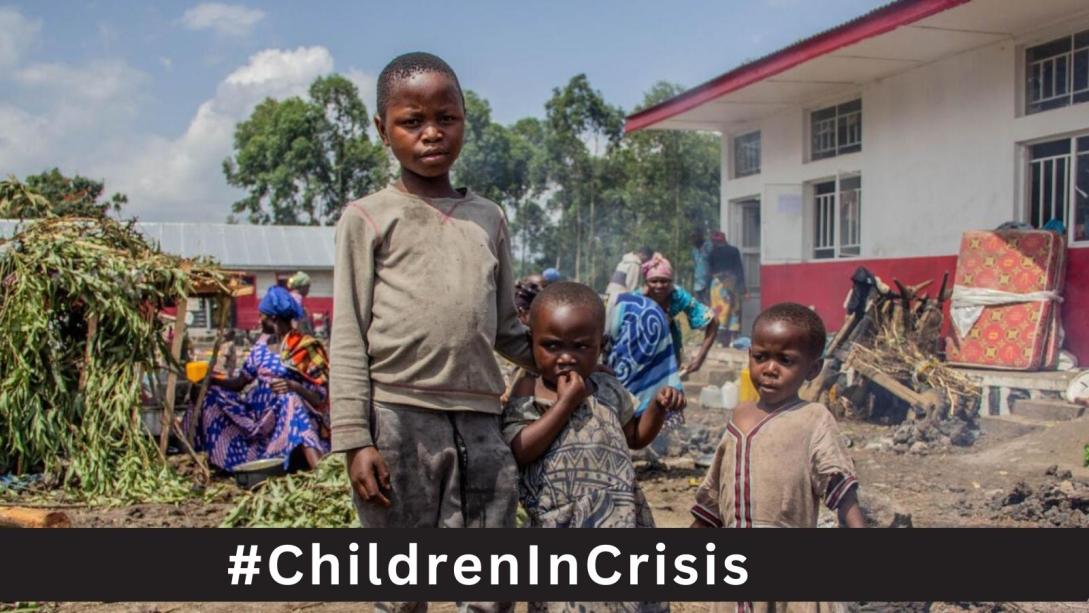
The UNICEF 2026 humanitarian Action for Children Appeal estimates that more than 200 million children will require humanitarian assistance in 133 countries and territories this year. While high-profile humanitarian crises such as the ones in Afghanistan, the State of Palestine, Sudan and Ukraine mobilized 47% of the humanitarian contributions received in 2025, chronically, underfunded crises continue to struggle to receive attention from donor community with appeals for these emergency responses receiving only 17% of the contributions received. In a world engulfed with polycrisis, the likelihood that emergencies get neglected is inevitable. In such situations of “forgotten”, “neglected” or “underfunded” crisis, it is imperative that the plights of children are not overlooked.
This is the reason why since 2023, the Delegation of the European Union to the United Nations in New York has been partnering with UNICEF in organizing the discussion series entitled “Children in Crisis: Spotlight on Underfunded Humanitarian Emergencies[1].” Since, 2023, the series has focused on crises in The Democratic Republic of Congo (DRC), Haiti, Occupied Palestinian Territory, Sudan, South Sudan, the Central Sahel, the Central African Republic, Myanmar, the situation of Rohingya children, Afghanistan, and Colombia (see details and key messages chronologically listed below).
Aim of discussion series
- Focus on the plight of children in underfunded crisis, who receive little/no or inadequate assistance. With particular attention drawn to the need for their access to education and protection, creating linkages to the six grave violations against children; the EU commitments on Education in Emergencies; and the EU updated Guidelines on Children and Armed Conflict.
- Demonstrate the operational reality, severity and scale of needs in severely underfunded crises, with in depth focus on specific sectors that are most relevant for the wellbeing and protection of children.
- Advocate for specific focus on children’s rights in programming for/and humanitarian support, especially amidst the humanitarian Reset and hyper-prioritization; and
- Advocate for more financing for children’s programming during humanitarian responses
Key Messages from the Discussion Series in 2026
KEY MESSAGES: Central Sahel

European Union/UNICEF
KEY MESSAGES: Venezuela

EU-UNICEF
KEY MESSAGES: Meeting on South Sudan

EU/UN
Key Messages from the Discussion Series in 2025
KEY MESSAGES: Meeting on Colombia

EU/UNICEF
KEY MESSAGES: Meeting on Afghanistan

EU/UNICEF
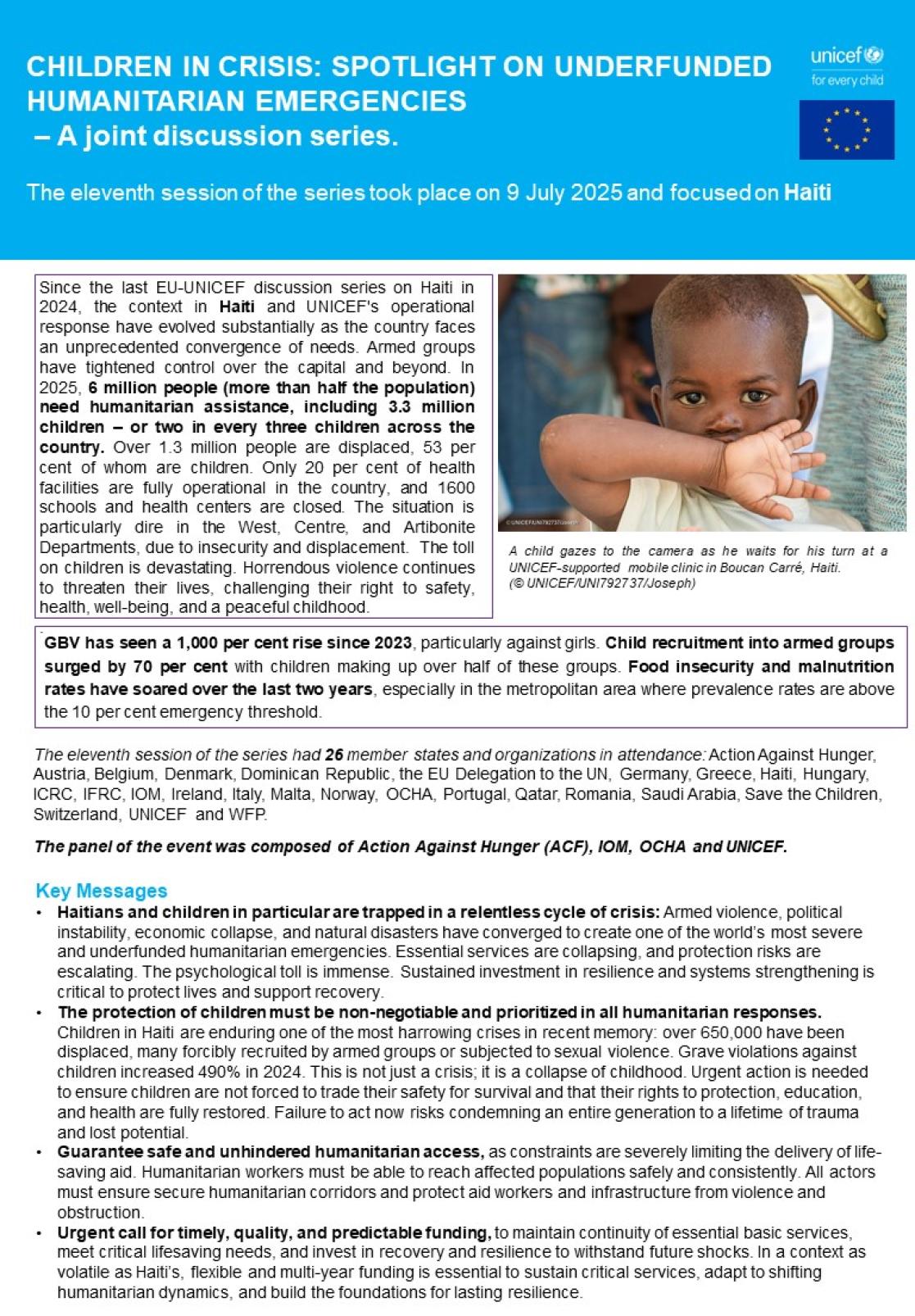
KEY MESSAGES: Meeting on Haiti
EU/UNICEF
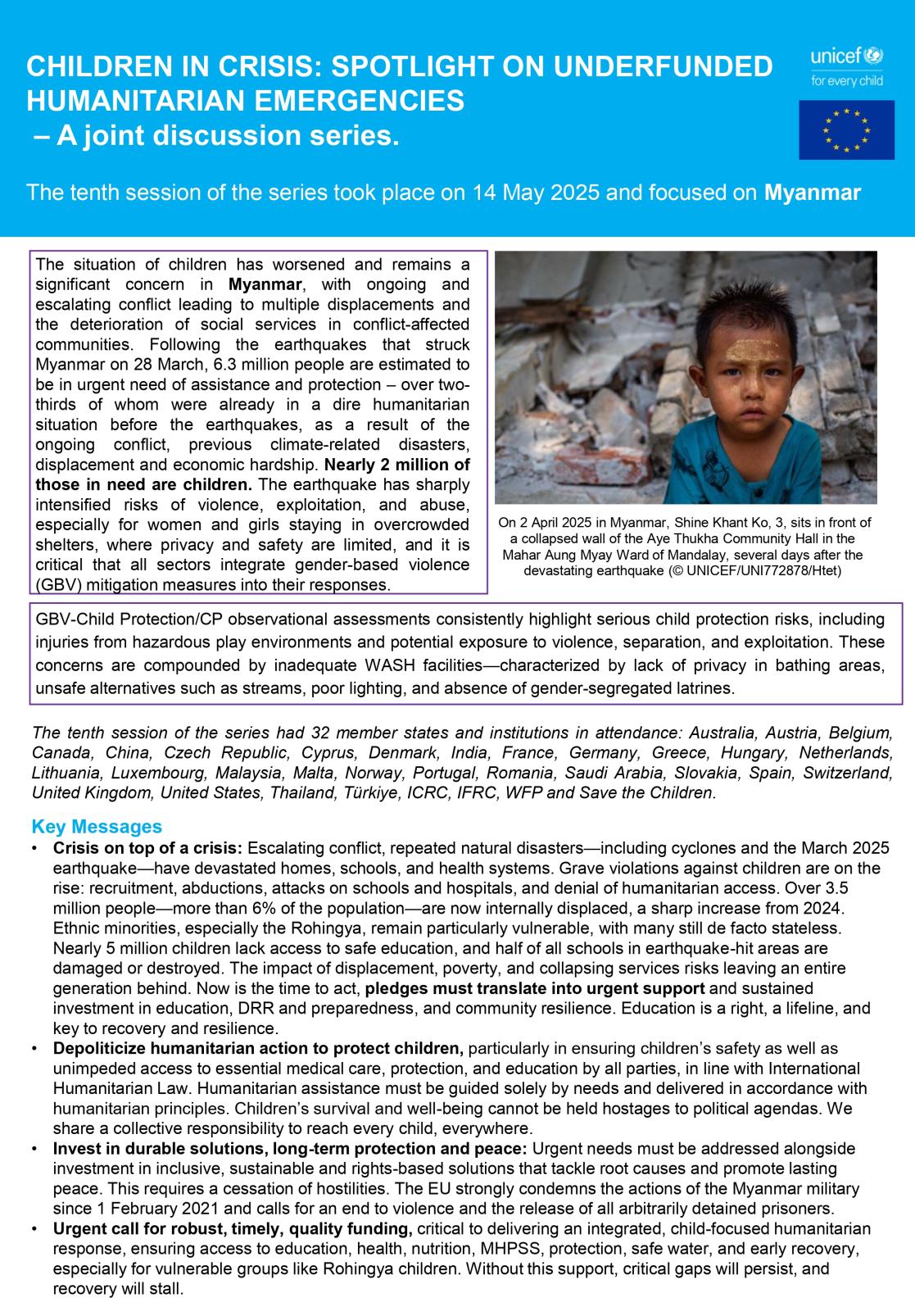
KEY MESSAGES: Meeting on Myanmar
EU/UNICEF
KEY MESSAGES: Meeting on Central African Republic

EU-UNICEF
Key Messages from the Discussion Series in 2023 and 2024
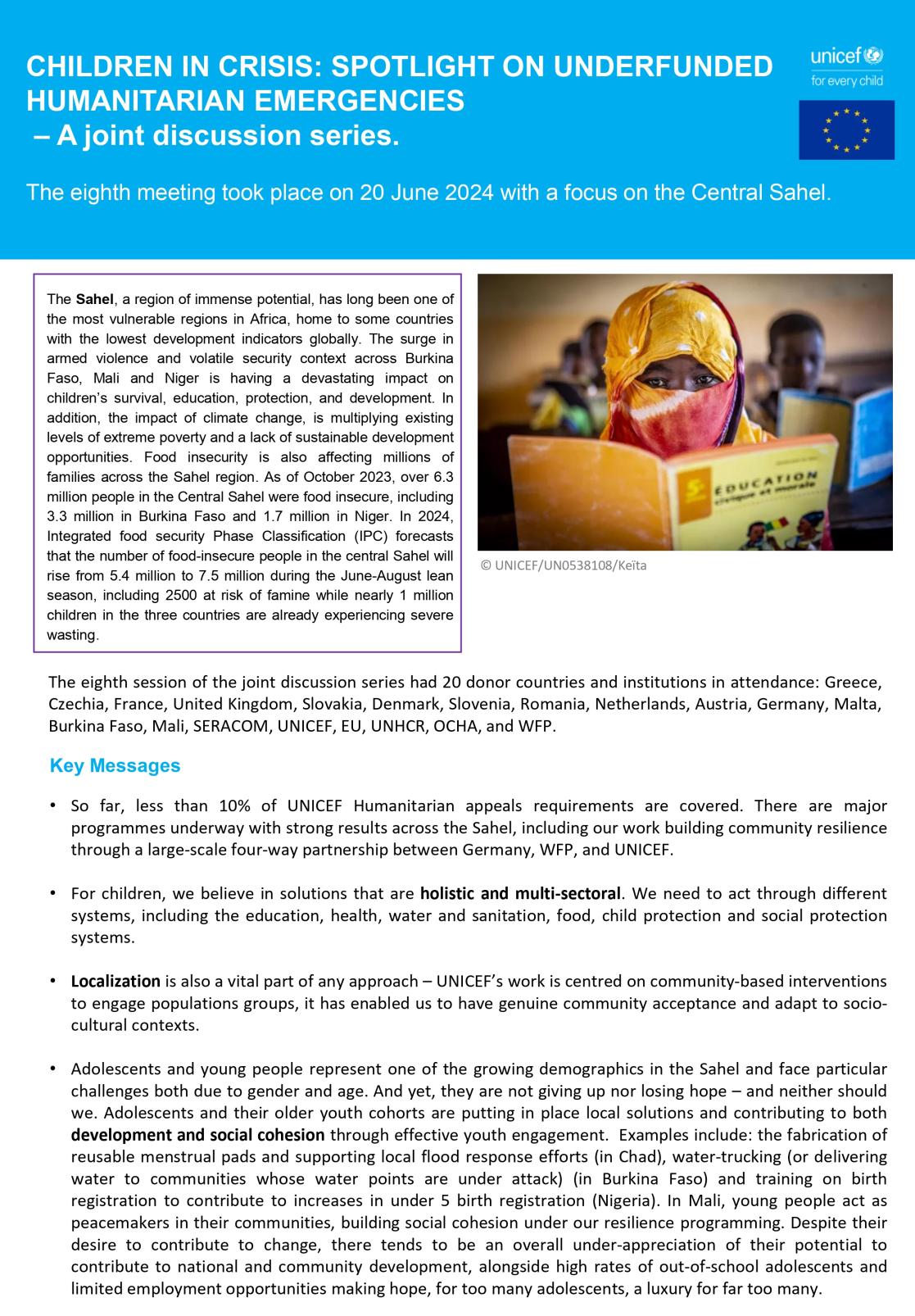
KEY MESSAGES: Meeting on the Central Sahel
UNICEF
KEY MESSAGES: Meeting on Haiti
See also: UNICEF Humanitarian Action for Children 2023 - Haiti

EU-UNICEF
KEY MESSAGES: Meeting on DRC and Sudan

EU-UNICEF
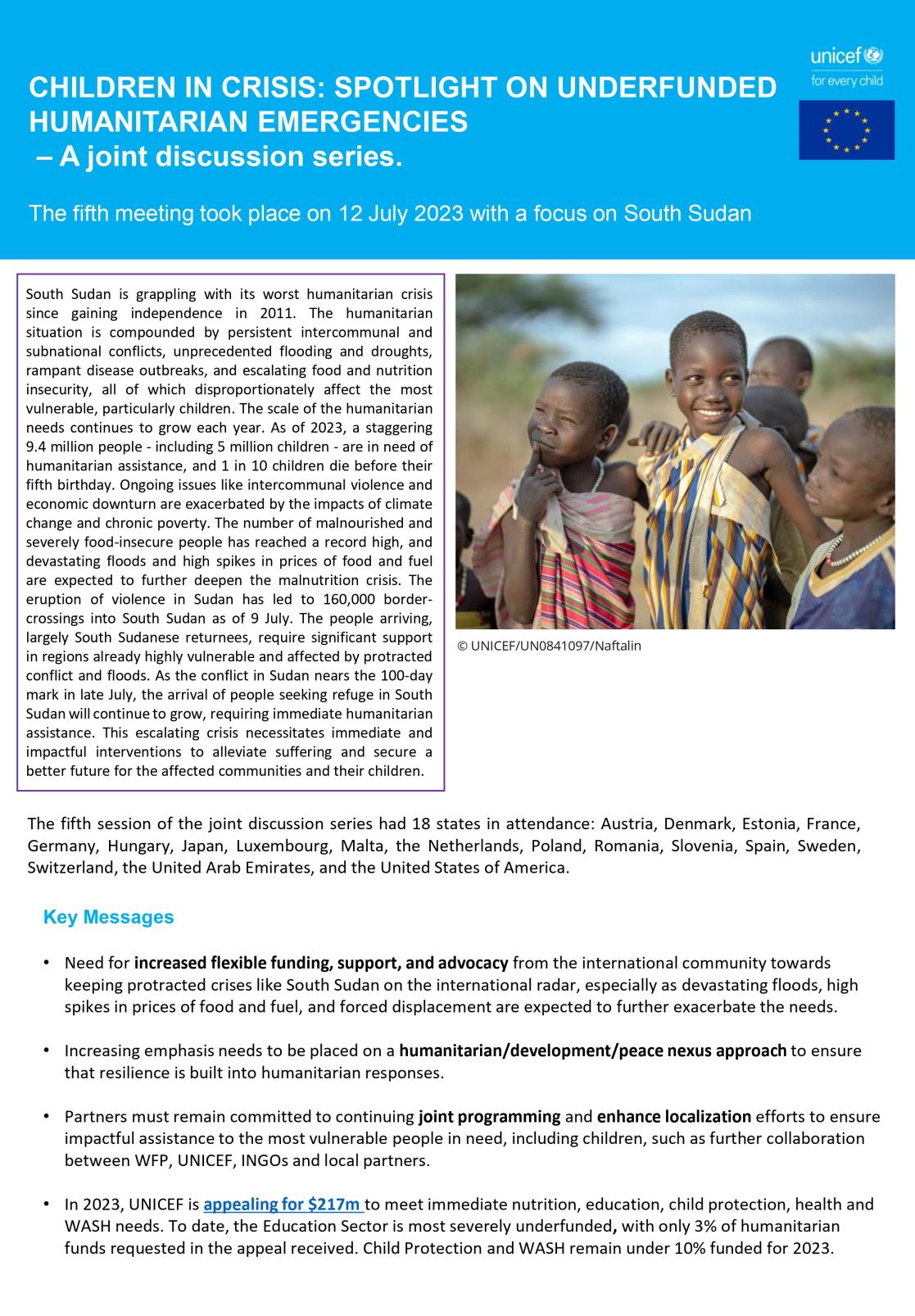
KEY MESSAGES: Meeting on South Sudan
EU/UNICEF
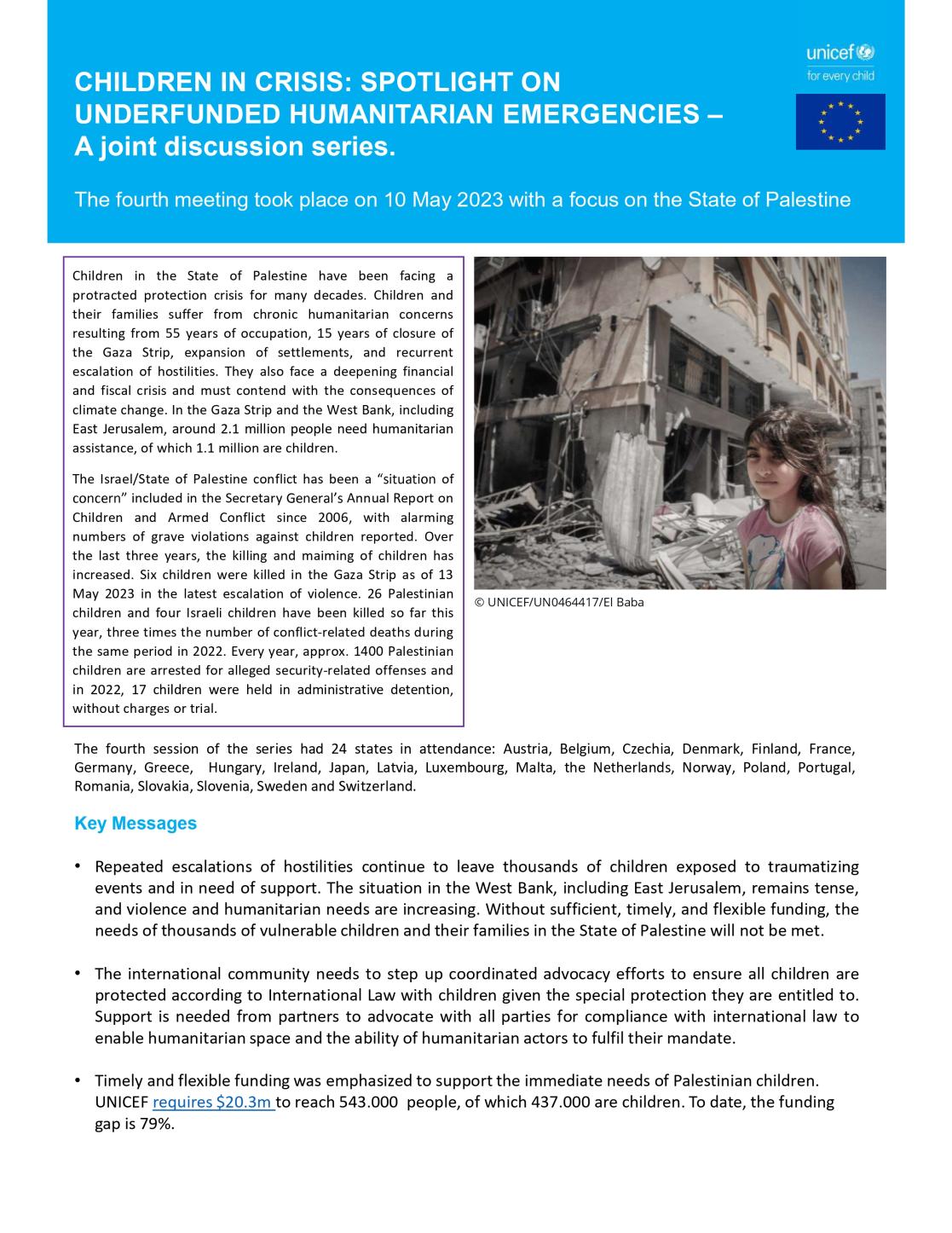
KEY MESSAGES: Meeting on Palestine
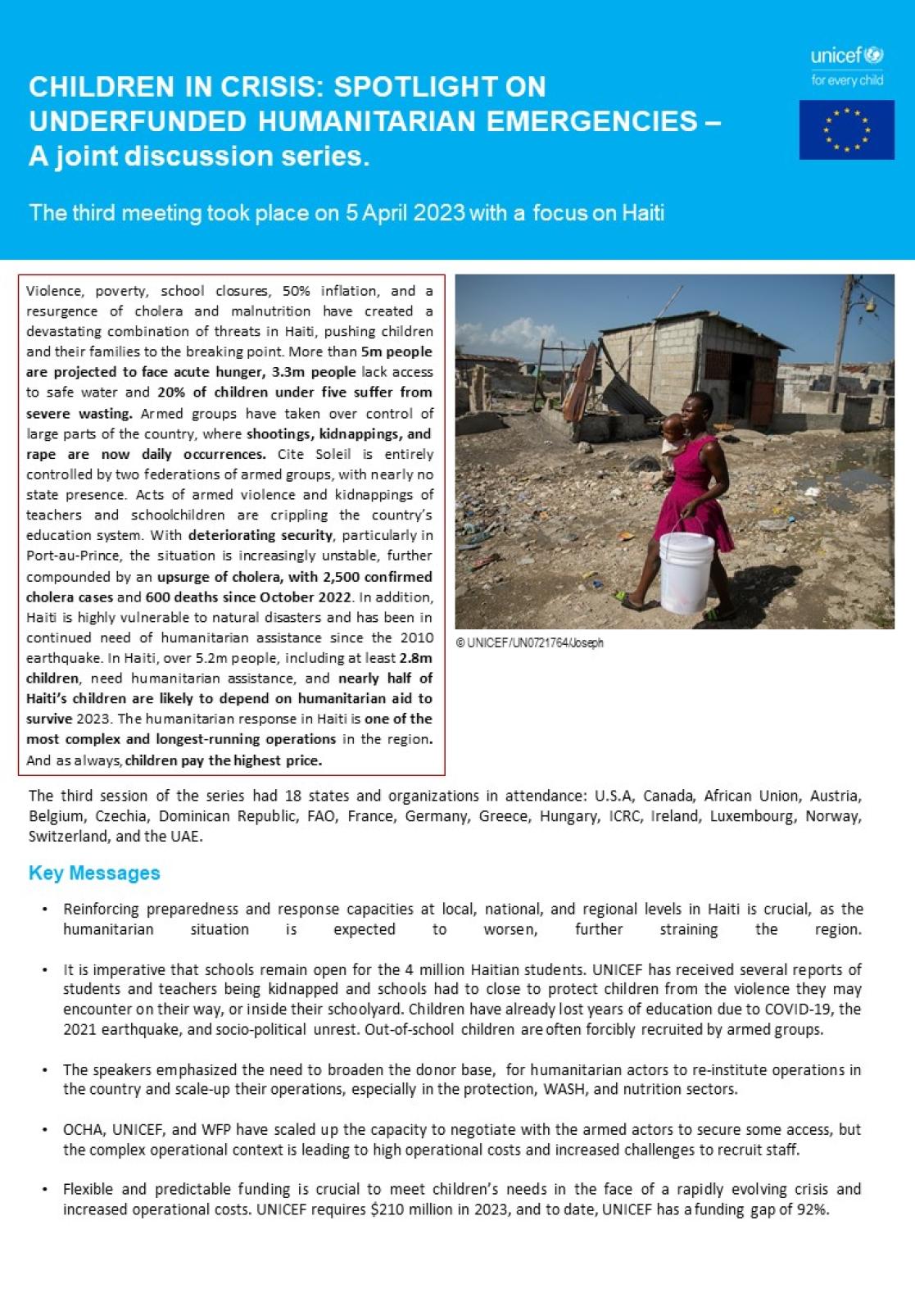
KEY MESSAGES: Meeting on Haiti
EU-UNICEF
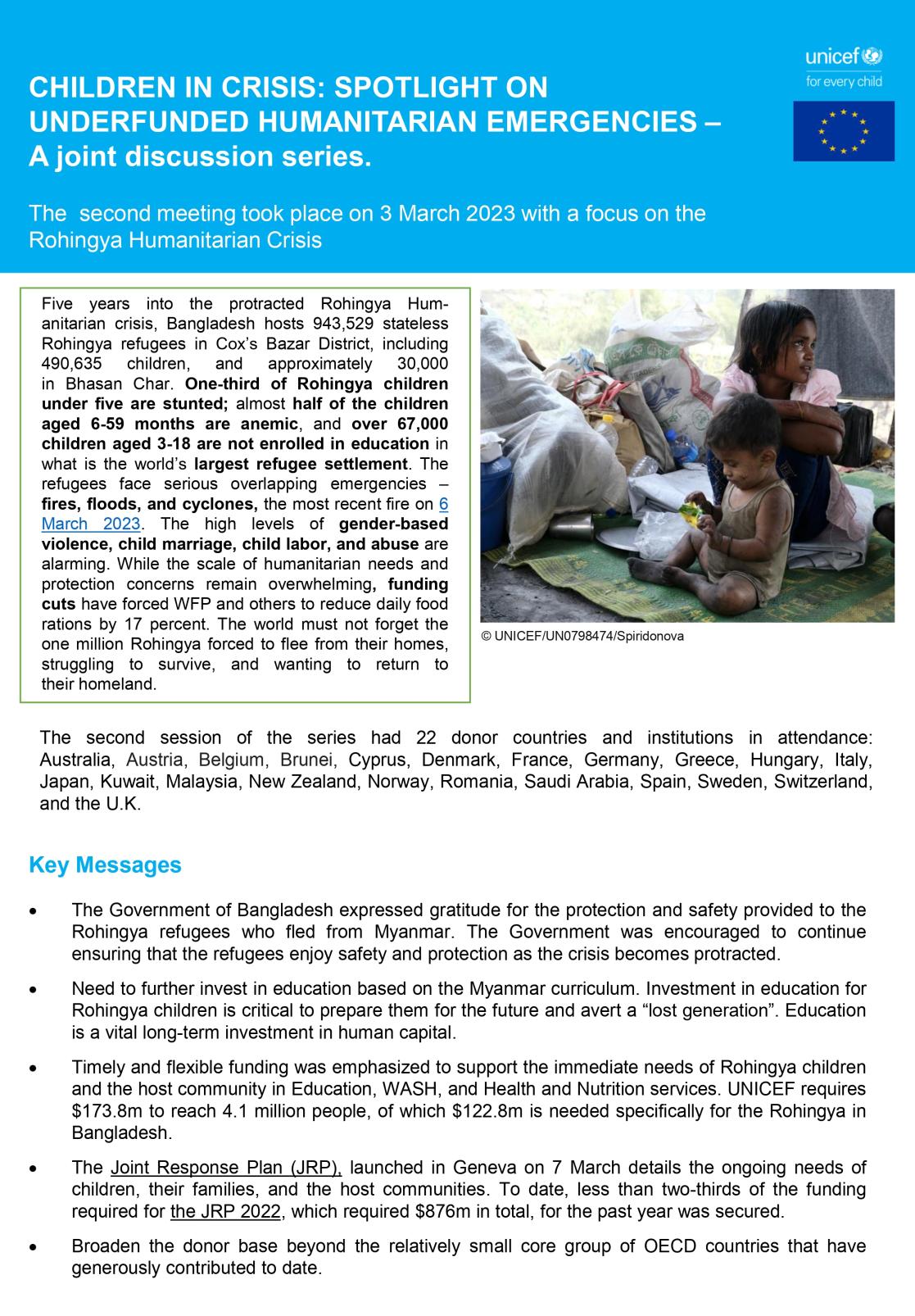
KEY MESSAGES: Meeting on the Rohingya Crisis
See also: Rohingya Humanitarian Crisis Joint Response Plan 2023 and UNICEF Humanitarian Action for Children 2023 - Bangladesh
KEY MESSAGES: Meeting on the DRC
See also: OCHA 2023 Humanitarian Response Plan (HRP) for the DRC and UNICEF Humanitarian Action for Children 2023 - DRC
[1] UNICEF Humanitarian Action for Children 2023