
EU Programme continues supporting cooperation between Uzbek state agencies to address challenges encountered by women residing in the border areas
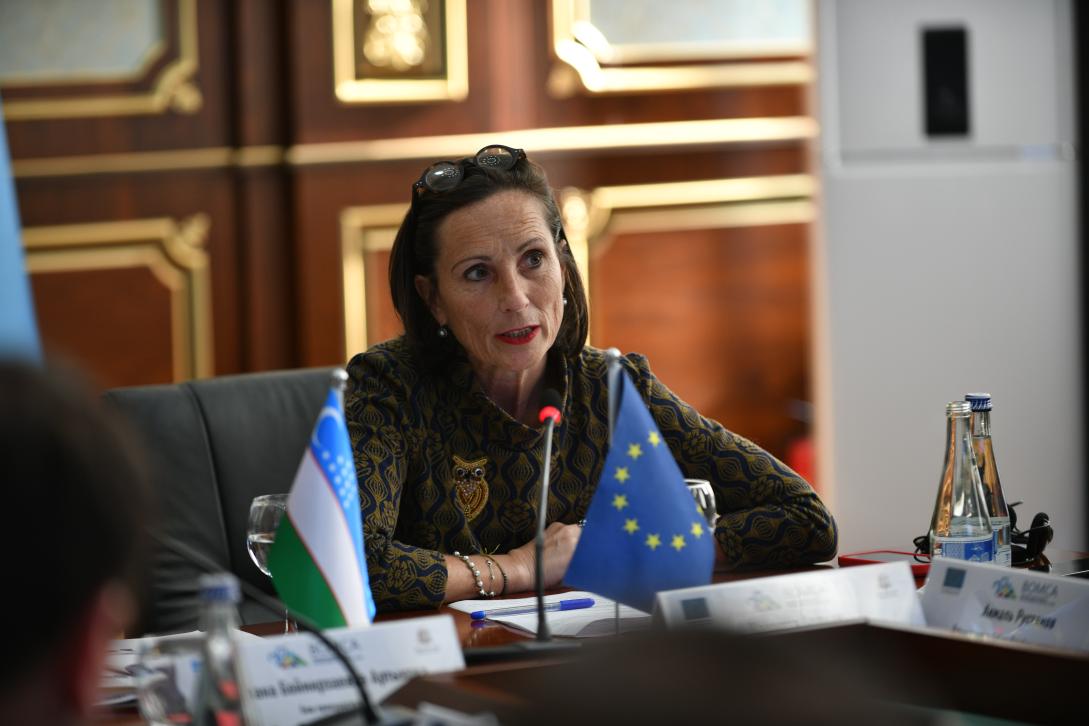
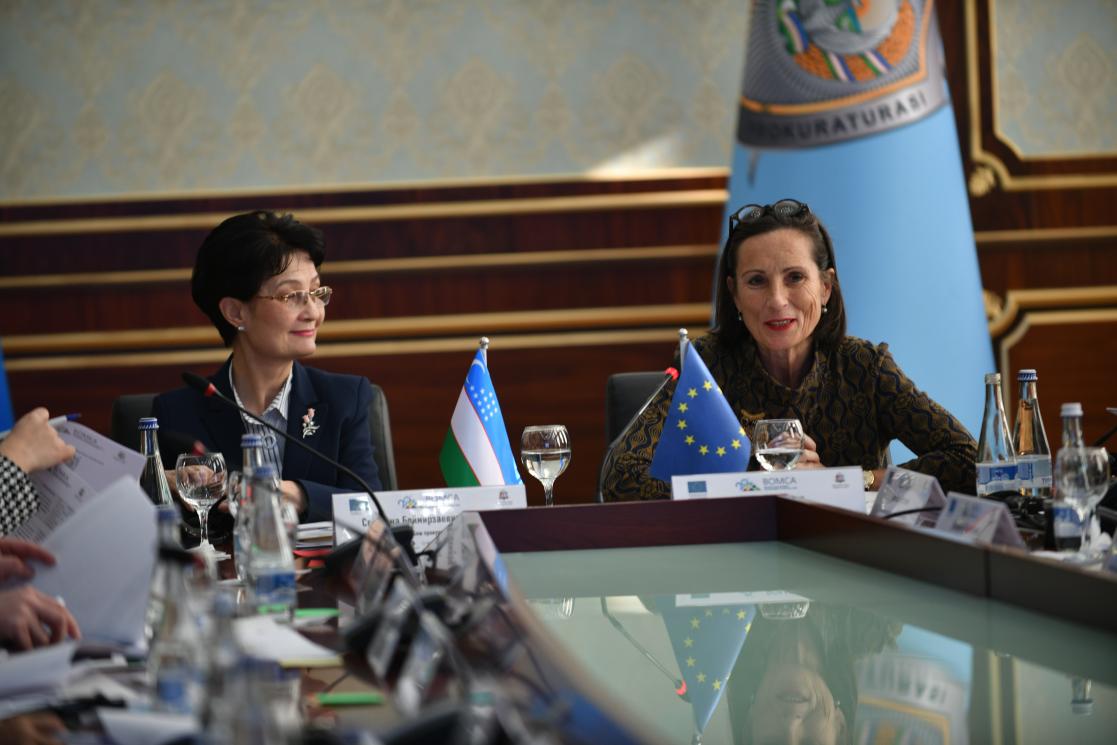
From 27 to 28 February 2023, in cooperation with the Prosecutor General’s Office of Uzbekistan, the Border Management Programme in Central Asia (BOMCA 10) organised a Roundtable in Tashkent on provision of support to women residing in the border areas of Uzbekistan. The Roundtable helped to raise awareness on the challenges encountered by women residing in close proximity to the borders and served as a platform for dialogue among the state agencies to exchange up-to-date information, and, most importantly, to develop joint ideas and solutions to support this group of women.
EU BOMCA Programme
The Programme’s expert team presented best practices from both the European Union and the Eastern Partnership countries in addressing the vulnerabilities of women residing in the border areas. During the interactive sessions, in cooperation with the international experts, representatives of the Uzbek state agencies analysed the existing situation of women from border regions, with a focus on respect for human rights, prevention of domestic violence, engagement of elderly women and increased employment opportunities. The in-depth discussions enabled experts to formulate tailored recommendations to better support all groups of women, residing in the border areas of Uzbekistan.

EU BOMCA Programme
The Roundtable was organised in the framework of the Programme’s Component 4, “Improvement of Cross-Border Cooperation”, which is aimed at improving the living conditions of people in border areas through local economic development, with a focus on human rights, gender equality and vulnerable groups.
About BOMCA
The Border Management Programme in Central Asia (BOMCA), funded by the European Union (EU), aims to enhance security, stability and sustainable growth in the region, while supporting cross-border cooperation and improving living conditions for people in the border areas of Central Asia. Since its implementation in 2003, BOMCA has played a leading role in strengthening cooperation between border control authorities through the application of the concept of integrated border management, as well as in bringing border control in line with international and EU standards.
BOMCA’s tenth phase, launched in April 2021, covers four areas: institutional development of border management agencies, improvement of detection capacities, trade facilitation, and improvement of cross-border cooperation. With a budget of EUR 21.65 million and an implementation period of 4.5 years, BOMCA 10 is the largest regional initiative in the field. It is implemented by a consortium of border management institutions of selected EU member states and the International Centre for Migration Policy Development led by the State Border Guard for the Republic of Latvia.