Goktuk Kara: We no longer call road incident accidents
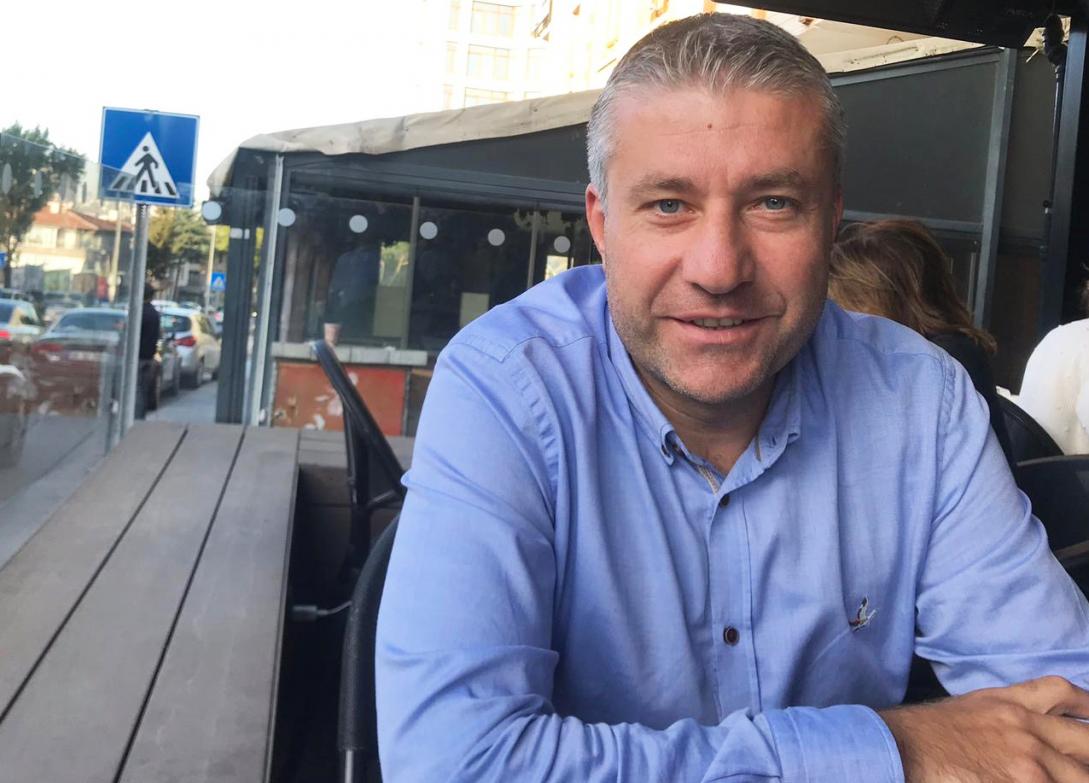
In his interview for Daryo.uz website within the #European Mobility Week in Tashkent, Goktuk Kara, programme manager of the European Union Delegation in Turkey, spoke about how to improve road safety.
— Mr. Kara, it is known that the overwhelming majority of Turkey's population lives in cities, and the country's rapid urbanization prompts an accelerated transition to the ecosystem of the "smart city". Please tell us how the smart city concept can improve road safety?
— Turkey is a developing country, including demographically: population growth rates are showing positive dynamics. Suffice it to say that in the past two decades alone, the population of Istanbul has tripled: according to official data, 15.5 million people now live there. Of course, given this trend, the development of transport networks is important.
Since there are road, bus and rail systems in parallel, the country has a plan for the distribution of these capacities in the face of growing demand, but sometimes this is not enough. This is why I think smart ecosystems can help reduce the pressure on the transport industry from cities..
Traffic management is an important segment of the transport network. Take bus routes, for example: smart systems provide datasets to understand the performance of each section of a transport route by assessing the congestion of the routes.
With such data, road services can regulate traffic, drivers can use special applications to track free parking spaces, and citizens can check the arrival time of vehicles on a schedule on their smartphones.
But it is important to understand that data itself is only a tool for improving efficiency. Therefore, it is important that society, citizens and politicians have a vision for the development of the city for future. The question is what type of a city do we want our kids to live in!
What does it mean in practice to give our citizens sustainable mobility alternatives? Well, if you build good safe bike infrastructure in Turkish cities, you’ll get more cyclists. And then you’ll have healthier citizens, better air quality, less congestion, and lower carbon emissions. If you can get more people walking, or taking public transport, rather than taking the car for even short trips, you get: better air quality, less congestion, and lower carbon emissions !
First of all, you need to slow down people in cities. It may sound unusual, but cities are places where you can't rush. Driving at speeds above 30 km / h multiplies the chances of death during an accident.
Infrastructure security is very important. You must protect cyclists and pedestrians by creating good infrastructure for this segment of users.
Emergency call systems are also very important for road safety. During an accident, it is imperative that emergency services can reach the crash site without hindrance. This priority of traffic management during a disaster is very critical..
— Turkey and Uzbekistan are countries that are largely similar to each other mentally and culturally. Please share Turkey's experience in improving road safety that would be applicable in Uzbekistan. How do you think it is worth improving driving culture? Tightening fines, social advertising, what else?
— I think this is a really very good question. I believe in the cultural code. This is what we have learned and this is how we participate in the culture of society.
It is necessary to instill a culture of road safety in elementary school. Already at school age, children are at risk of getting into an accident, and this can lead to serious injury, long-term suffering, depression, and even worse - to death.
For the older generation, it is important to develop a long-term communication strategy. It is not enough to install radars and video surveillance cameras, limiting ourselves to paying fines. It is important that people are internally aware of the consequences of their actions.
The driver must understand that at high speed it will be more difficult for him to stop if a child suddenly jumps out onto the road, which can lead to irreversible consequences.
In addition, the state must have a strategy with concrete action plans. Violations must be accompanied by severe penalties. People need to know that they will be caught, fined, and have to pay for their actions.
The VisionZero road safety project has been launched in Turkey since 2017. This concept, introduced by the Swedish government back in 1970s, now covers all countries of the European Union. The idea is to zero out fatalities after accidents.
We no longer call accidents accidents, because accidents mean a fateful coincidence, in fact, an accident. But if you analyze the road safety statistics, you will see that this is not about carelessness. We are almost always talking about breaking the rules, drunkenness, breaking the speed limit, neglecting seat belts. There are many rules violated, and this is the source of road deaths and serious injuries.
We stopped calling them accidents. Because it is not an accident where you did not fasten your seat belt when you drove at 120 km / h where you should have been at 50 km / h.
I will not hide: in Turkey, the VisionZero project was at first difficult to implement, but after the implementation of the project, the number of accidents decreased significantly. Moreover: the relative mortality rate is also declining, and this is the main result.
There is no secret here, and in general the VisionZero project consists of four stages:
The first stage is an analysis of the existing situation: first of all, the institutional and legislative structures.
The second stage is the search for solutions and the creation of a promising strategy for the country as a whole.
The third component is the creation of an accident register. It is necessary to understand and accept that you cannot manage what you do not measure. Statistics are the key to understanding why accidents happen.
The fourth level is a communication strategy that is implemented using various communication channels, the ambassadors of which are politicians, celebrities and the private sector.
Today Turkey loses 2% of GDP on road traffic accidents. This is a huge amount that the state simply loses. Moreover, this number is only a statistical value, behind which there are injuries and deaths of specific people. Traffic accidents also have indirect consequences: serious injuries lead to depression, divorce, and job loss. This price that society pays cannot be calculated on a calculator, but it is extremely high. This is what we are trying to convey to every citizen.
— These days, Uzbekistan is hosting the European Mobility Week, one of the key topics of which is Zero-emission Mobility. How popular are alternative modes of transport such as bicycles and e-scooters in Turkey? And what should the authorities pay attention to when creating infrastructure for this type of transport?
European Mobility Week is a very important event, a global opportunity to convey the message that there are different paths, new visions and means. This year, 538 municipalities participate in the EMW - this is half of Turkish cities.
This year’s theme for European Mobility Week is 'Zero-emission mobility for all.' It brilliantly captures what we are trying to deliver in the European Green Deal. It’s about discussing and deciding together how to reconcile our everyday mobility needs with our ambitious climate objective of carbon neutrality for the EU by 2050, which means a 90% reduction in CO2 emissions. How to limit the negative impact of transport on the quality of life and health of citizens – the pollution, the noise, the congestion, the cost of road crashes.
Sustainable urban mobility is going to be vital in this context. 70% of us already live in cities, and that number is going to grow. Carbon emissions from transport continue to grow as well as we move around in the city, commuting to work and school, and going shopping. So we have to facilitate cleaner transport options so that they become a natural choice – we know that citizens want to move to cleaner alternatives provided they are safe, reliable, and affordable.
European Mobility Week is a feast of local initiatives to encourage 'Zero-emission mobility for all'. Towns and cities are having car-free days, walking and cycling events, as well as serious discussions around more efficient and sustainable urban transport planning. In that context, let’s not forget the COVID-19 crisis, and let’s use European Mobility Week to step up efforts to restore citizens' trust in public transport.
Electric scooters and bicycles are becoming very popular modes of transport in our country. Just yesterday, on the occasion of the award ceremony for the European Mobility Week, our Minister announced the introduction of new rules for regulating the movement of electric scooters.
At the same time, the infrastructure should be well designed and integrated into the urban transport network. The person should be able to cycle part of the path by bike, continue on the bus, and then reach the destination on his bike. Integration and multimodality are the key to creating a comfortable environment for citizens.
It is necessary to create such an ecosystem in the city so that each user within walking distance has access to both public transport and bicycle sharing points.
Returning to the topic of security. The government needs to think about security. More than 70% of accidents occur in vulnerable groups, including pedestrians and cyclists. Would you let your child ride a bike to school? Most likely not, as he or she is completely unprotected on the road.
First of all, it is necessary to create infrastructure, dedicated roads and lanes for non-motorized vehicles, along which it will be possible to move comfortably and safely. Then and only then will people use them!